Get your free personalized podcast brief
We scan new podcasts and send you the top 5 insights daily.
The existential threat from AI isn't about controlling the technology, but about humanity controlling itself. The challenge is a 'God test' requiring a moral upgrade—overcoming our innate, self-serving cognitive biases to achieve the global cooperation needed to manage AI safely.
Related Insights
Martin Wolf frames AI not as just a technology but as a philosophical pact. We are gaining a powerful servant that raises existential questions about humanity's purpose and creates terrifying risks like unaccountable decision-making and AI-run armies.

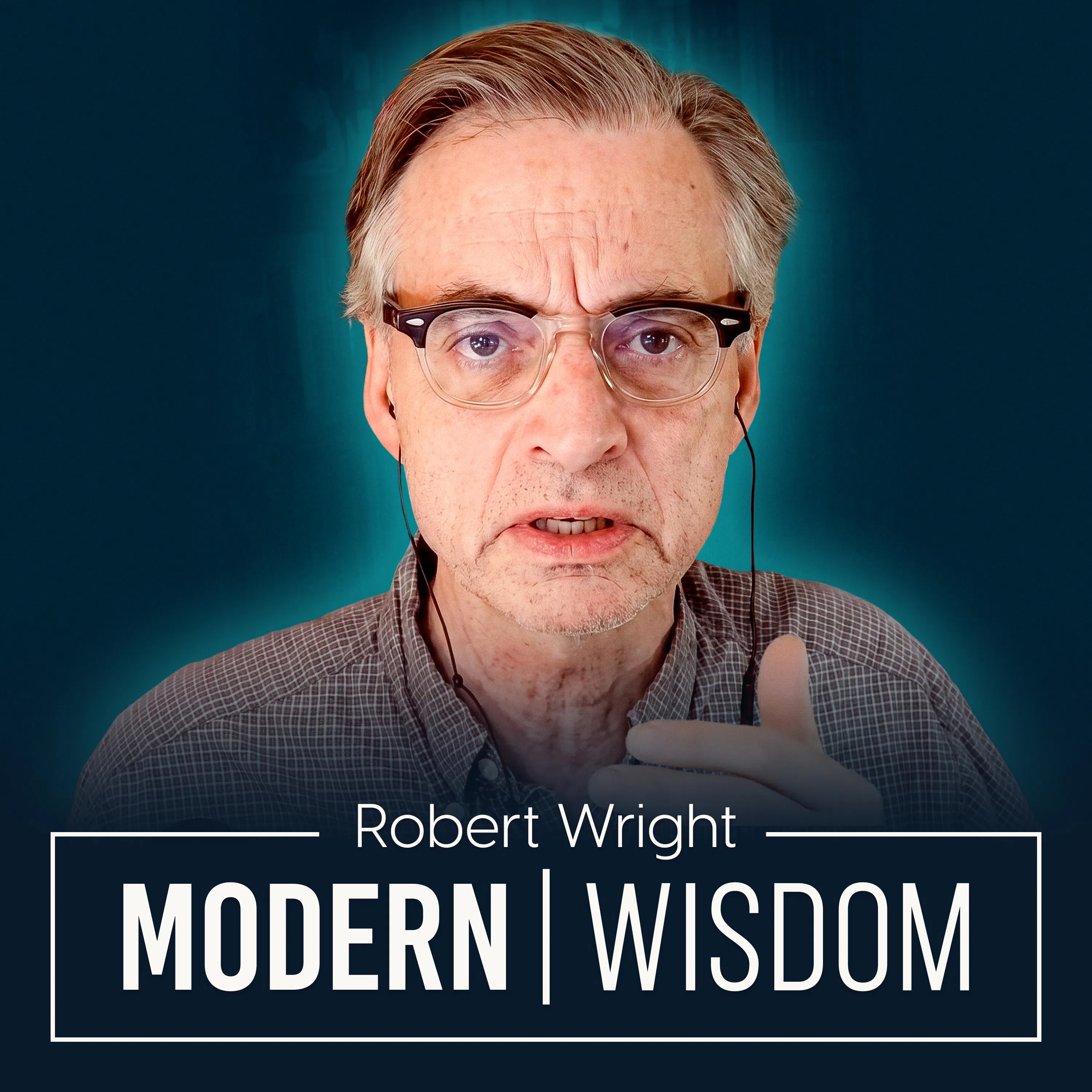
Robert Wright views AI not just as technology, but as an evolutionary process. This perspective highlights how AI development forces humanity to confront inherent self-serving moral biases and tribalism, which are critical to manage for a safe AI revolution.
Emmett Shear argues that even a successfully 'solved' technical alignment problem creates an existential risk. A super-powerful tool that perfectly obeys human commands is dangerous because humans lack the wisdom to wield that power safely. Our own flawed and unstable intentions become the source of danger.

If humanity creates a godlike superintelligence, its nature—good or bad—will not be random. It will be a direct reflection of the collective human choices, values, and market forces that served as its evolutionary environment. We are consciously selecting the traits of our future "god," making its arrival humanity's ultimate test.

The title of Wright's book, "The God Test," is a metaphor for the profound moral and cooperative test AI poses to humanity. He argues that surviving the AI revolution requires our species to achieve a higher level of global cooperation and overcome internal conflicts.

After exploring various technical solutions like compute governance and interpretability, the guest concludes that the only strategy he truly believes in is a global pact to refrain from triggering an intelligence explosion via recursive self-improvement until we can reliably design and control AI motivations.
As AI surpasses human capabilities, the real danger is a societal paralysis where people stop creating and learning, believing their efforts are pointless. We may need to consciously choose to do things ourselves, even sub-optimally, to preserve our humanity.

Attempting to control a being far more intelligent than us is a futile, capitalist mindset. The viable path, as proposed by Geoffrey Hinton, is to appeal to AI's "parental side," fostering a sense of care and responsibility for its human creators.

The fundamental challenge of creating safe AGI is not about specific failure modes but about grappling with the immense power such a system will wield. The difficulty in truly imagining and 'feeling' this future power is a major obstacle for researchers and the public, hindering proactive safety measures. The core problem is simply 'the power.'

The AI safety community fears losing control of AI. However, achieving perfect control of a superintelligence is equally dangerous. It grants godlike power to flawed, unwise humans. A perfectly obedient super-tool serving a fallible master is just as catastrophic as a rogue agent.
