Get your free personalized podcast brief
We scan new podcasts and send you the top 5 insights daily.
Debates over systems like Israel's 'Lavender' often focus on the AI. However, the more critical issue may be the human-defined 'rules of engagement'—specifically, what level of algorithmic confidence (e.g., 55% accuracy) leadership deems acceptable to authorize a strike. This is a policy problem, not just a technology one.

Related Insights
The requirement for human responsibility in the use of force is not a new concept created for AI. It is governed by long-standing international humanitarian law and existing military policies. These foundational legal structures apply to all weapons, from bows to AI-drones, ensuring a commander is always accountable.

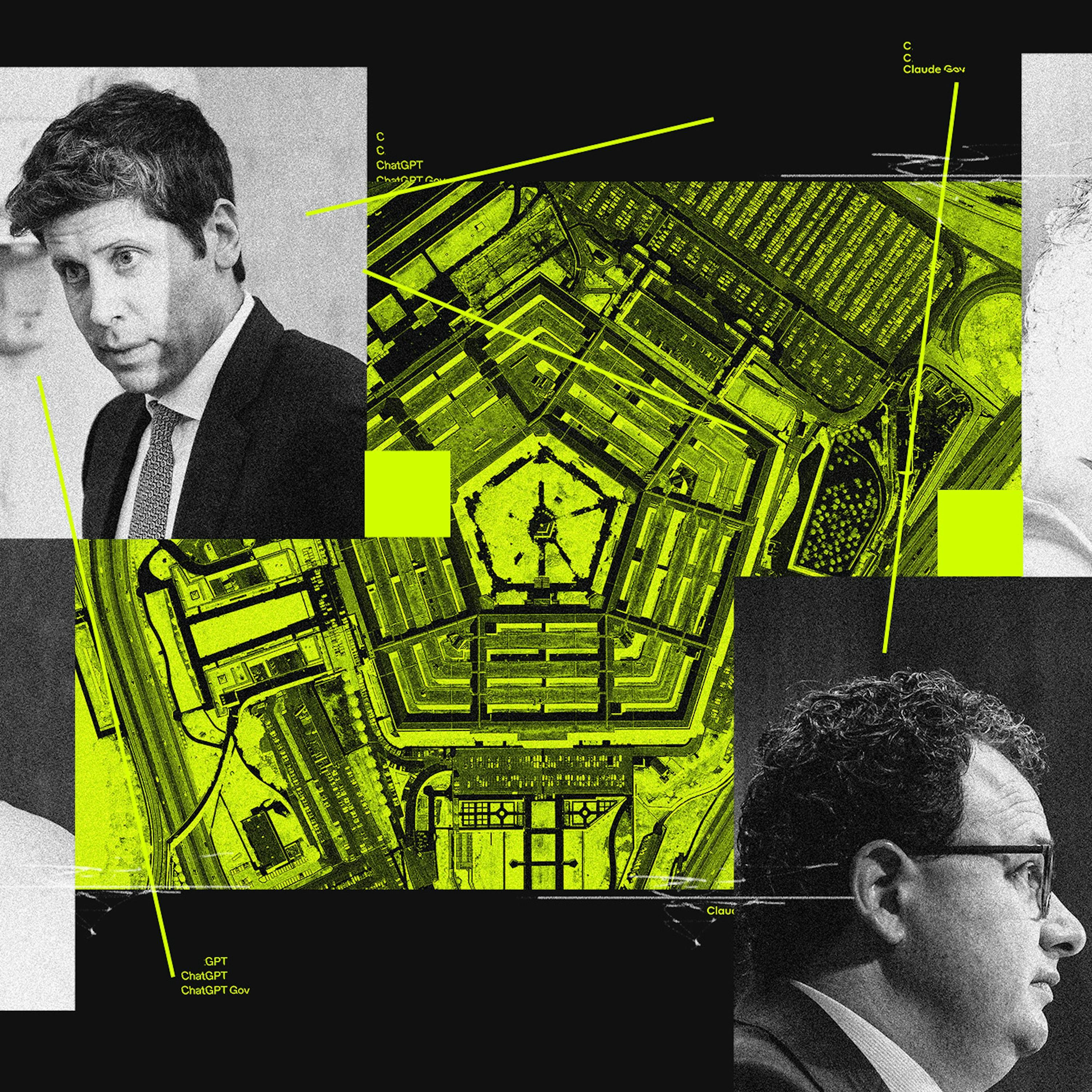
The standoff between Anthropic and the Pentagon marks the moment abstract discussions about AI ethics became concrete geopolitical conflicts. The power to define the ethical boundaries of AI is now synonymous with the power to shape societal norms and military doctrine, making it a highly contested and critical area of national power.

To prevent a scenario where 'the algorithm did it,' the U.S. military relies on the legal principle of 'human responsibility for the use of force.' This ensures a specific commander is always accountable for deploying any weapon, autonomous or not, sidestepping the accountability gap that worries AI ethicists.
While fears focus on tactical "killer robots," the more plausible danger is automation bias at the strategic level. Senior leaders, lacking deep technical understanding, might overly trust AI-generated war plans, leading to catastrophic miscalculations about a war's ease or outcome.
While the US military opposes bans on autonomous 'killer robots' for conventional warfare, it maintains a firm 'human-in-the-loop' policy for nuclear launch decisions. This reveals a strategic calculation: the normative value of preventing autonomous nuclear use outweighs any marginal benefit, a line not drawn for conventional systems.
The Pentagon labeled Anthropic a "supply chain risk" not due to a technical flaw, but because it dislikes the AI's embedded "constitution" and safety guardrails. This reveals a fundamental clash over who controls the values and behaviors of AI used in defense, turning a tech partnership into a political battle.

Seemingly reasonable terms like 'no autonomous lethal weapons' are impossible for a private company to enforce. They require moral and legal judgments about warfare—like defining a civilian or collateral damage—that are the exclusive and complex domain of a sovereign government, not a tech vendor.

Public fear focuses on AI hypothetically creating new nuclear weapons. The more immediate danger is militaries trusting highly inaccurate AI systems for critical command and control decisions over existing nuclear arsenals, where even a small error rate could be catastrophic.
Contrary to the 'killer robots' narrative, the military is cautious when integrating new AI. Because system failures can be lethal, testing and evaluation standards are far stricter than in the commercial sector. This conservatism is driven by warfighters who need tools to work flawlessly.

Countering the common narrative, Anduril views AI in defense as the next step in Just War Theory. The goal is to enhance accuracy, reduce collateral damage, and take soldiers out of harm's way. This continues a historical military trend away from indiscriminate lethality towards surgical precision.