Get your free personalized podcast brief
We scan new podcasts and send you the top 5 insights daily.
The hosts and Tavarish highlight that driving a steer-by-wire Cybertruck creates an ergonomic paradox. While the computer provides a seamless and smooth experience during autonomous self-driving modes, human manual steering feels unusually jerky, disorienting, and difficult compared to conventional mechanical steering.

Related Insights
Zoox intentionally designed its autonomous vehicle without a steering wheel or traditional car layout. This allows for optimal sensor placement for the AI driver and a unique, face-to-face cabin experience, betting that customer comfort will outweigh the familiarity of a retrofitted car.

As Full Self-Driving (FSD) and autonomous vehicles become widespread, the culture of driving will fundamentally shift. Prohibitive risk and insurance costs will make manual driving a rare, expensive hobby for enthusiasts, much like thoroughbred racing is today.

After proving its robo-taxis are 90% safer than human drivers, Waymo is now making them more "confidently assertive" to better navigate real-world traffic. This counter-intuitive shift from passive safety to calculated aggression is a necessary step to improve efficiency and reduce delays, highlighting the trade-offs required for autonomous vehicle integration.

Instead of creating bespoke self-driving kits for every car model, a humanoid robot can physically sit in any driver's seat and operate the controls. This concept, highlighted by George Hotz, bypasses proprietary vehicle systems and hardware lock-in, treating the car as a black box.

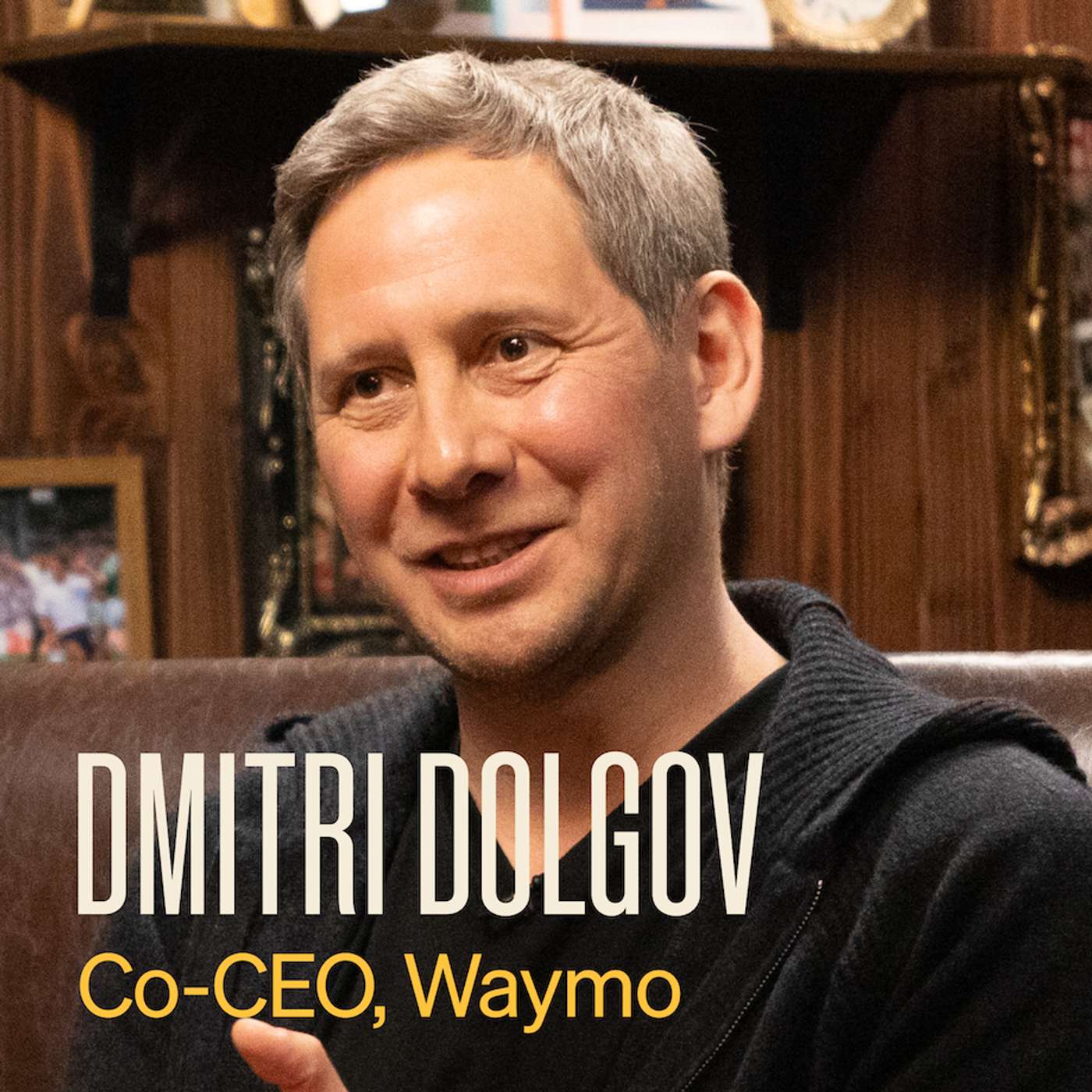
Waymo's co-CEO argues that Level 4/5 autonomy will not emerge by incrementally improving Level 2/3 driver-assist systems. The hardest challenges of operating without a human driver are entirely absent in assist systems, requiring a "qualitative jump" and a completely different approach from the outset.
Waabi's CEO argues that achieving Level 4 (eyes-off) autonomy isn't a linear progression from Level 2 (driver-assist). They are entirely different safety problems. L4 requires a purpose-built technology stack from day one, as the absence of a human driver introduces challenges that cannot be solved by simply improving an L2 system.

Autonomous systems can perceive and react to dangers beyond human capability. The example of a Cybertruck autonomously accelerating to lessen the impact of a potential high-speed rear-end collision—a car the human driver didn't even see—showcases a level of predictive safety that humans cannot replicate, moving beyond simple accident avoidance.

The primary value of a human driver isn't piloting the vehicle but executing real-world tasks around the journey: parking, running errands, or handling logistics. Autonomous vehicles solve the driving 'task' but fail to address the complete 'job,' highlighting the need for embodied AI that can interact with the physical world.
Zoox intentionally designed its autonomous vehicle without a steering wheel or traditional driver's seat. This purpose-built approach forces a new mental model on the user—transportation, not driving—bypassing the psychological fear of not being in control that a retrofitted car would trigger.

Google's AV team found that acceptable physical forces change based on context. The same g-force that feels normal on a highway on-ramp is perceived as dangerously aggressive in a residential cul-de-sac. This shows comfort relies on psychological context, not just physics.
