Get your free personalized podcast brief
We scan new podcasts and send you the top 5 insights daily.
The primary value of a human driver isn't piloting the vehicle but executing real-world tasks around the journey: parking, running errands, or handling logistics. Autonomous vehicles solve the driving 'task' but fail to address the complete 'job,' highlighting the need for embodied AI that can interact with the physical world.

Related Insights
The advent of general-purpose humanoid robots will accelerate autonomous driving. Instead of waiting for car manufacturers to integrate self-driving hardware, a robot can physically sit in the driver's seat of any car and operate it, turning legacy vehicles into self-driving ones instantly.

The integration of AI into human-led services will mirror Tesla's approach to self-driving. Humans will remain the primary interface (the "steering wheel"), while AI progressively automates backend tasks, enhancing capability rather than eliminating the human role entirely in the near term.
Instead of creating bespoke self-driving kits for every car model, a humanoid robot can physically sit in any driver's seat and operate the controls. This concept, highlighted by George Hotz, bypasses proprietary vehicle systems and hardware lock-in, treating the car as a black box.

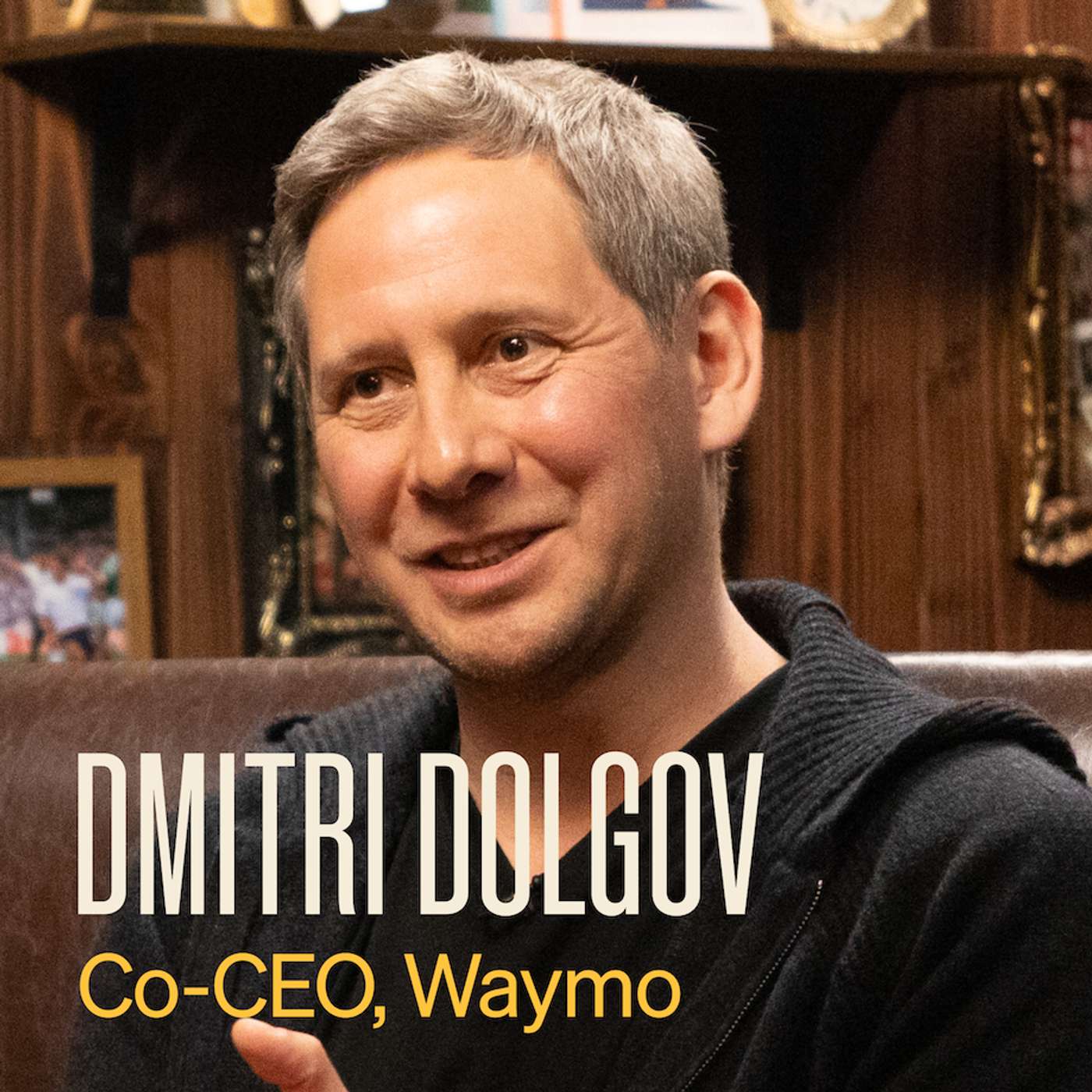
Waymo's co-CEO argues that Level 4/5 autonomy will not emerge by incrementally improving Level 2/3 driver-assist systems. The hardest challenges of operating without a human driver are entirely absent in assist systems, requiring a "qualitative jump" and a completely different approach from the outset.
Current self-driving technology cannot solve the complex, unpredictable situations human drivers navigate daily. This is not a problem that more data or better algorithms can fix, but a fundamental limitation. According to the 'Journey of the Mind' theory, full autonomy will only be possible when vehicles can incorporate the actual mechanism of consciousness.

Despite marketing hype, current AI agents are not fully autonomous and cannot replace an entire human job. They excel at executing a sequence of defined tasks to achieve a specific goal, like research, but lack the complex reasoning for broader job functions. True job replacement is likely still years away.

AI models lack access to the rich, contextual signals from physical, real-world interactions. Humans will remain essential because their job is to participate in this world, gather unique context from experiences like customer conversations, and feed it into AI systems, which cannot glean it on their own.

The evolution of Tesla's Full Self-Driving offers a clear parallel for enterprise AI adoption. Initially, human oversight and frequent "disengagements" (interventions) will be necessary. As AI agents learn, the rate of disengagement will drop, signaling a shift from a co-pilot tool to a fully autonomous worker in specific professional domains.
Beyond basic navigation, the most nuanced challenge for AVs is mastering pickups and drop-offs. The system must understand complex social context, like when it is acceptable to briefly double-park or how to avoid blocking a driveway, which is a more subtle problem than structured highway driving.
The death of AI co-pilots is overstated. They have a massive opportunity in "bits meets atoms" industries like manufacturing. While AI can build machines, servicing them involves hyper-local, multivariate problems best solved by a human augmented with a co-pilot, such as AI-powered safety goggles for diagnostics.
