Get your free personalized podcast brief
We scan new podcasts and send you the top 5 insights daily.
The main obstacle to deploying enterprise AI isn't just technical; it's achieving organizational alignment on a quantifiable definition of success. Creating a comprehensive evaluation suite is crucial before building, as no single person typically knows all the right answers.
![Jesse Zhang - Building Decagon - [Invest Like the Best, EP.443] thumbnail](https://megaphone.imgix.net/podcasts/2cc4da2a-a266-11f0-ac41-9f5060c6f4ef/image/7df6dc347b875d4b90ae98f397bf1cb1.jpg?ixlib=rails-4.3.1&max-w=3000&max-h=3000&fit=crop&auto=format,compress)
Related Insights
Consumers can easily re-prompt a chatbot, but enterprises cannot afford mistakes like shutting down the wrong server. This high-stakes environment means AI agents won't be given autonomy for critical tasks until they can guarantee near-perfect precision and accuracy, creating a major barrier to adoption.

Despite proven cost efficiencies from deploying fine-tuned AI models, companies report the primary barrier to adoption is human, not technical. The core challenge is overcoming employee inertia and successfully integrating new tools into existing workflows—a classic change management problem.

Companies feel immense pressure to integrate AI to stay competitive, leading to massive spending. However, this rush means they lack the infrastructure to measure ROI, creating a paradox of anxious investment without clear proof of value.

The conventional wisdom that enterprises are blocked by a lack of clean, accessible data is wrong. The true bottleneck is people and change management. Scrappy teams can derive significant value from existing, imperfect internal and public data; the real challenge is organizational inertia and process redesign.

Standardized benchmarks for AI models are largely irrelevant for business applications. Companies need to create their own evaluation systems tailored to their specific industry, workflows, and use cases to accurately assess which new model provides a tangible benefit and ROI.

AI evaluation shouldn't be confined to engineering silos. Subject matter experts (SMEs) and business users hold the critical domain knowledge to assess what's "good." Providing them with GUI-based tools, like an "eval studio," is crucial for continuous improvement and building trustworthy enterprise AI.
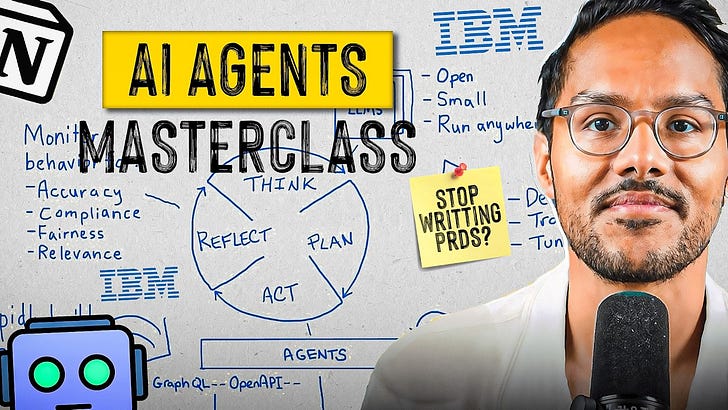
The primary bottleneck in improving AI is no longer data or compute, but the creation of 'evals'—tests that measure a model's capabilities. These evals act as product requirement documents (PRDs) for researchers, defining what success looks like and guiding the training process.

Off-the-shelf AI models can only go so far. The true bottleneck for enterprise adoption is "digitizing judgment"—capturing the unique, context-specific expertise of employees within that company. A document's meaning can change entirely from one company to another, requiring internal labeling.

The most significant hurdle for businesses adopting revenue-driving AI is often internal resistance from senior leaders. Their fear, lack of understanding, or refusal to experiment can hold the entire organization back from crucial innovation.

The excitement around AI capabilities often masks the real hurdle to enterprise adoption: infrastructure. Success is not determined by the model's sophistication, but by first solving foundational problems of security, cost control, and data integration. This requires a shift from an application-centric to an infrastructure-first mindset.
