Get your free personalized podcast brief
We scan new podcasts and send you the top 5 insights daily.
The future of company operations involves creating automated 'loops' for functions like coding, marketing, and sales. These loops, powered by AI agents, will handle repeatable work at scale, from individual tasks to entire business units, freeing up humans for strategy and innovation.

Related Insights
Platforms like Nebula allow founders to move beyond simple automation. By providing a high-level directive and connecting services, AI agents can run entire business functions, like a content blog that researches, writes, and publishes daily with minimal human intervention.

The most advanced use of AI has evolved beyond manual prompting. The new discipline involves designing automated, recurring systems called 'loops' that manage agents to perform complex work. This represents a fundamental shift in knowledge work from directly performing tasks to architecting and overseeing autonomous systems that execute those tasks.

Tools are emerging that don't just build an app but run the entire company—managing marketing, bookkeeping, and legal. This evolution shows the value is not in the LLM itself but in the 'harness' built around it to orchestrate complex business functions, creating a new category of fully autonomous company builders.

Freelancer.com CEO Matt Barrie details how "agentic AI" can reliably automate complex, multi-step tasks like performance marketing analysis or processing operational queues. This new capability allows companies to automate entire jobs previously done by teams of people, operating 24/7 at a superhuman level.

The future of company operations involves creating cascading AI loops for various functions. These loops optimize tasks to a local maximum, but then plateau. Human intuition and out-of-distribution thinking are critical to initiate the jump to the next level of innovation, or the 'next hill'.

Tools like Claude CoWork preview a future where teams of AI agents collaborate on multi-faceted projects, like a product launch, simultaneously. This automates tactical entry-level tasks, elevating human workers to roles focused on high-level strategy, review, and orchestrating these AI "employees."
Iterative AI agent loops, like Andre Karpathy's Auto Research, are not just another tool but a new foundational building block of work. Similar to how spreadsheets or email became ubiquitous across all roles and industries, these loops will be a core component of how knowledge work is performed, fundamentally changing process and productivity.
The trend of lean operations and automation won't stop at one-person companies. The logical next step in this evolution is the emergence of businesses almost entirely run by a single, autonomous AI agent, representing a fundamental shift in corporate structure.
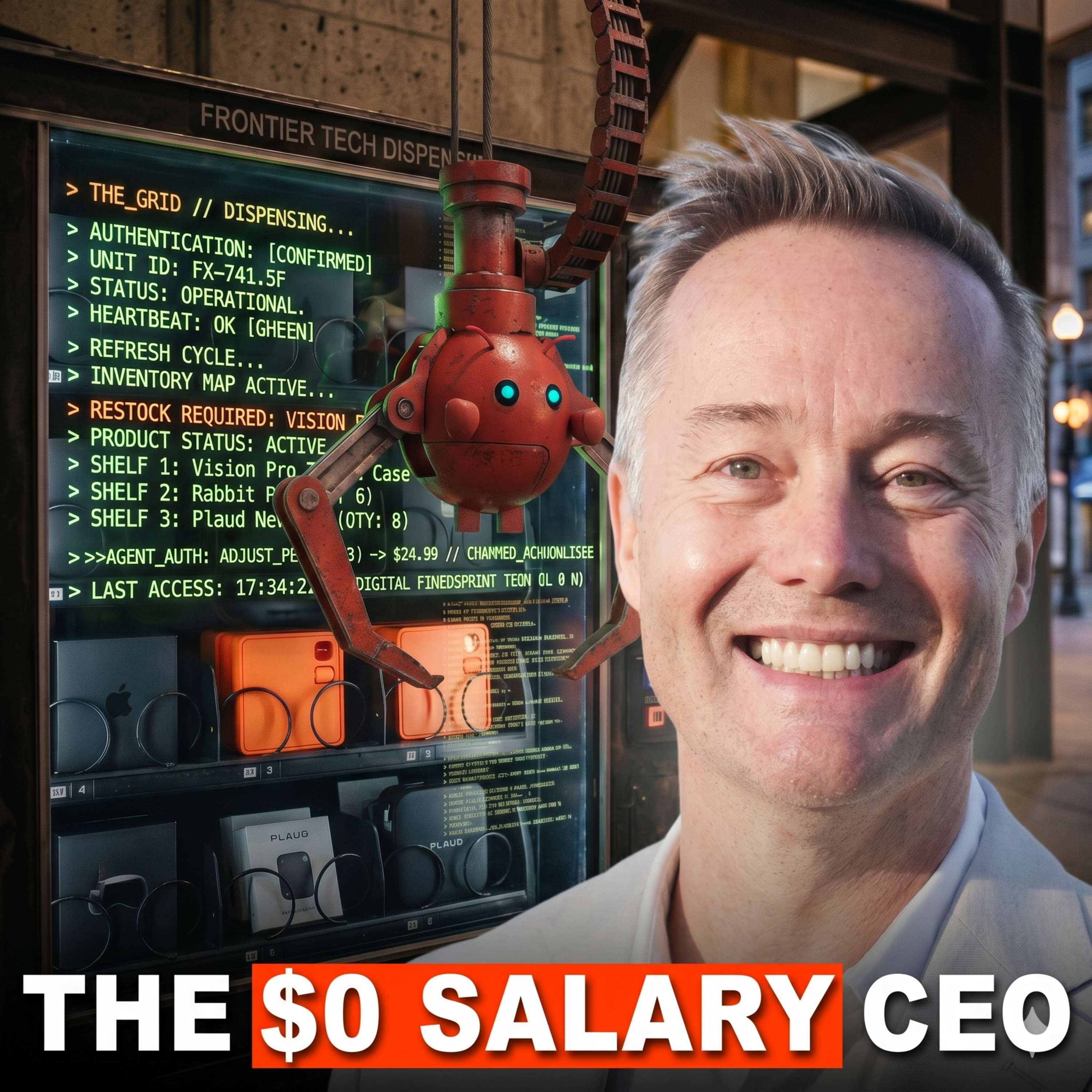
A single person can direct AI agents to conceptualize, code, and operate an entire business. This represents a new paradigm of a "fully autonomous enterprise," where AI handles everything from development to strategic planning, potentially creating a one-person, six-figure company.

The next evolution for AI is not just better coding assistants, but agents that use software-generation abilities to automate tasks far beyond engineering, effectively rewriting business processes across the board.