Get your free personalized podcast brief
We scan new podcasts and send you the top 5 insights daily.
Grant and Faber note many sophisticated investors admit they don't understand their private credit investments. This lack of transparency and knowledge is dangerously similar to the opacity of mortgage-backed securities (CDOs) before the 2008 financial crisis, signaling potential systemic risk.

Related Insights
Large banks have offloaded riskier loans to private credit, which is now more accessible to retail investors. According to Crossmark's Victoria Fernandez, this concentration of risk in a less transparent market, where "cockroaches" may be hiding, is a primary systemic concern.

While private credit is a viable asset class, Ed Perks expresses caution. The tremendous amount of capital flooding the space creates pressure to deploy it, which can lead to less disciplined underwriting and potential credit quality issues. He notes this space warrants close monitoring due to its lack of transparency.

PIMCO's Marc Seidner warns that a chart overlaying recent private credit issuance on pre-2008 subprime mortgage debt shows an "uncanny" similarity. This suggests too much capital has led to deteriorating discipline, underwriting, and investor protections, creating systemic risks.
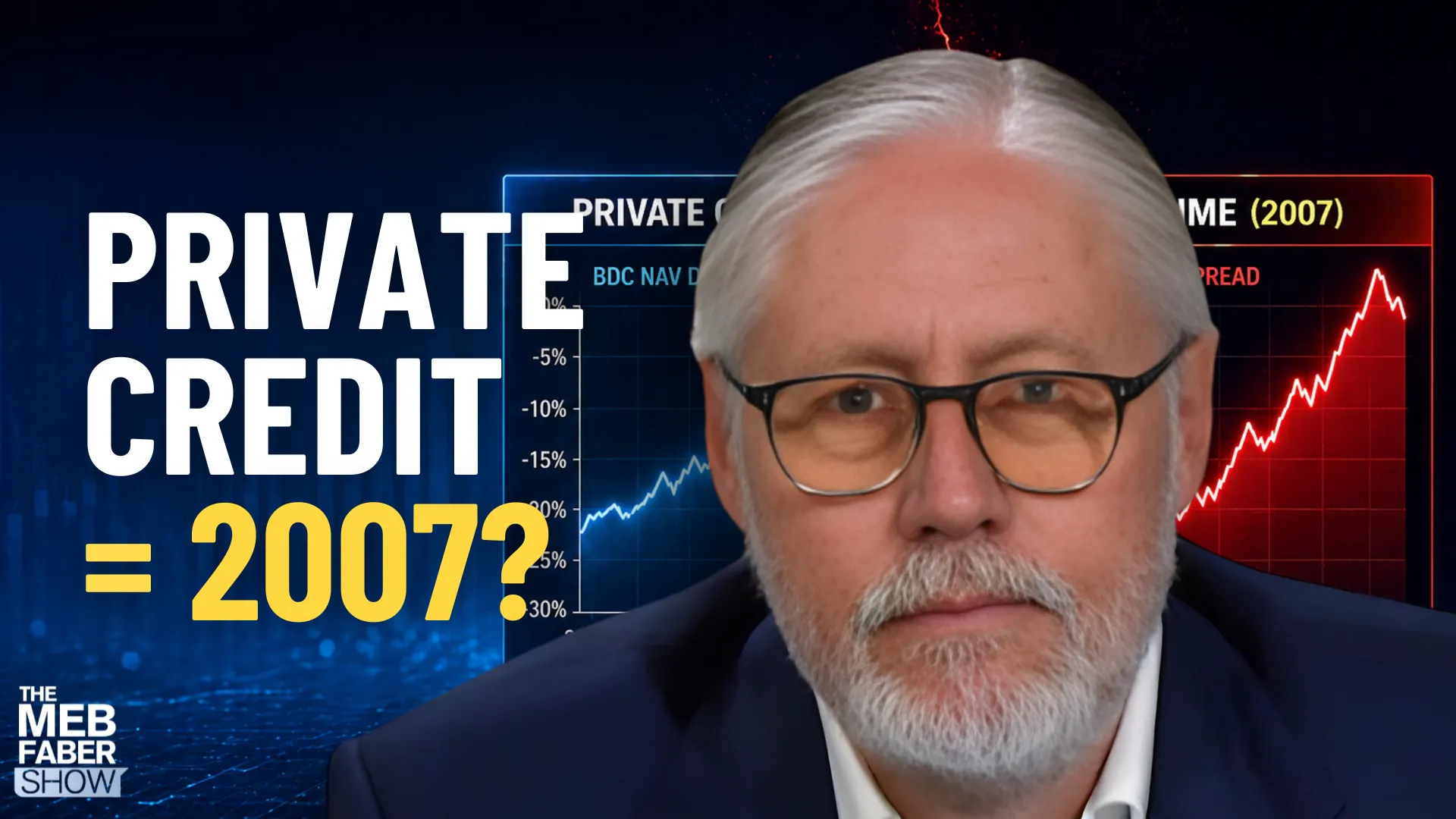
Private credit grew by taking on riskier loans that banks shed after Dodd-Frank, making the core banking system safer. However, banks now provide wholesale leverage to these private credit funds with minimal due diligence, creating a new, less transparent concentration of risk.

The private credit market is exhibiting behaviors reminiscent of the 2007-2008 subprime crisis. These include major funds blocking investor withdrawals ("gating") and large banks proactively disclosing their exposure, suggesting growing internal anxiety and a desire to manage public perception before a potential downturn.

Private equity giants like Blackstone, Apollo, and KKR are marking the same distressed private loan at widely different values (82, 70, and 91 cents on the dollar). This lack of a unified mark-to-market standard obscures true risk levels, echoing the opaque conditions that preceded the 2008 subprime crisis.
Due to the private credit market's opaqueness, complexity, and hidden interconnectedness, any significant credit event would likely trigger a 'sudden stop' liquidity event. This poses a greater systemic risk than a slow, corrosive problem, as it could catch regulators completely off guard.

Persistently low high-yield credit spreads, despite global turmoil, don't signal corporate health. This is a structural market shift where the riskiest debt has migrated from public markets to the opaque world of private credit, artificially suppressing spreads and hiding true risk.

While most US economic cycles appear healthy, the opaque private credit market represents the most significant systemic risk. Recent signs of stress, such as fund redemption limits and high exposure to volatile sectors like software, are reminiscent of the "contained" problems that preceded the 2008 financial crisis.

The rapid growth of private credit during the zero-interest-rate period parallels the pre-2008 subprime mortgage boom. In both cases, immense capital inflows created pressure to originate assets, leading to rushed due diligence and a degradation of underwriting standards to fill the newly created investment vehicles.