Get your free personalized podcast brief
We scan new podcasts and send you the top 5 insights daily.
The US attempt to escort ships through the Strait of Hormuz failed because shipping companies lacked confidence in the limited protection offered. This rendered the operation a failure, with only two US-flagged vessels participating while hundreds remained behind, demonstrating that perceived credibility is paramount in such operations.

Related Insights
The disruption in the Strait of Hormuz isn't a formal closure. Instead, shippers and producers are adopting a "wait and see" approach, halting flows due to reports of damaged ships and skyrocketing insurance premiums, effectively creating a self-imposed blockade.

The failure to militarily secure the Strait of Hormuz is a major strategic concession. It demonstrates a critical vulnerability and effectively hands Iran control over a global economic chokepoint, allowing them to wield immense leverage over international trade.

While the US and allies can militarily secure convoys through the Strait of Hormuz, this is not a panacea. This action would only restore a fraction of normal shipping volume (est. 20%) and will not immediately restore the trust needed from commercial shipping and insurance companies to resume full operations.
Despite the Strait of Hormuz closure being a long-theorized scenario, the US military response was 'insufficient' and lacked preparedness. Iran achieved a near-total shutdown with minimal force, relying on the *threat* of attack, revealing a significant gap in US strategic readiness.

Dr. Anas Al-Hajji asserts that Iran did not militarily close the Strait of Hormuz. The disruption was caused by European insurance companies canceling policies for tankers under EU solvency rules after an attack near Sri Lanka expanded the perceived risk zone, making transit impossible for uninsured ships.

The US has long used the threat of military force to keep the Strait of Hormuz open. By failing to act despite a large naval presence, it has revealed this deterrent is hollow. This hands Iran a proven economic weapon and erodes the credibility of US power projection globally.
Iran doesn't need a naval blockade to close the Strait of Hormuz. The mere threat of drone and missile attacks is enough to deter shippers and insurers, creating a "de facto closure." This asymmetrical strategy highlights how psychological warfare can be as effective as direct military action in disrupting global trade.
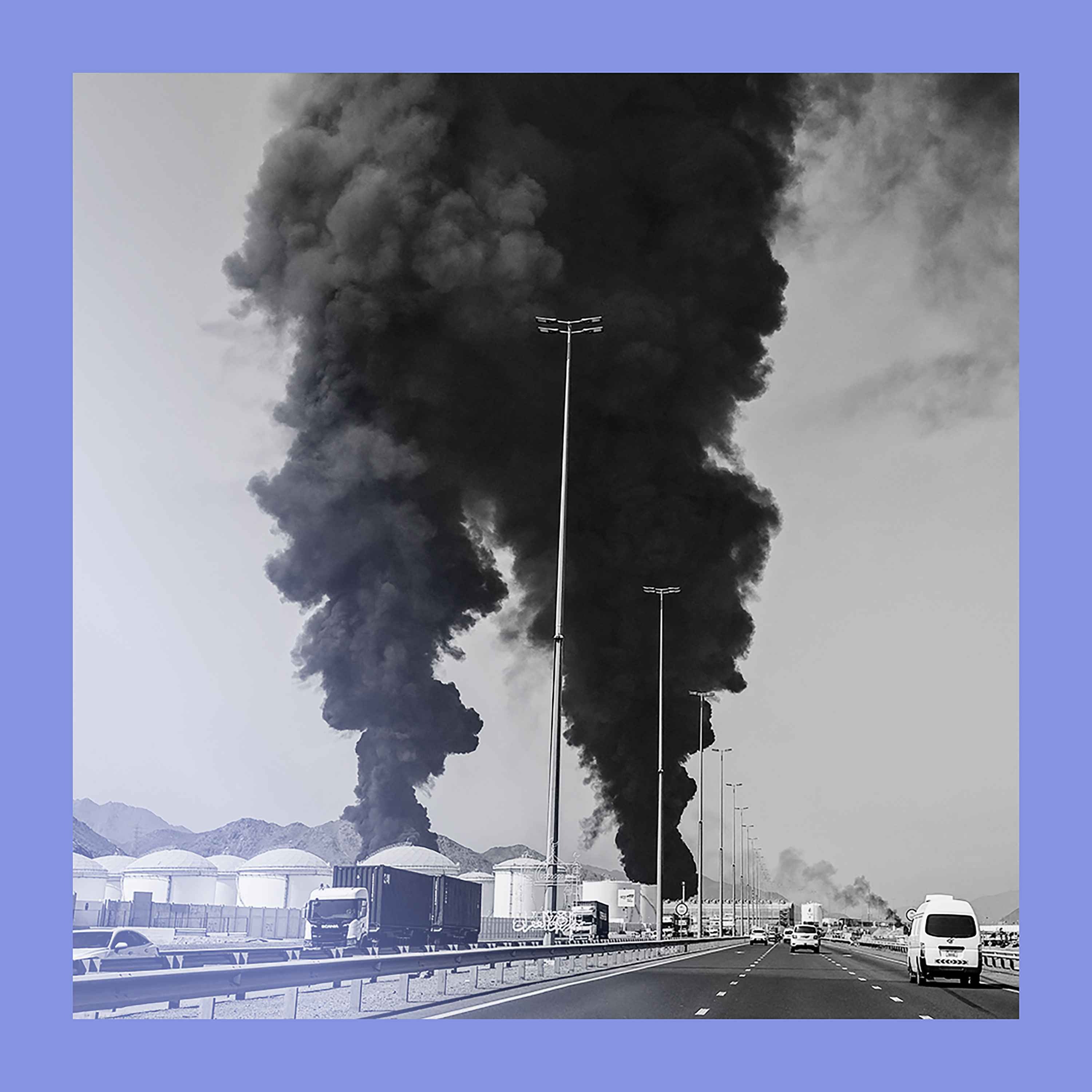
The critical choke point of the Strait of Hormuz is closed not by military force, but by economics. Commercial shipping requires insurance, which is now either unavailable or prohibitively expensive for the region. Even with naval escorts, ships will not sail without coverage, making this an insurance-driven crisis.
The most stable outcome from the Hormuz crisis is a formal tolling system, even if run by Iran. This provides certainty for shippers but signals a fundamental shift away from the US Navy guaranteeing global free trade, ending a decades-long era.

The US cannot secure the Strait of Hormuz alone. The solution is a US-led military convoy that includes allies like Japan and South Korea, and even unconventional partners like China, who are heavily dependent on the oil route. This international presence creates a stronger deterrent and shares the burden.