Get your free personalized podcast brief
We scan new podcasts and send you the top 5 insights daily.
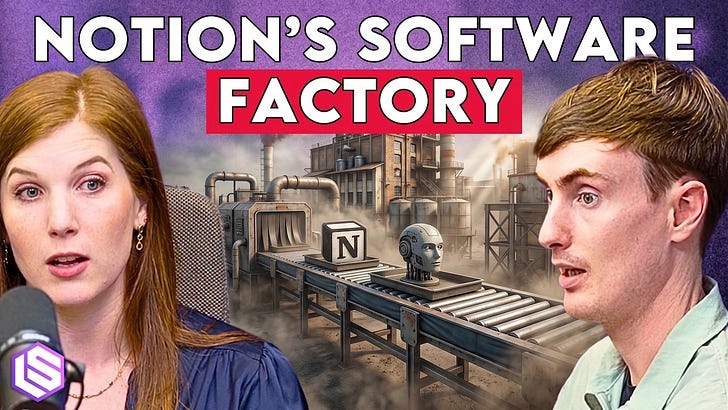
Recognizing that evaluating and steering AI models requires a unique skillset, Notion created a non-traditional technical role. These engineers, often from non-CS backgrounds, focus on qualitative analysis, defining evaluation journeys, and understanding model taste, bridging the gap between product and pure software engineering.
Related Insights
Beyond traditional engineers using AI and non-technical "vibe coders," a third archetype is emerging: the "agentic engineer." This professional operates at a higher level of abstraction, managing AI agents to perform programming, rather than writing or even reading the code themselves, reinventing the engineering skill set.

The engineering role is shifting from direct coding to 'agent management.' Notion's co-founder Simon Last no longer types code; instead, he designs end-to-end tasks, assigns them to AI agents, and verifies the final output. This represents a fundamental change in the software development workflow.

A technical AI background isn't required to be a PM in the AI space. The critical need is for leaders who can translate powerful AI models into tangible, human-centric value for end users. Your expertise in customer behavior and problem-solving is often more valuable than model-building skills.

As AI agents automate code-writing, companies like WorkOS are hiring "product engineers" who possess taste, product sense, and strong communication. The stereotype of the purely technical, anti-social developer is becoming unemployable in modern tech companies.

With AI agents automating raw code generation, an engineer's role is evolving beyond pure implementation. To stay valuable, engineers must now cultivate a deep understanding of business context and product taste to know *what* to build and *why*, not just *how*.

As AI coding agents become more capable, the primary skill for engineers is evolving. It's less about writing individual lines of code and more about the managerial skills of delegation, context switching, and designing and overseeing systems of agents, mirroring the transition managers go through.
Because PMs deeply understand the customer's job, needs, and alternatives, they are the only ones qualified to write the evaluation criteria for what a successful AI output looks like. This critical task goes beyond technical metrics and is core to the PM's role in the AI era.
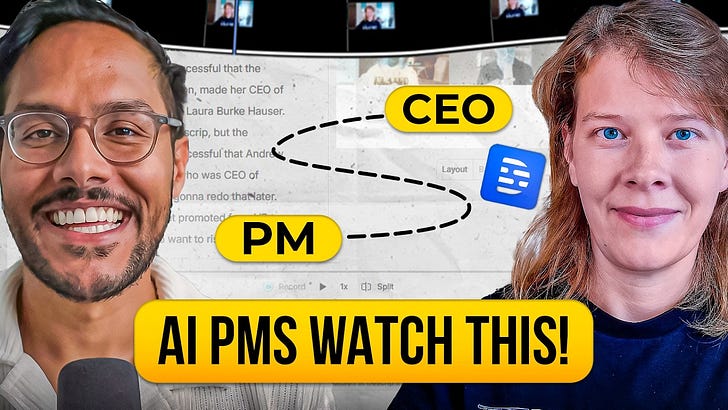
With AI handling much of the coding, the most valuable engineers are no longer just prolific coders. Companies now prioritize platform engineers who can make deep architectural choices and product engineers who can embed with customers to excel at requirements gathering, which becomes the new bottleneck.

AI agents empower individuals to perform tasks outside their core roles. At OpenAI, designers now write significant code, and PMs build functional prototypes. This blurs the lines between engineering, design, and product, unifying them under the umbrella of being "builders."

To effectively apply AI, product managers and designers must develop technical literacy, similar to how an architect understands plumbing. This knowledge of underlying principles, like how LLMs work or what an agent is, is crucial for conceiving innovative and practical solutions beyond superficial applications.