Get your free personalized podcast brief
We scan new podcasts and send you the top 5 insights daily.
Despite powerful models, OpenAI is hiring thousands for roles like 'technical ambassadorship' because enterprises struggle to implement AI. This 'capabilities overhang' shows the biggest challenge isn't model intelligence, but applying it at scale in real-world workflows, which requires significant human support.

Related Insights
Despite proven cost efficiencies from deploying fine-tuned AI models, companies report the primary barrier to adoption is human, not technical. The core challenge is overcoming employee inertia and successfully integrating new tools into existing workflows—a classic change management problem.

The biggest resistance to adopting AI coding tools in large companies isn't security or technical limitations, but the challenge of teaching teams new workflows. Success requires not just providing the tool, but actively training people to change their daily habits to leverage it effectively.

Job listings at top AI labs like OpenAI and Anthropic reveal a strategic pivot. By hiring 'Forward Deployed Engineers,' these firms show the market's biggest challenge is now enterprise implementation, signaling a shift from pure research to hands-on integration services.

The significant gap between AI's theoretical potential and its actual business implementation represents a massive market opportunity. Companies that help others integrate AI and become 'AI native' will win, not necessarily those with the most advanced models.
Enterprises struggle to get value from AI due to a lack of iterative, data-science expertise. The winning model for AI companies isn't just selling APIs, but embedding "forward deployment" teams of engineers and scientists to co-create solutions, closing the gap between prototype and production value.

Despite powerful new models, enterprises struggle to integrate them. OpenAI is hiring hundreds of 'forward-deployed engineers' to help corporations customize models and automate tasks. This highlights that human expertise is still critical for unlocking the business value of advanced AI, creating a new wave of high-skill jobs.

Sam Altman argues there is a massive "capability overhang" where models are far more powerful than current tools allow users to leverage. He believes the biggest gains will come from improving user interfaces and workflows, not just from increasing raw AI intelligence.
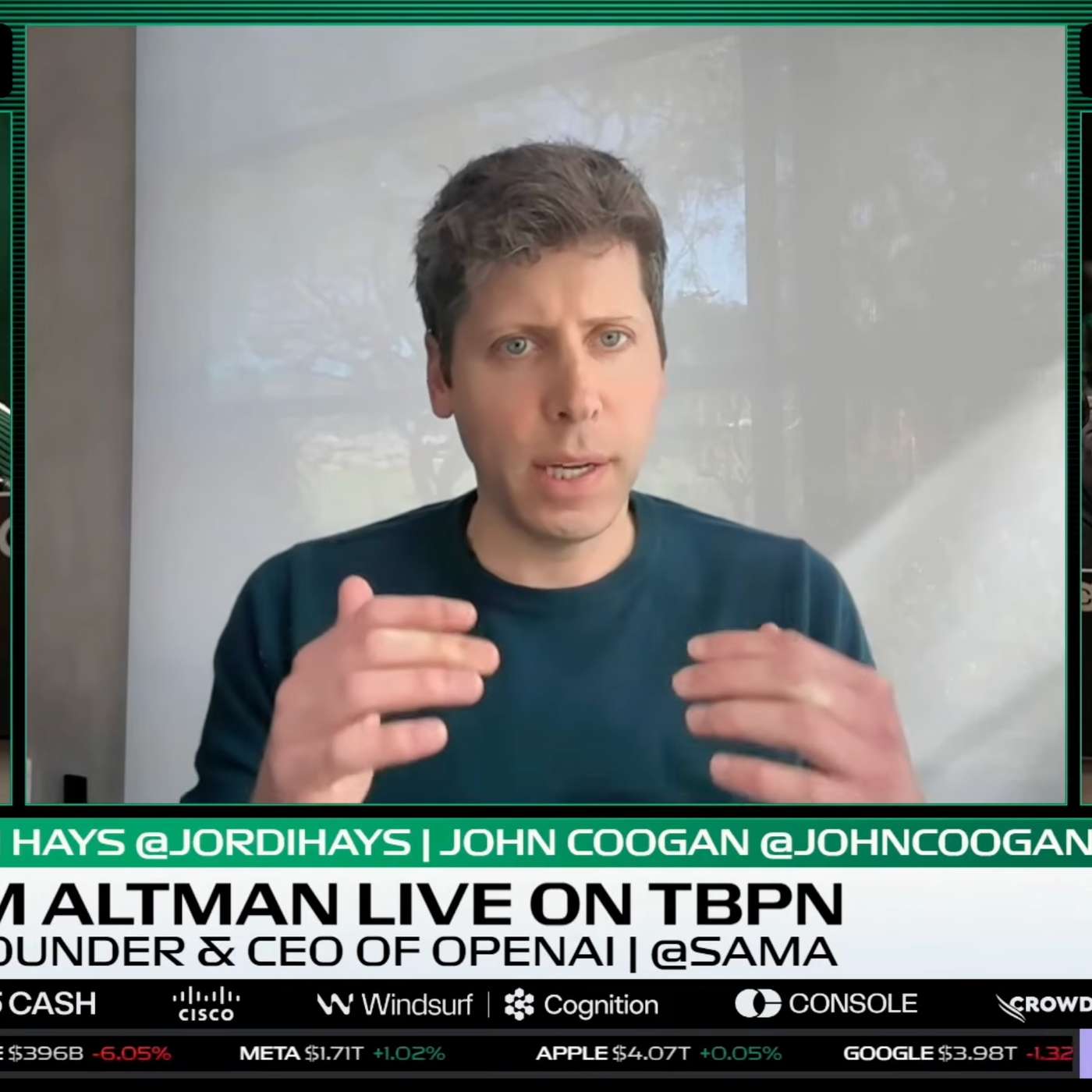
OpenAI is hiring hundreds of "forward deployed engineers" to act as technical consultants. This strategy aims to deeply integrate its AI agents into corporate workflows, creating a powerful services-led moat against rivals by providing custom, hands-on implementation for large clients.
AI's "capability overhang" is massive. Models are already powerful enough for huge productivity gains, but enterprises will take 3-5 years to adopt them widely. The bottleneck is the immense difficulty of integrating AI into complex workflows that span dozens of legacy systems.

OpenAI's CEO believes a significant gap exists between what current AI models can do and how people actually use them. He calls this "overhang," suggesting most users still query powerful models with simple tasks, leaving immense economic value untapped because human workflows adapt slowly.
