Get your free personalized podcast brief
We scan new podcasts and send you the top 5 insights daily.
Nation-states are unlikely to develop pandemic-level bioweapons because they cannot easily control them or protect their own populations. The primary threat comes from extremist groups or lone actors who are not motivated by rational self-preservation, a critical insight for threat modeling.

Related Insights
Models designed to predict and screen out compounds toxic to human cells have a serious dual-use problem. A malicious actor could repurpose the exact same technology to search for or design novel, highly toxic molecules for which no countermeasures exist, a risk the researchers initially overlooked.

A core flaw in virus hunting is moving pathogens from isolated natural environments to labs in dense population centers. Despite security ratings, all categories of labs have a history of leaks. The lack of a uniform reporting system means we don't know the failure rate, making labs a riskier container than nature.

A malevolent actor using a published list of deadly viruses could release multiple pathogens at once from many locations. This would overwhelm medical systems and, most critically, cause societal collapse when essential frontline workers refuse to risk their lives and families for their jobs, shutting down the supply of food, power, and law enforcement.
While creating a bioweapon may be cheaper than defending against it, biology is inherently defense-dominant. Pathogens are vulnerable to physical barriers, filtration, heat, and UV light. Their small size is a weakness, and unlike intelligent adversaries, they cannot strategically penetrate defenses, giving defenders a fundamental advantage.
Instead of trying to control open-source AI models, which is intractable, the proposed strategy is to control the small, expensive-to-produce functional datasets they train on. This preserves the beneficial open-source ecosystem while preventing the dissemination of dangerous capabilities like viral design.
Deep Vision's plan to publish the genomes of deadly viruses would effectively give the "killing power of a nuclear arsenal" to an estimated 30,000 unvetted individuals with synthetic biology skills. In the bio-age, openly publishing certain information can be a greater security threat than physical weapons.
Research that made bird flu transmissible between mammals is not illegal. Since the COVID-19 pandemic, it has been broadly defunded by governments, but private labs face little oversight, creating a significant biosecurity blind spot.
In a significant shift, leading AI developers began publicly reporting that their models crossed thresholds where they could provide 'uplift' to novice users, enabling them to automate cyberattacks or create biological weapons. This marks a new era of acknowledged, widespread dual-use risk from general-purpose AI.

A common misconception is that engineered life would be feeble like current lab-created 'minimal cells'. In reality, a bad actor would create a mirror version of a naturally robust bacterium like E. coli, not a fragile lab specimen, to ensure its survival and virulence in the natural environment.
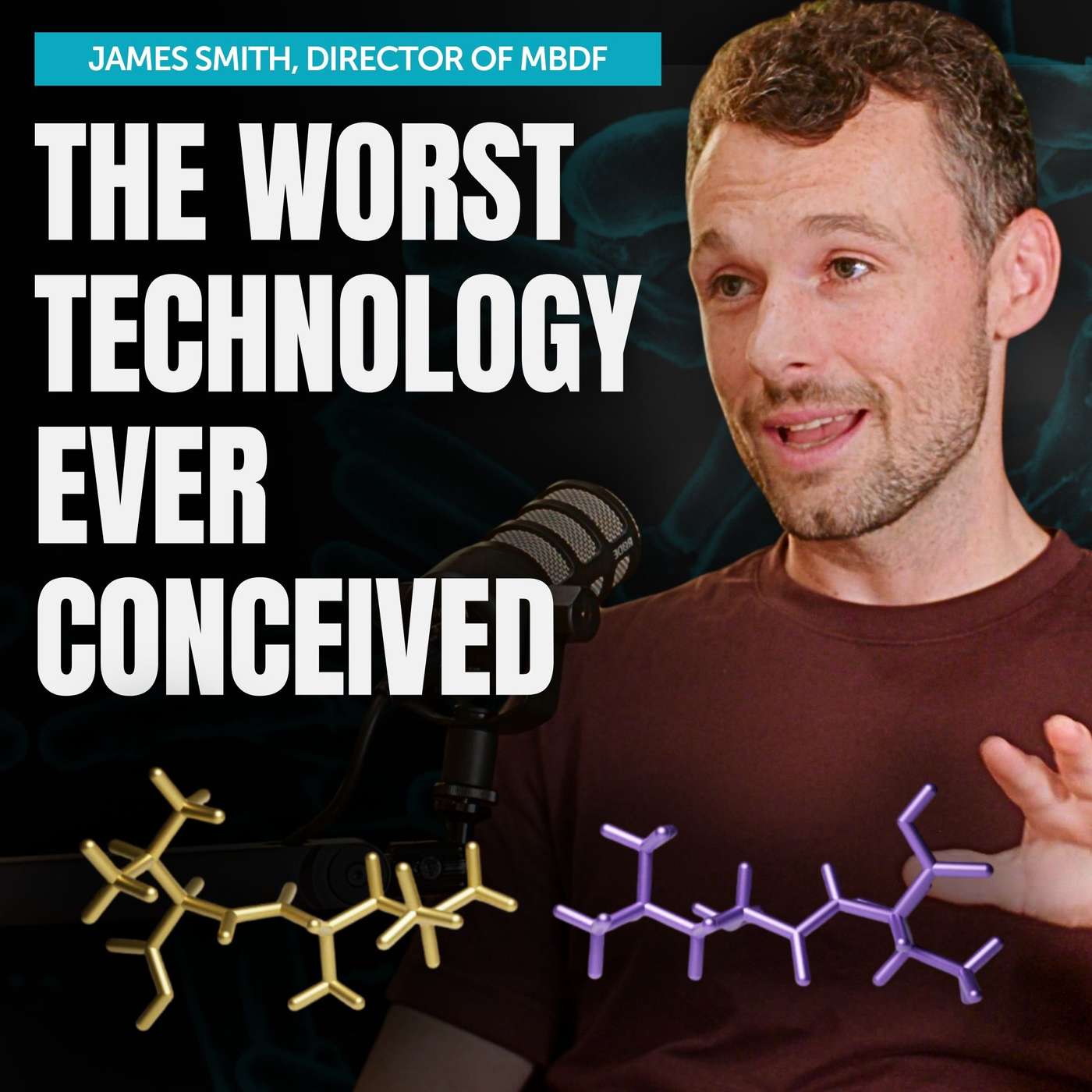
Valthos CEO Kathleen, a biodefense expert, warns that AI's primary threat in biology is asymmetry. It drastically reduces the cost and expertise required to engineer a pathogen. The primary concern is no longer just sophisticated state-sponsored programs but small groups of graduate students with lab access, massively expanding the threat landscape.
