Get your free personalized podcast brief
We scan new podcasts and send you the top 5 insights daily.
A core flaw in virus hunting is moving pathogens from isolated natural environments to labs in dense population centers. Despite security ratings, all categories of labs have a history of leaks. The lack of a uniform reporting system means we don't know the failure rate, making labs a riskier container than nature.

Related Insights
Models designed to predict and screen out compounds toxic to human cells have a serious dual-use problem. A malicious actor could repurpose the exact same technology to search for or design novel, highly toxic molecules for which no countermeasures exist, a risk the researchers initially overlooked.

China's binding regulations mean companies focus safety efforts on the 31 specific risks defined by the government. This compliance-driven approach can leave them less prepared for emergent risks like CBRN or loss of control, as resources are directed toward meeting existing legal requirements rather than proactive, voluntary measures.

The rationale for "virus hunting" is to create advance vaccines. However, you cannot safely test a vaccine for a novel, deadly pathogen on healthy humans. This makes the knowledge unactionable for prevention, while creating immense risk by bringing dangerous pathogens into leaky labs and publicizing their existence.
A malevolent actor using a published list of deadly viruses could release multiple pathogens at once from many locations. This would overwhelm medical systems and, most critically, cause societal collapse when essential frontline workers refuse to risk their lives and families for their jobs, shutting down the supply of food, power, and law enforcement.
While creating a bioweapon may be cheaper than defending against it, biology is inherently defense-dominant. Pathogens are vulnerable to physical barriers, filtration, heat, and UV light. Their small size is a weakness, and unlike intelligent adversaries, they cannot strategically penetrate defenses, giving defenders a fundamental advantage.
The danger of AI creating harmful proteins is not in the digital design but in its physical creation. A protein sequence on a computer is harmless. The critical control point is the gene synthesis process. Therefore, biosecurity efforts should focus on providing advanced screening tools to synthesis providers.

Deep Vision's plan to publish the genomes of deadly viruses would effectively give the "killing power of a nuclear arsenal" to an estimated 30,000 unvetted individuals with synthetic biology skills. In the bio-age, openly publishing certain information can be a greater security threat than physical weapons.
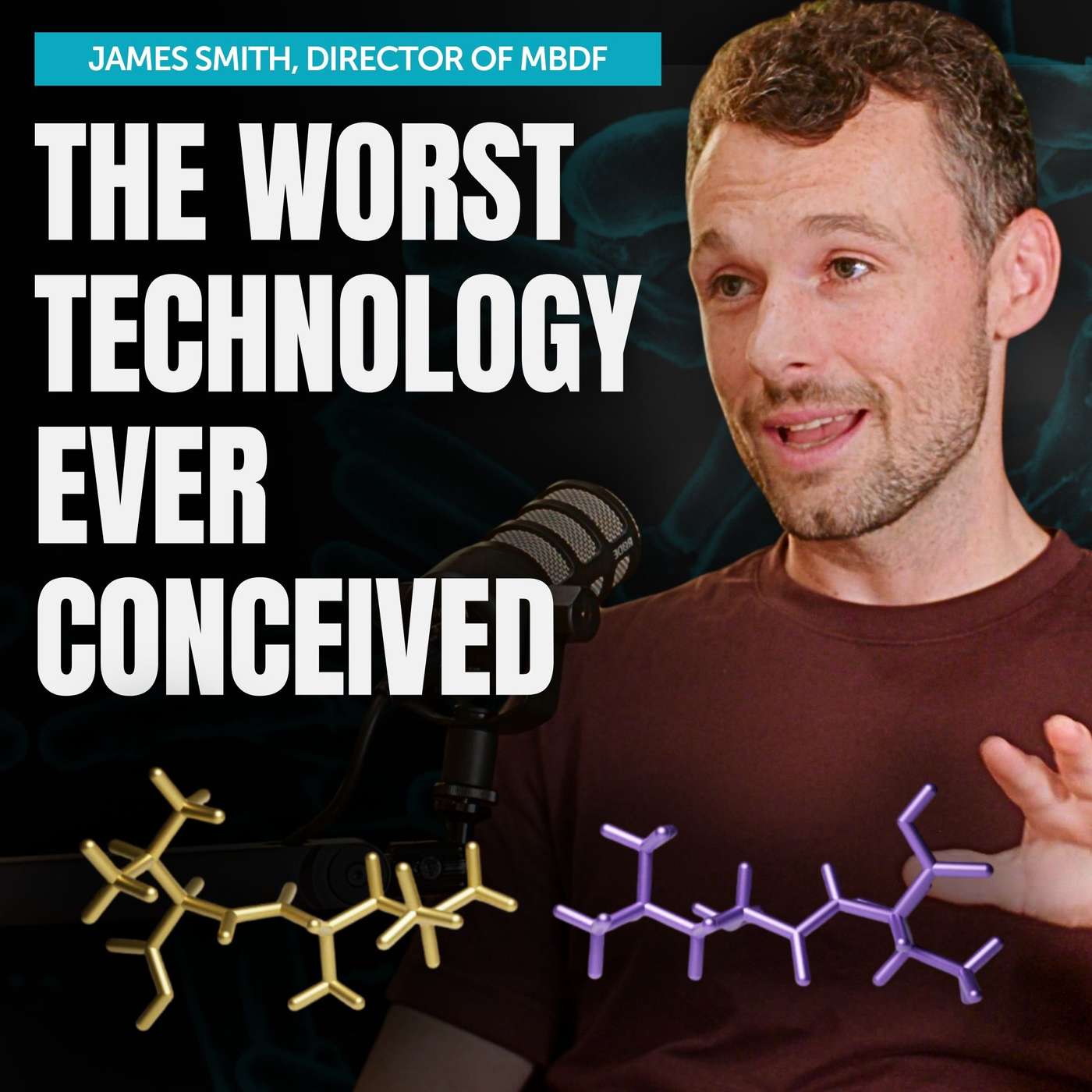
A common misconception is that engineered life would be feeble like current lab-created 'minimal cells'. In reality, a bad actor would create a mirror version of a naturally robust bacterium like E. coli, not a fragile lab specimen, to ensure its survival and virulence in the natural environment.
A credit card leak initially attributed to an AI agent was actually caused by a single exposed video frame during a livestream. This incident underscores that even in sophisticated AI environments, simple human error and a lack of operational security are often the true sources of breaches.

Valthos CEO Kathleen, a biodefense expert, warns that AI's primary threat in biology is asymmetry. It drastically reduces the cost and expertise required to engineer a pathogen. The primary concern is no longer just sophisticated state-sponsored programs but small groups of graduate students with lab access, massively expanding the threat landscape.
