Get your free personalized podcast brief
We scan new podcasts and send you the top 5 insights daily.
Beyond immediate costs, prolonged conflicts drain stockpiles of sophisticated and slow-to-replace military hardware. The US has lost aerial tankers and a rare E-3 AWACS radar plane, of which it has fewer than 20. This rapid consumption of critical assets has significant implications for a nation's ability to fight future wars, a cost often overlooked in strategic planning.

Related Insights
The US faces a severe economic disadvantage in the Middle East conflict. Iran uses $30,000 drones that can disable $160 million tankers, while US countermeasures involve $4 million Patriot missiles. This cost imbalance allows Iran to inflict massive economic damage cheaply, posing a significant strategic threat.

Nations like Iran and Russia deploy vast numbers of cheap drones (around $55,000 each), forcing defenders to use multi-million dollar missiles. This creates a severe cost imbalance, making traditional, high-end air defense economically unsustainable over time.

Modern asymmetric warfare is less about ground skirmishes and more about economic attrition through missile technology. Adversaries use extremely cheap drones and mines to exhaust the multi-million-dollar missile defense systems of better-equipped powers, creating a lopsided cost exchange.

When purchasing a new ship or aircraft, the initial price tag is deceptive. The 'fully burdened cost' includes long-term expenses for crewing, training, support, and maintenance. A one-time budget increase doesn't cover this tail, forcing the military to retire platforms early and resulting in no net growth of the force.

The conflict reveals a critical vulnerability: nations burn through advanced interceptor missiles at a rate that vastly outpaces annual production. Firing two interceptors per incoming missile means that even well-stocked Gulf states could exhaust their pre-war supplies in days, exposing a major bottleneck in the defense supply chain.
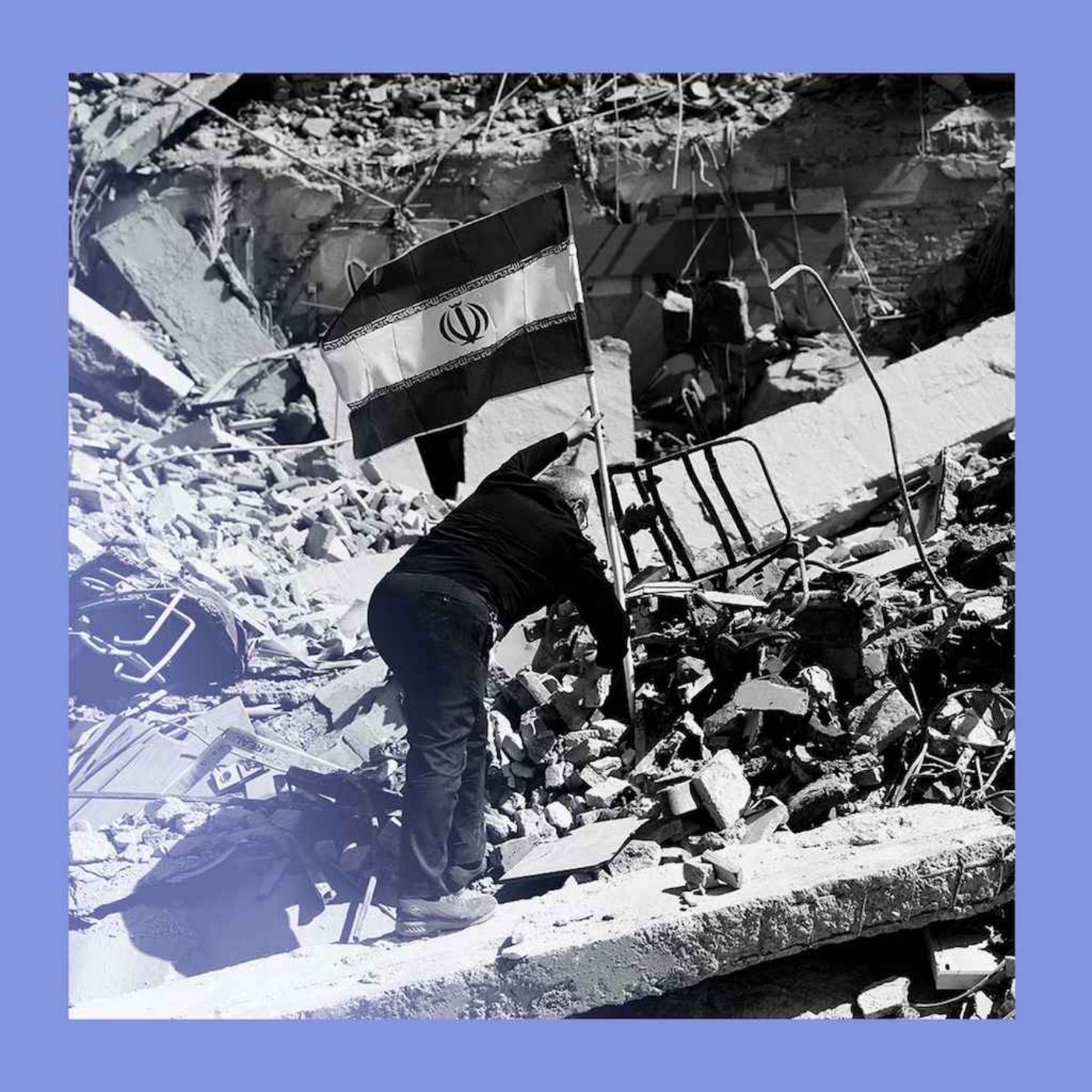
The conflict with Iran highlights a new reality in warfare. Inexpensive, easily produced drones create an asymmetrical threat, as defense systems are vastly more expensive to deploy per incident, making traditional defense economically unsustainable.

The common belief that a large weapons stockpile deters adversaries is flawed. The war in Ukraine demonstrated that the true measure of deterrence is a nation's industrial capacity—the factory's ability to rapidly regenerate and replace assets consumed in conflict.

Simulations of a conflict with China consistently show the US depleting its high-end munitions in about seven days. The industrial base then requires two to three years to replenish these stockpiles, revealing a massive gap between military strategy and production capacity that undermines deterrence.

Expending high-end munitions like JASSM missiles on a secondary adversary like Iran critically depletes stockpiles essential for deterring a primary competitor like China. This creates a significant vulnerability, as the defense industrial base cannot quickly replenish these sophisticated weapons, undermining readiness for a major conflict.

The US military's 30-year strategy, born from the Gulf War, of relying on small numbers of technologically superior weapons is flawed. The war in Ukraine demonstrates that protracted, industrial-scale conflicts are won by mass and production volume, not just technological sophistication.