Get your free personalized podcast brief
We scan new podcasts and send you the top 5 insights daily.
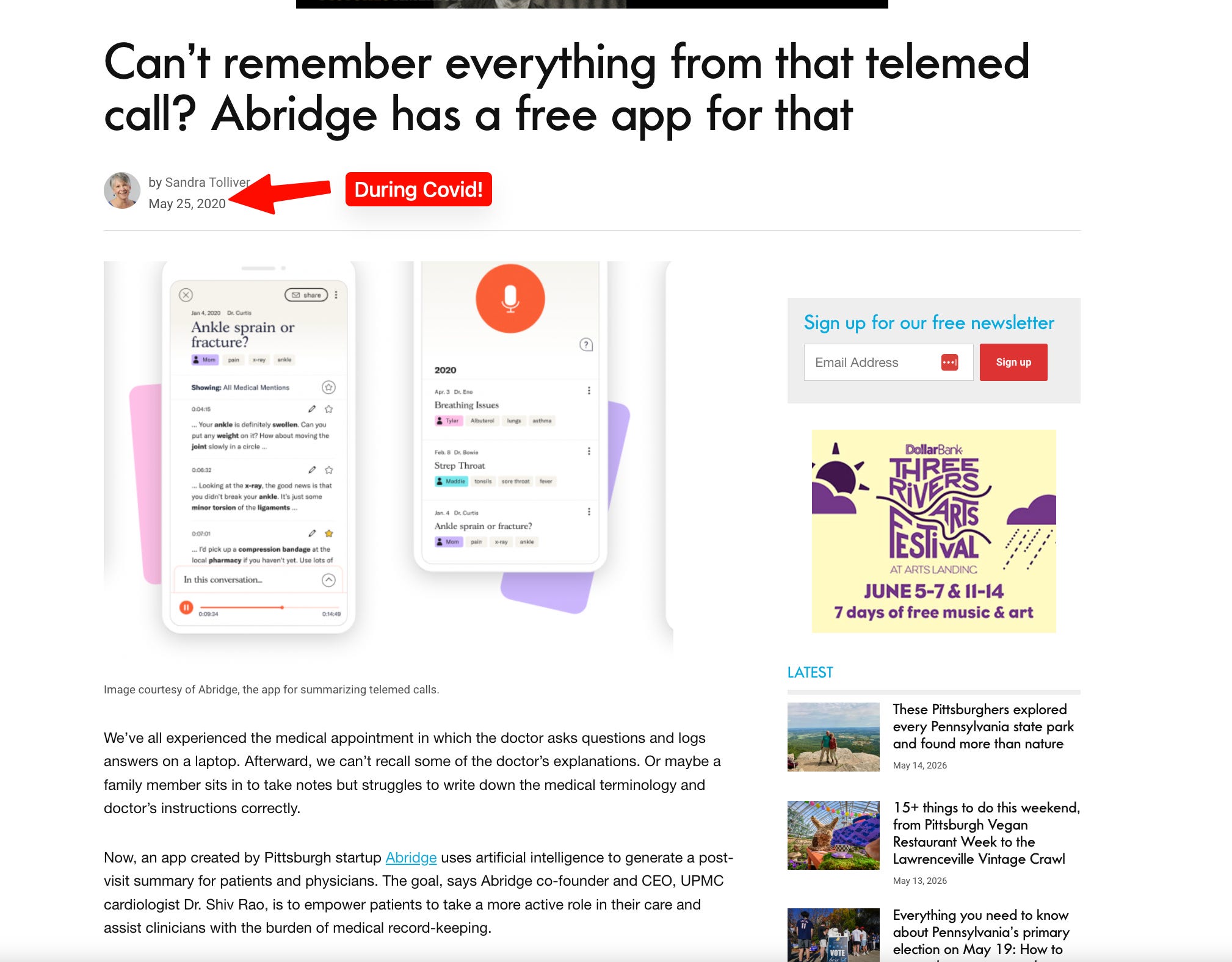
Abridge achieves deep user personalization beyond simple stylistic preferences. It operates at three levels: the individual doctor's phrasing, the specific requirements of a medical specialty (e.g., cardiology), and the unique best-practice guidelines of an entire hospital system, making the tool feel indispensable to all stakeholders.
Related Insights
Abridge strategically structures its product roadmap beyond initial user benefits. The first act saves clinicians time. The second helps health systems save and make money. The ultimate goal, the third act, is to leverage their platform to save patient lives, creating a powerful long-term vision.
To drive adoption of new medical software, move beyond traditional IT support. Identify clinical influencers, elevate them to "super user" status, and empower them to be the first point of contact for their peers. This peer-led model is more effective, builds community, and scales support organically.
The next evolution in personalized medicine will be interoperability between personal and clinical AIs. A patient's AI, rich with daily context, will interface with their doctor's AI, trained on clinical data, to create a shared understanding before the human consultation begins.
Traditional enterprise software is a usability compromise designed for everyone. LLMs move beyond simple personalization (showing relevant data) to full individualization, creating unique interfaces and experiences for each user based on their role and context, finally solving the 'mega menu' problem.

While proprietary data and high-quality models are important, Abridge's true moat lies in its deep integration into the clinical workflow. By solving problems like prior authorization in real-time while the patient is still in the room, it collapses weeks of administrative latency into minutes, creating value that is hard to replicate.
While many AI tools see low adoption (~20%), Ambience wins enterprise deals by demonstrating over 75% of clinicians use its product daily for 80%+ of visits. This high, sticky utilization is a crucial proof point that resonates with health system leaders and proves the tool's indispensability.

Modern physician segmentation in the pharmaceutical industry has moved far beyond potential and product adoption. Leading US companies now use up to 79 parameters—including beliefs, motivators, and barriers—to build complex personas. This enables hyper-personalized engagement strategies tailored to each physician's unique context.

To avoid the "alert fatigue" common in medical software, Abridge's product philosophy is for its AI to be proactive, not reactive. It works seamlessly in the background to prepare clinicians before visits, rather than interrupting them with constant alerts during patient conversations, making the experience helpful but unobtrusive.
Instead of replacing experts, AI can reformat their advice. It can take a doctor's diagnosis and transform it into a digestible, day-by-day plan tailored to a user's specific goals and timeline, making complex medical guidance easier to follow.
To overcome alert fatigue, AI tools must go beyond simple alerts. Success comes from EMR integration, offering 'next best actions,' explainable AI, and, crucially, allowing clinicians to adjust the model's sensitivity to match their personal risk threshold for different patients.