Get your free personalized podcast brief
We scan new podcasts and send you the top 5 insights daily.
Two months before the Boston Massacre, Franklin published a parable about an underestimated lion cub (America) that grows to overpower a bullying mastiff (Britain). This was a chillingly prophetic diplomatic warning, using storytelling to convey a threat and a prediction of future power dynamics.
Related Insights
Franklin leaked letters from Massachusetts's governor hoping to prove to colonists that British policy was driven by bad advice, not malice. The plan backfired when radicals inflamed tensions and the British establishment publicly humiliated Franklin. This personal attack turned him from a loyalist seeking compromise into a committed revolutionary.
The famous kite experiment was more than a scientific breakthrough; it was a powerful public relations event. It established Franklin as the first world-class American intellectual and rebranded the colonies from a backwater for religious zealots into a forward-thinking "laboratory of the future," lending crucial credibility to the revolutionary cause.
Franklin used performative eccentricities, like wearing a frontiersman's fur cap to the French court and taking morning "air baths," as a deliberate branding strategy. This cultivated an image of rustic, American authenticity, positioning him and the new nation as an antidote to the perceived snobbery and artifice of the European old world.
Ken Burns argues that beyond taxes and representation, the American Revolution was propelled by escalating media rhetoric. The more colonial newspapers labeled the crown tyrannical, the more tyrannical it acted, creating an inflammatory feedback loop that pushed both sides toward conflict.

Great civilizations are frequently built on powerful myths or "lies," from the Babylonian god Marduk to the American Declaration's concept of "natural rights." The power of these ideas for social cohesion is independent of their objective truth, which is often not even believed by later generations.

Historians argue the most critical phase of the American Revolution was the decade before 1776. Colonists used economic boycotts and built alternative political and judicial institutions, effectively achieving self-governance before the war, which was simply the British attempt to reclaim control.

Instead of dogmatic certainty, Franklin championed the imperfect US Constitution with a rare spirit of compromise. His memorable endorsement, "I consent, sir, to this constitution because I expect no better and because I am not sure that it is not the best," serves as a model for pragmatic leadership.
A month before his death, the former slave-owner Franklin published a satire arguing for the enslavement of Christians by Barbary pirates. He skillfully deployed the same arguments used by pro-slavery Americans to expose their hypocrisy. This final act demonstrates his remarkable capacity for personal evolution and his mastery of persuasive writing for a moral cause.
Franklin intentionally crafted his life story, particularly in his autobiography, to become the prototype of the American 'self-made man.' He contrasted his destitute arrival in a new city with his eventual immense success, creating an enduring national narrative of upward mobility through industry and frugality.
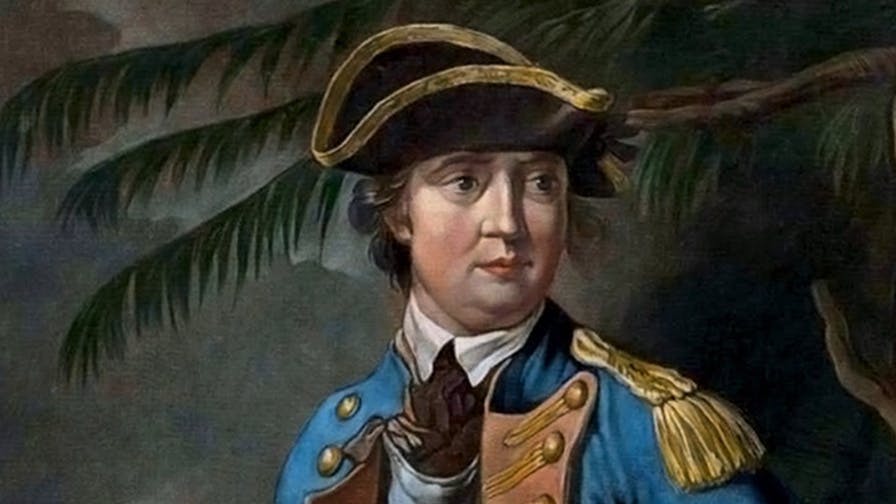
The American Revolution was itself an act of treason against Britain. Benedict Arnold's defection created a singular, despised traitor, allowing the American people to unite against an internal enemy and solidifying their identity beyond simply being rebels against the crown.