Get your free personalized podcast brief
We scan new podcasts and send you the top 5 insights daily.
Secretary Hegseth and Deputy Feinberg orchestrated the firing of Navy Secretary Phelan via a savvy bureaucratic maneuver. Instead of citing their actual policy disagreements, they told President Trump that Phelan wasn't moving fast enough on his favored "battleship" idea—a project they themselves opposed—using the president's own priorities to eliminate a rival.

Related Insights
Presidential interest in a "bigger" ship, not naval strategy, spawned the concept for a massive, $14 billion battleship. This political project forces the Navy into a budgetary dilemma, potentially sacrificing next-generation aircraft for a single, expensive surface combatant that may not meet its actual strategic needs.

The White House and Pentagon are deliberately shifting blame for a controversial military strike onto a subordinate admiral. This tactic insulates political leaders like the Secretary of Defense, whose rocky tenure and past blunders created the context for such controversial actions, from accountability.
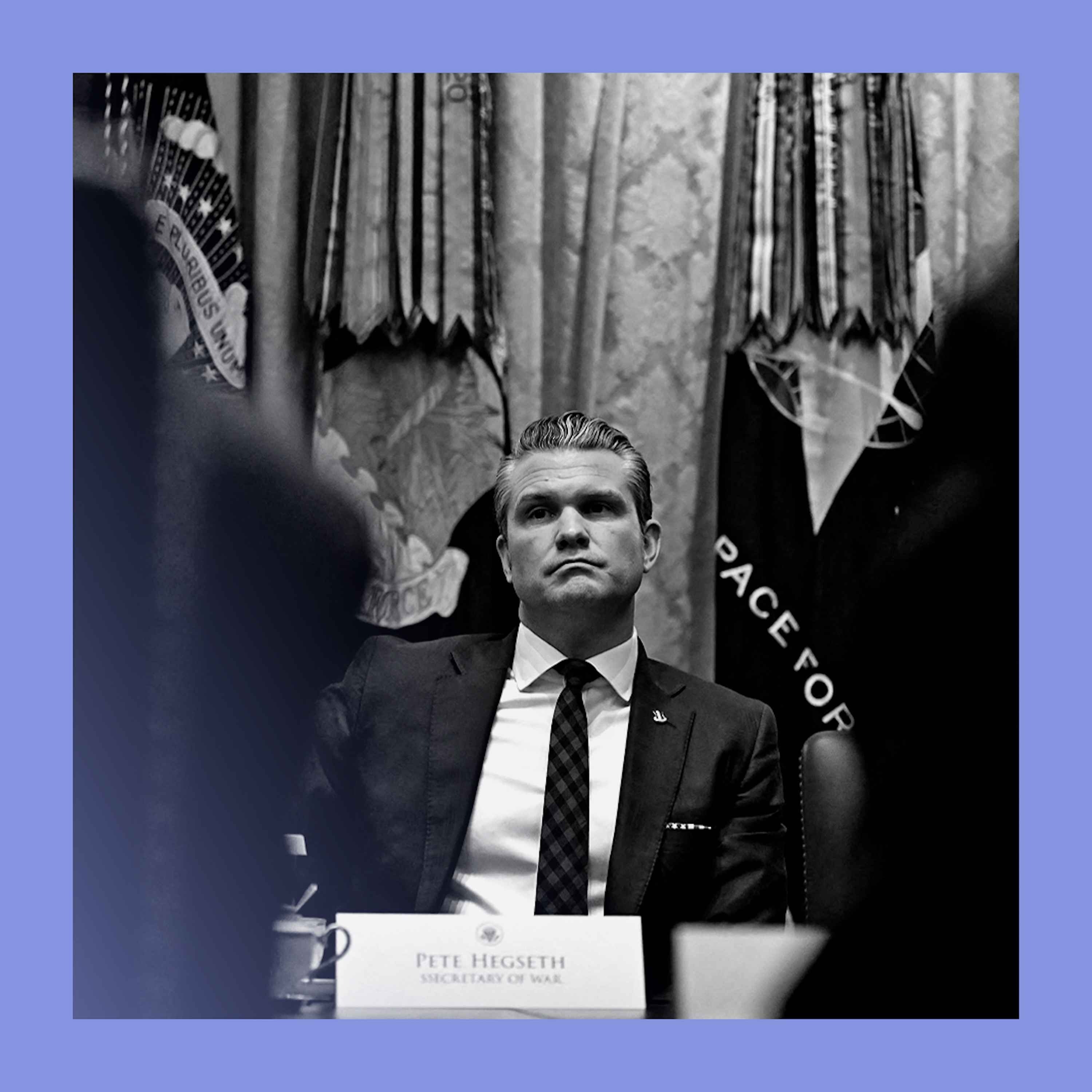
Trump is more likely to retain officials who project a strident, handsome, and brazen image, like Pete Hegseth. He favors this aesthetic of strength over thoughtfulness or actual competence, which is why someone like Kash Patel, who is seen as incompetent without the same bravado, is more vulnerable.

Administrations frequently appoint figures known for a specific ideology to implement the exact opposite policy. This pattern suggests institutional pressures override personal beliefs. For example, Fed chair candidate Kevin Warsh, despite his hawkish reputation, will likely cut rates to align with administration goals.

Secretary of Defense Pete Hegseth is deliberately reshaping the military's officer corps to fit his partisan image. This involves removing qualified officers from promotion lists based on their race and gender, treating their very existence as a partisan act.
Secretary Hegseth's controversial military actions are rooted in a long-held belief, articulated before he took office, that lawyers have tied America's hands with "red tape." This "stab-in-the-back" myth, blaming legal constraints for past failures, now drives his radical approach to the laws of war.
Unlike in other administrations where shakeups signal instability, for Trump, firing officials aligns perfectly with his core brand as the "Apprentice" boss who gets rid of incompetence. This is a unique political asset that his voters expect and appreciate.
The Pentagon created a "submarine czar" role reporting directly to the Deputy Defense Secretary. This structure establishes a single point of accountability, enabling faster decisions, risk-taking, and the ability to cut through traditional bureaucracy that stalls critical defense programs.

Unlike the ousted Navy Secretary Phelan, an outsider with few allies, Army Secretary Will Driscoll has secured his position by building a strong constituency. His alliance with the Vice President and support from his service and Capitol Hill make him politically protected and difficult to fire without creating a major party schism.
Trump allows officials he plans to fire, like Kristi Noem, to face public scrutiny and humiliation in hearings before their dismissal. This tactic serves his political purposes, demonstrating a lack of loyalty and respect for his team, using them as an "anger pillow."