Get your free personalized podcast brief
We scan new podcasts and send you the top 5 insights daily.
Despite targeting the same protein (Trope-2), different ADCs like sacituzumab govitecan (SG) and sacituzumab tirumotecan (sac-TMT) exhibit unique toxicity profiles due to their different linker-payloads. Clinicians must be prepared for diarrhea with SG versus oral mucositis with sac-TMT, requiring distinct mitigation strategies for drugs that otherwise seem very similar.

Related Insights
When combining sacituzumab govitecan (SASE) and pembrolizumab (IO), it's crucial to differentiate the cause of diarrhea. SASE-induced diarrhea is similar to standard chemotherapy, while IO-induced diarrhea often presents with bloody stools and severe abdominal cramping.
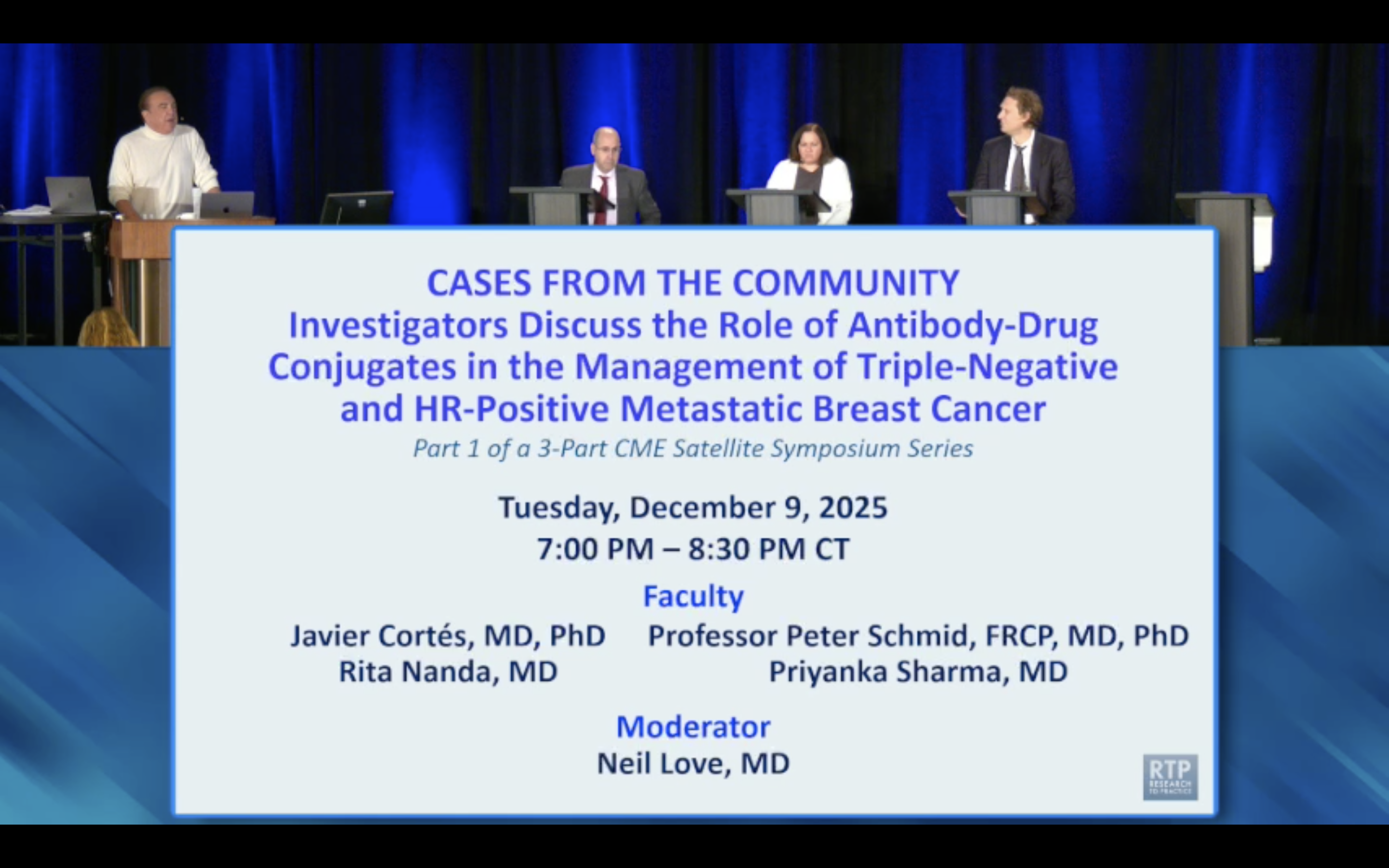
Different TROP2-targeted ADCs using the same class of payload (topo-1 inhibitor) display distinct primary toxicities, such as diarrhea versus stomatitis. This highlights that subtle differences in drug-to-antibody ratio and linker technology create unique pharmacological profiles, making the drugs clinically distinct despite their apparent similarities.

The TROPION-PanTumor01 study showed that patients who progressed on the TROP2-ADC sacituzumab govitecan still achieved responses to a second TROP2-ADC, Dato-DXD. This suggests that targeting the same antigen with a different payload can overcome initial resistance, informing future treatment sequencing.
The SURE-01 trial experienced two early deaths, leading to mandatory dose reductions and growth factor support. While this made the ADC sacituzumab govitecan more manageable, it highlights its narrow therapeutic window and the critical need for proactive toxicity management protocols from the outset.

Though ADCs like Sacituzumab Govitekan cause notable side effects like diarrhea and neutropenia, patient-reported outcome data shows they provide a meaningful and sustained improvement in quality of life compared to standard chemotherapy. This was observed even with longer treatment durations and lower discontinuation rates.
The failure of the TROPiCS-04 trial for sacituzumab govitecan may not indicate the TROP2 ADC class is ineffective. Experts suggest problems with dosing and toxicity management (e.g., neutropenia) during the trial could be the real culprit, arguing that the drug class still holds promise.

Despite both being Trop-2 targeted antibody-drug conjugates, Sacituzumab Govitecan and Datopotomab duroxotein have distinct side effects due to different linkers and payloads. Sacituzumab causes neutropenia and diarrhea, while Datopotomab is linked to stomatitis and ocular issues, requiring unique management strategies.

A key principle for clinicians is that an antibody-drug conjugate's adverse events are primarily dictated by its linker-payload (e.g., deruxtecan, vedotin), not its specific antibody target. This allows for anticipating toxicities like neuropathy or GI issues based on the payload class, creating a predictable framework for management across different ADCs.
The differing efficacy and toxicity profiles of TROP2 ADCs like sacituzumab govitecan and Dato-DXD suggest that the drug's linker and payload metabolism are crucial determinants of clinical outcome. This indicates that focusing solely on the target antigen is an oversimplification of ADC design and performance.
Despite being advanced targeted therapies, TROP2-directed ADCs present complex safety profiles. Oncologists must manage classic chemotherapy side effects like nausea and cytopenias alongside unique, serious toxicities including stomatitis, ocular issues, and potentially fatal interstitial lung disease, requiring specialized patient monitoring and counseling.