Get your free personalized podcast brief
We scan new podcasts and send you the top 5 insights daily.
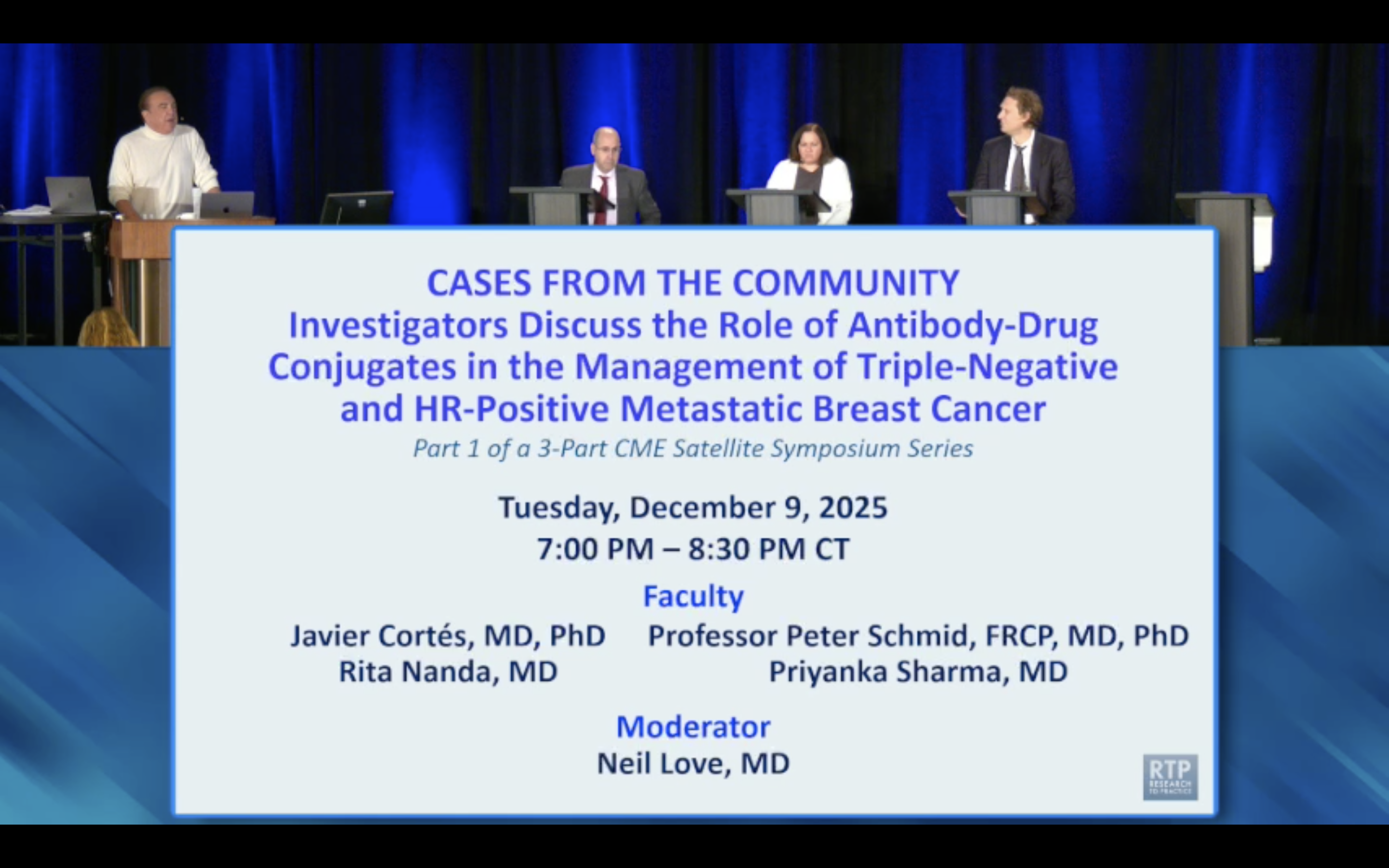
When combining sacituzumab govitecan (SASE) and pembrolizumab (IO), it's crucial to differentiate the cause of diarrhea. SASE-induced diarrhea is similar to standard chemotherapy, while IO-induced diarrhea often presents with bloody stools and severe abdominal cramping.
Related Insights
Real-world data suggests that using one antibody-drug conjugate (ADC) immediately after another is often ineffective. A potential strategy to overcome this resistance is to administer a different class of chemotherapy before starting the second ADC.
In trials like ASCENT-4, where over 80% of the control arm received sacituzumab govitecan upon progression, the true overall survival (OS) benefit is obscured. This makes progression-free survival (PFS) a more reliable endpoint for evaluating the drug's first-line efficacy.
While the feared side effect of severe lung inflammation (pneumonitis) did not increase, other immune-mediated adverse events did. This led to higher rates of treatment discontinuation in the experimental arm, potentially negating any benefits of the concurrent approach and contributing to the trial's failure.

A critical distinction exists between a clinical adverse event (AE) and its impact on a patient's quality of life (QOL). For example, a drop in platelet count is a reportable AE, but the patient may be asymptomatic and feel fine. This highlights the need to look beyond toxicity tables to understand the true patient experience.

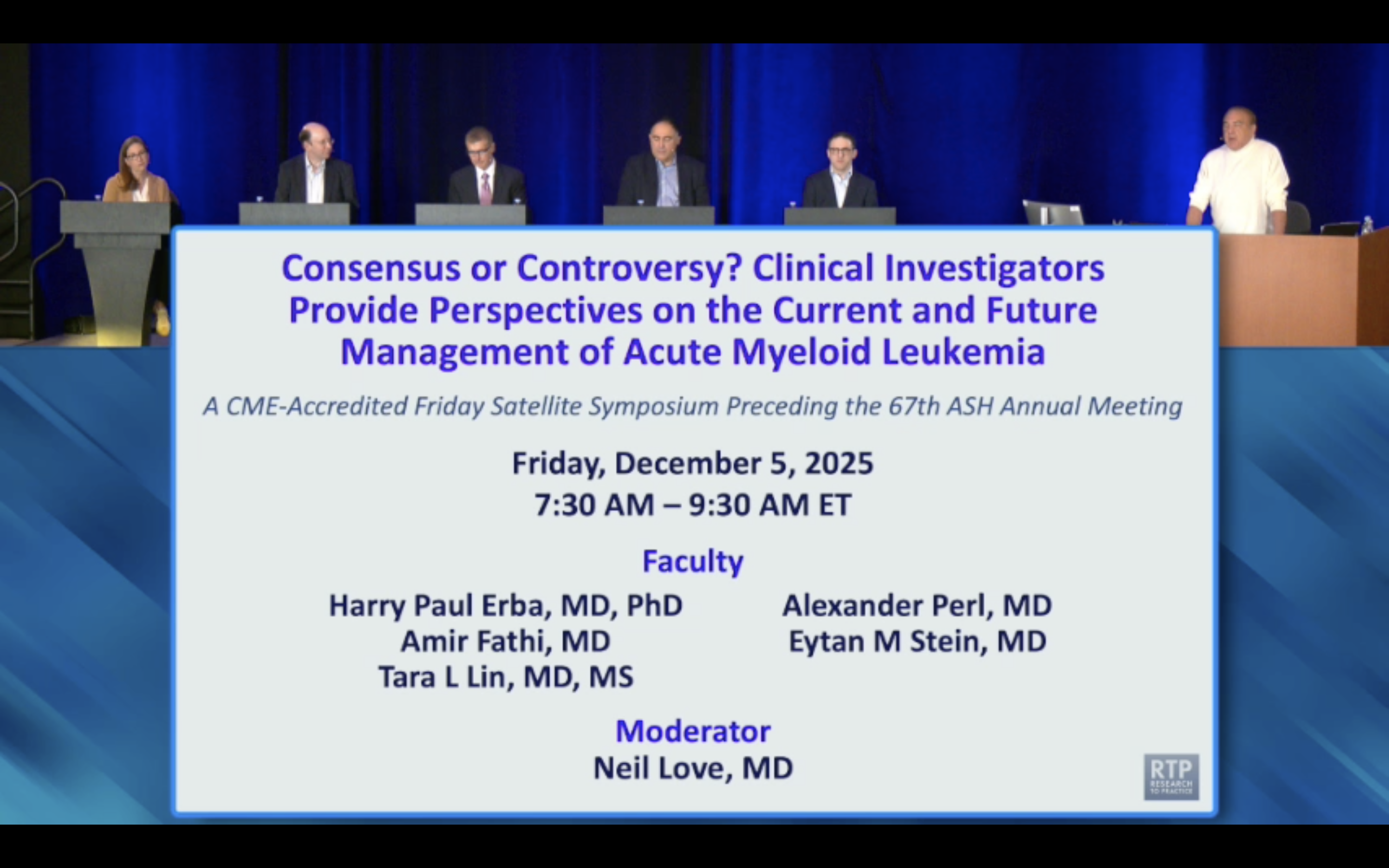
Initial studies combining menin inhibitors with venetoclax/azacitidine showed high remission rates but also high mortality. Using each agent at its full, 28-day dose caused severe, fatal myelosuppression, forcing protocol amendments to shorten drug exposure to manage toxicity.
A healthy gut is crucial for a strong immune response to cancer. In studies on melanoma patients, administering a fecal transplant from a donor who responded well to immunotherapy literally doubled the number of recipients who successfully beat their cancer, showing a direct gut-cancer treatment link.

While Tumor Lysis Syndrome with venetoclax in newly diagnosed AML is rare, clinicians should be aware of a different, insidious complication: a potentially severe Cytokine Release Syndrome (CRS)-like reaction, particularly in patients with monocytic leukemia.
The failure of the TROPiCS-04 trial for sacituzumab govitecan may not indicate the TROP2 ADC class is ineffective. Experts suggest problems with dosing and toxicity management (e.g., neutropenia) during the trial could be the real culprit, arguing that the drug class still holds promise.
The differing efficacy and toxicity profiles of TROP2 ADCs like sacituzumab govitecan and Dato-DXD suggest that the drug's linker and payload metabolism are crucial determinants of clinical outcome. This indicates that focusing solely on the target antigen is an oversimplification of ADC design and performance.
Clinical trial data shows that despite specific toxicities, antibody-drug conjugates (ADCs) can be better tolerated overall than standard chemotherapy. For example, trials for both sacituzumab govitecan and dato-DXd reported fewer patients discontinuing treatment in the ADC arm compared to the chemotherapy arm.