Get your free personalized podcast brief
We scan new podcasts and send you the top 5 insights daily.
Instead of replacing human assistants with AI, a more powerful strategy is to equip them with advanced AI agents (like Grok or Muse). This allows cost-effective global talent to handle complex tasks and act as the "human-in-the-loop" for AI.

Related Insights
Don't just hire offshore talent; train them on AI. A skilled professional in another country can compete with the output of a domestic employee earning $150k+ when empowered with AI tools and workflows. This combination is a huge force multiplier and represents the "next big break" for scaling companies efficiently.

Frame internal AI initiatives not as a way to replace employees, but to automate their chores. This frees them to move 'up the stack' to perform higher-value functions like client relations, creative strategy, and founder meetings, ultimately increasing overall output.
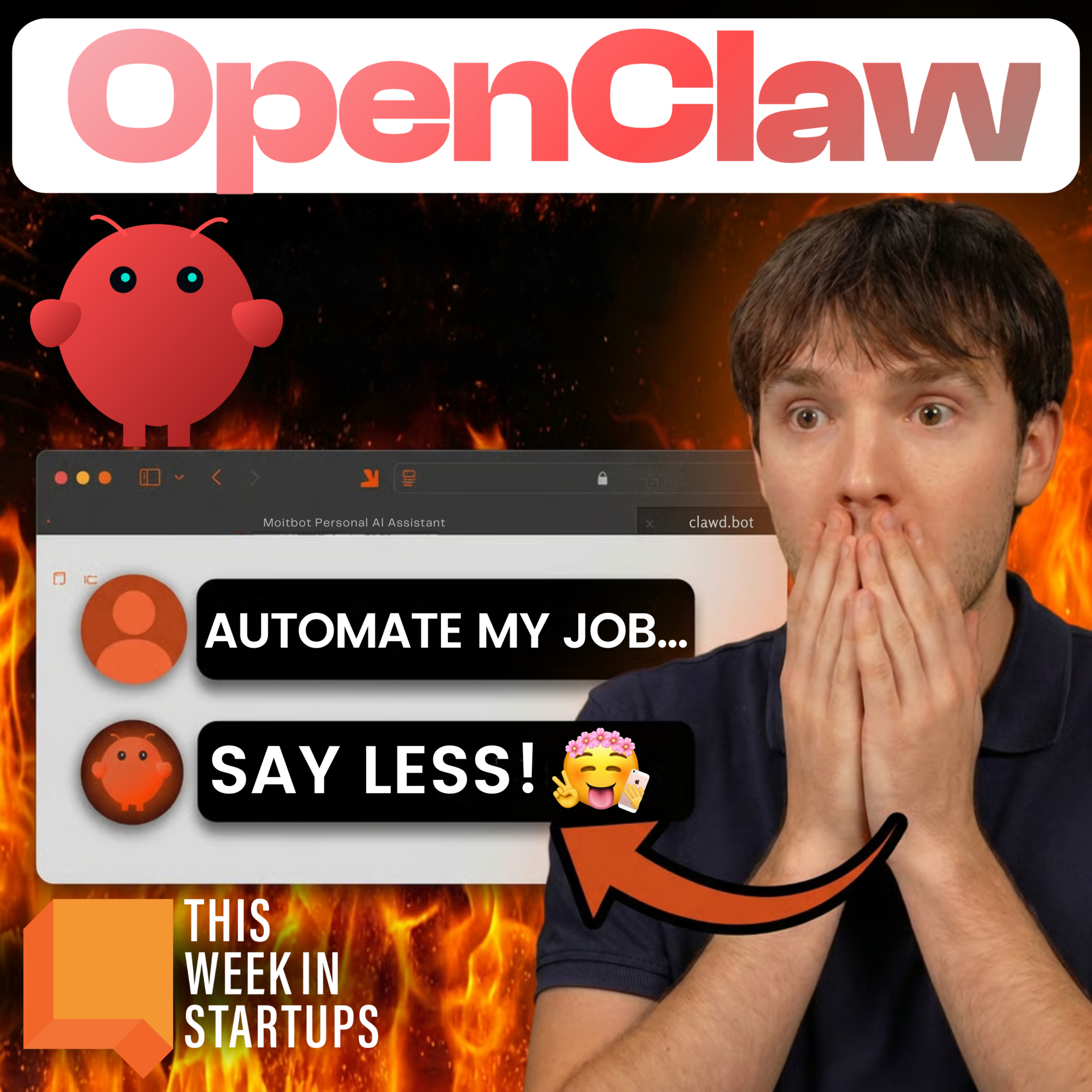
The prevailing mental model for AI assistants is flawed. Instead of treating an agent as an extension of the user with access to their keys and passwords, the breakthrough model is to treat it as a separate employee with its own computer and browser, capable of being assigned high-level tasks.

The most dramatic productivity gains come not from a single AI assistant, but from a human operator orchestrating multiple specialized agents concurrently. This model involves setting up 5-15 agents with specific roles and controlled tool access to perform complex tasks in parallel.
The strategic narrative for AI integration is shifting from automation (replacement) to augmentation (collaboration). Augmentation positions AI as an assistant that enhances human skills, enabling teams to achieve outcomes that neither humans nor AI could accomplish independently. This fosters a more inclusive and productive environment.

Instead of replacing junior hires, AI creates a new opportunity: empower high-agency junior talent with powerful AI tools. This strategy creates a force-multiplier effect, allowing a small, specialized team to achieve outsized results by giving them "nuclear power" to tackle complex problems.

The next leap in productivity isn't just using an AI assistant for synchronous tasks. It's becoming an "IC manager of agents," overseeing a team of 20-30 AI agents working concurrently on long-running, asynchronous tasks, creating a massive leverage factor.

Like an F1 team principal, workers can now manage a team of specialized AI agents. This shifts the human role away from performing discrete tasks towards higher-level strategy, outcome-based thinking, and applying unique domain knowledge, making the human more valuable.
Prioritize using AI to support human agents internally. A co-pilot model equips agents with instant, accurate information, enabling them to resolve complex issues faster and provide a more natural, less-scripted customer experience.

The optimal productivity workflow combines AI and human assistants. Use AI for the initial 80% of a task, such as research and data aggregation. Then, hand off the 'last mile' of execution—like authenticating logins or making final bookings—to a human who can navigate complex interfaces and finalize the process.
