Get your free personalized podcast brief
We scan new podcasts and send you the top 5 insights daily.
The optimal productivity workflow combines AI and human assistants. Use AI for the initial 80% of a task, such as research and data aggregation. Then, hand off the 'last mile' of execution—like authenticating logins or making final bookings—to a human who can navigate complex interfaces and finalize the process.

Related Insights
Contrary to the belief that humans should always be 'in the loop,' strategic disengagement is key. By handing off well-defined 'middle' tasks entirely to AI, humans can conserve cognitive energy for high-leverage activities like initial problem-framing and final quality assurance, where their input is most valuable.

AI excels at tasks like account scoring and initial insight gathering, providing a massive head start. However, the final strategic layer—interpreting the data and crafting the value proposition—requires human expertise. This "human first, AI fast" approach maximizes efficiency without sacrificing quality.

The key to creating effective and reliable AI workflows is distinguishing between tasks AI excels at (mechanical, repetitive actions) and those it struggles with (judgment, nuanced decisions). Focus on automating the mechanical parts first to build a valuable and trustworthy product.

Optimal AI workflow involves humans acting as the "bread" on either side of the AI's work. A human first sets the frame and defines "good," the AI then executes the core task (drafting, coding), and finally, a human judges the output and decides the next steps. This structure ensures quality and strategic direction.

AI is best for the rote 'middle' of a task (execution), while humans excel at the beginning (ideation, problem framing) and the end (polishing, adding taste, and final validation). This model, introduced by Quora's GM Kieran, maximizes the unique strengths of both human and machine intelligence, ensuring final outputs are both functional and refined.
Implement AI effectively by allocating 10% of your time to human-led strategy (ideation), delegating 80% to AI for repetitive execution (research, list building), and reserving the final 10% for human review and integration. This framework ensures human taste and vision remain central to the process.

Even when AI automates complex workflows, a human is still required to provide the initial prompt and direction. The nature of work shifts from manual execution to high-leverage direction, but the human role remains critical.

For complex, high-stakes tasks like booking executive guests, avoid full automation initially. Instead, implement a 'human in the loop' workflow where the AI handles research and suggestions, but requires human confirmation before executing key actions, building trust over time.
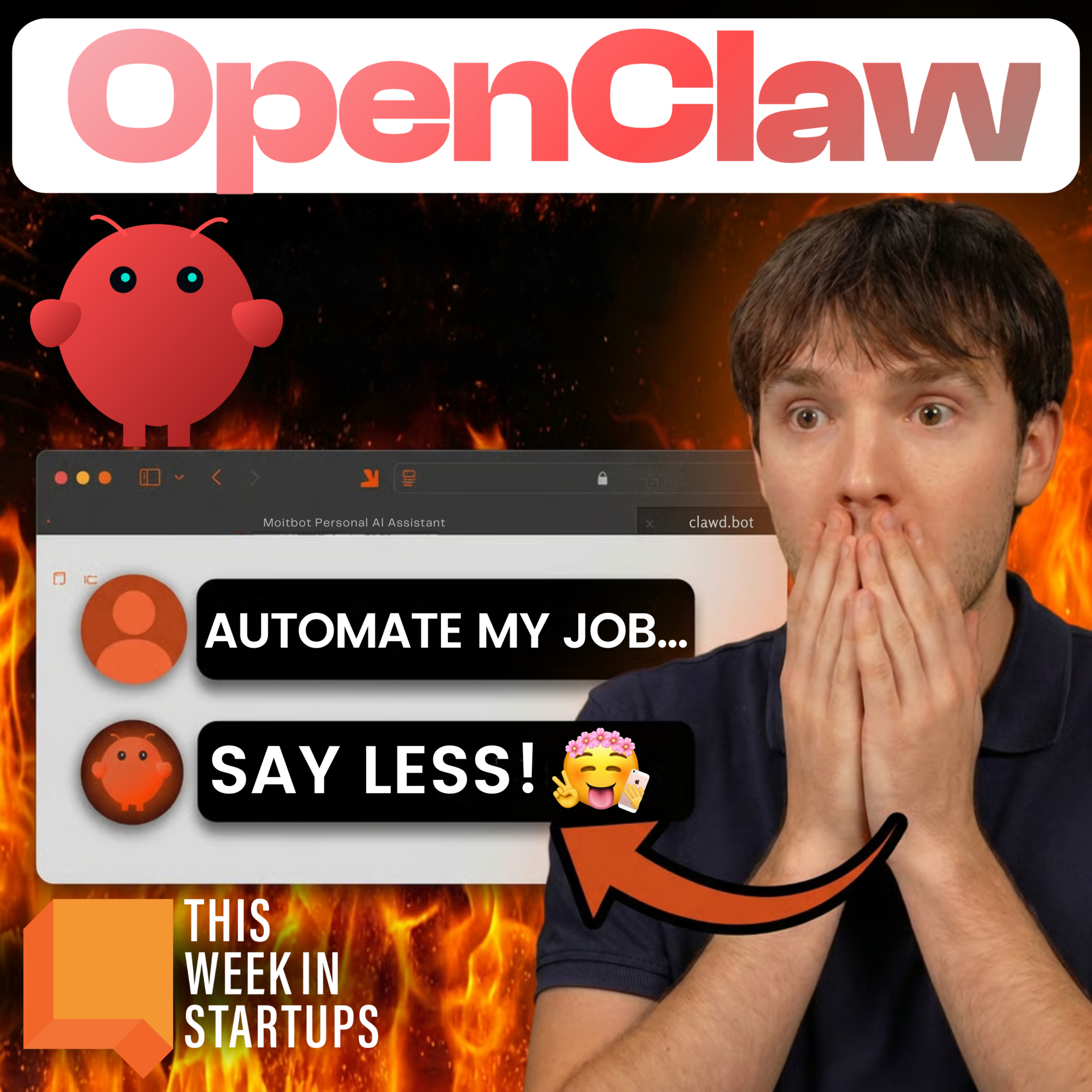
The most powerful current use case for enterprise AI involves the system acting as an intelligent assistant. It synthesizes complex information and suggests actions, but a human remains in the loop to validate the final plan and carry out the action, combining AI speed with human judgment.

AI excels at intermediate process steps but requires human guidance at the beginning (setting goals) and validation at the end. This 'middle-to-middle' function makes AI a powerful tool for augmenting human productivity, not a wholesale replacement for end-to-end human-led work.