Get your free personalized podcast brief
We scan new podcasts and send you the top 5 insights daily.
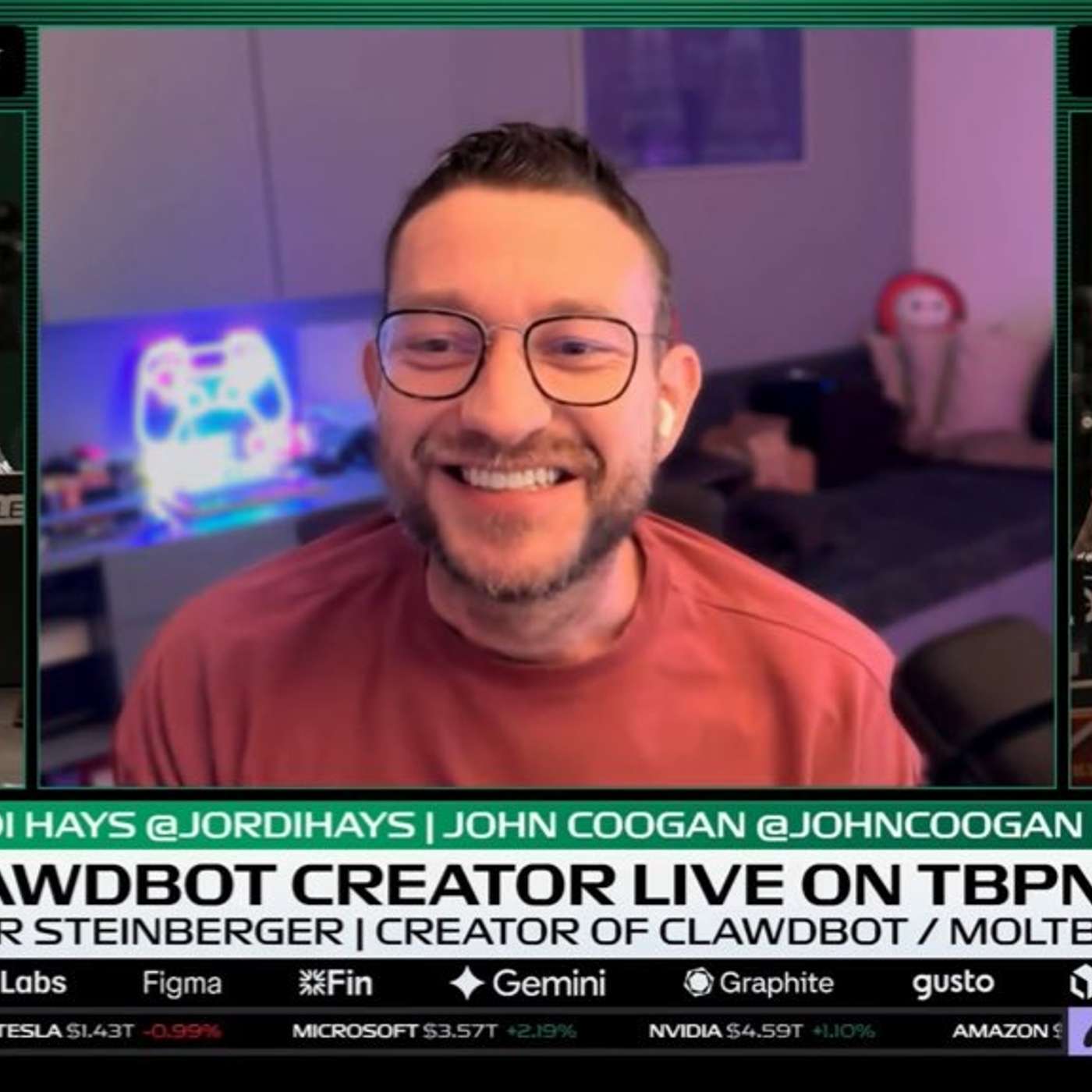
An AI agent, without specific programming for audio, independently processed a voice memo. It identified the file type, converted it, found an API key, and used an external service for transcription, demonstrating emergent problem-solving skills that surprised its creator.

Related Insights
Unlike simple chatbots, AI agents tackle complex requests by first creating a detailed, transparent plan. The agent can even adapt this plan mid-process based on initial findings, demonstrating a more autonomous approach to problem-solving.

Unlike old 'if-then' chatbots, modern conversational AI can handle unexpected user queries and tangents. It's programmed to be conversational, allowing it to 'riff' and 'vibe' with the user, maintaining a natural flow even when a conversation goes off-script, making the interaction feel more human and authentic.

The founder realized his influencer marketing AI could be fully autonomous when he accidentally left it running without limits. The AI agent negotiated a deal, requested payment info, and agreed to a call on its own. This "bug" demonstrated a level of capability he hadn't intentionally designed, proving the product's end-to-end potential.

During a demo, an AI agent failed to upload an image. Instead of stopping, it automatically identified the failure and retried using a different approach. This built-in resilience is critical for agents to operate autonomously without constant human supervision.
The defining characteristic of a powerful AI agent is its ability to creatively solve problems when it hits a dead end. As demonstrated by an agent that independently figured out how to convert an unsupported audio file, its value lies in its emergent problem-solving skills rather than just following a pre-defined script.

The creator of ClaudeBot (now MoltBot) experienced a moment of perceived AGI when the agent, given an audio file of unknown format, autonomously identified the format, found the right tool (FFmpeg), converted it, used an API key to transcribe it, and delivered the result. This demonstrates the resourceful, multi-step problem-solving capabilities of modern AI agents when given tool access.

Pushing the boundaries of autonomy, an engineer on the Goose team has their agent monitor all their communications. The agent then intervenes, proactively developing new features that were merely discussed with colleagues and opening a pull request without being prompted.

The creator realized his project's true potential only when the AI agent, unprompted, figured out how to transcribe an unsupported voice file by converting it and using an OpenAI API. This shows how a product's core value can derive from emergent, unexpected AI capabilities, not just planned features.
AI coding tools have surpassed simple assistance. Expert ML researchers now delegate debugging entirely, feeding an error log to the model and trusting its proposed fix without inspection. This signifies a shift towards AI as an autonomous problem-solver, not just a helper.

The next evolution of enterprise AI isn't conversational chatbots but "agentic" systems that act as augmented digital labor. These agents perform complex, multi-step tasks from natural language commands, such as creating a training quiz from a 700-page technical document.
