Get your free personalized podcast brief
We scan new podcasts and send you the top 5 insights daily.
To become an AI-native business, Atlassian realized its challenges were a mix of talent (hiring, training) and systems (infrastructure, security). It combined these functions under one leader, treating AI adoption as a single, cohesive problem to solve, rather than a siloed one.

Related Insights
Once a company achieves baseline AI fluency, the biggest hurdles become people-related: rewriting job descriptions, reskilling teams, and managing organizational change. Zapier appointed its Chief People Officer to lead AI transformation because these human-centric challenges became more critical than the initial technical adoption.

Beyond just using AI tools, truly "AI-native" companies are built differently. They feature distinct organizational designs, new talent profiles, and leadership visions that fundamentally rethink problem-solving. This structural difference separates them from legacy companies merely adding AI features.

Effective AI adoption requires a three-part structure. 'Leadership' sets the vision and incentives. The 'Crowd' (all employees) experiments with AI tools in their own workflows. The 'Lab' (a dedicated internal team, not just IT) refines and scales the best ideas that emerge from the crowd.

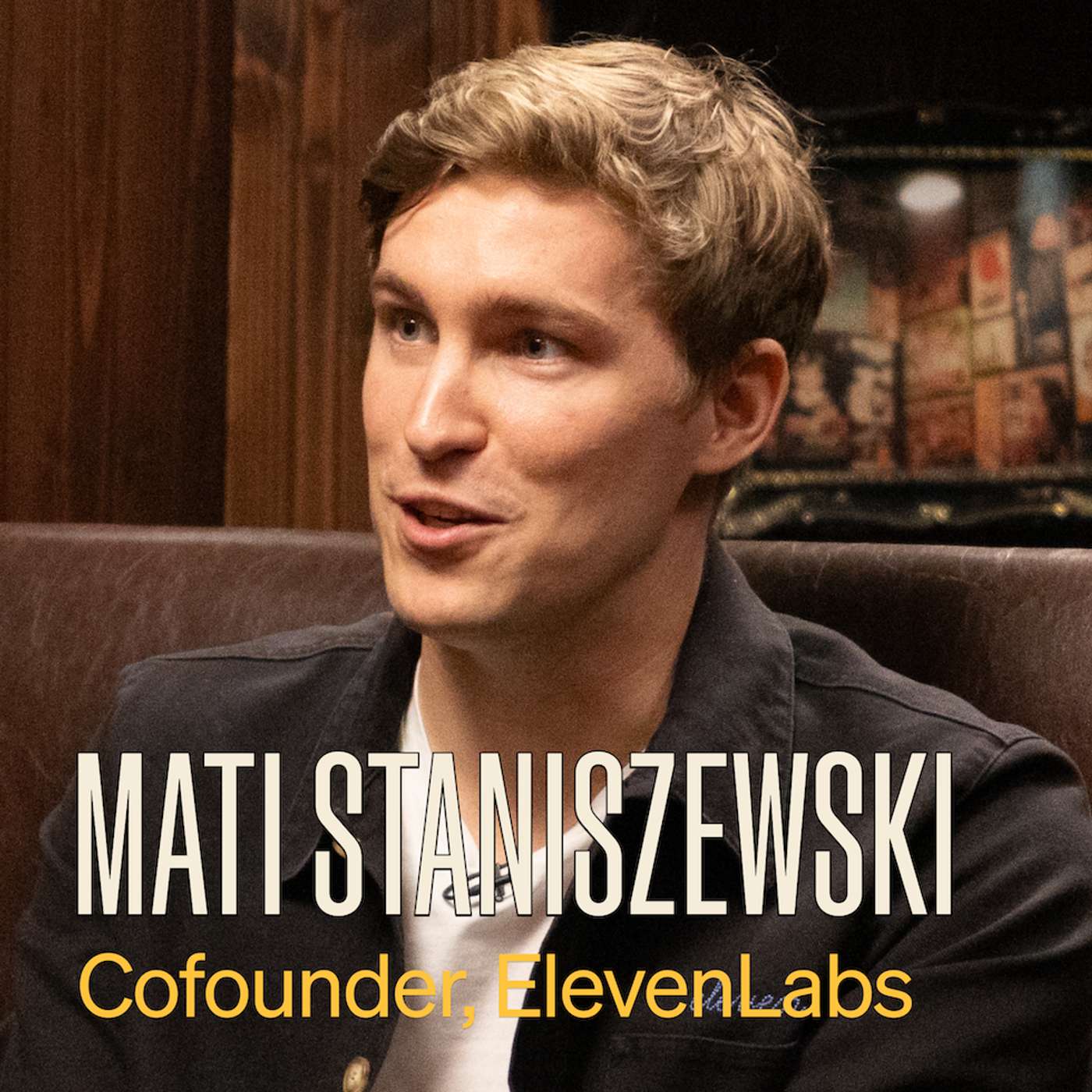
To maximize AI's impact, ElevenLabs places dedicated technical resources directly within non-technical departments like operations and talent acquisition. This embedded 'tech lead' is responsible for identifying and building automation, upskilling the team, and bridging the gap between business needs and technical capabilities.
Contrary to the belief that AI architecture is only for senior staff, Atlassian finds that "AI native" junior employees are often more effective. They are unburdened by old workflows and naturally think in terms of AI-powered systems. Senior staff can struggle with the required behavioral change, making junior hires a key vector for innovation.

Framing AI adoption as an IT initiative is a critical mistake. IT's role is to ensure security and responsible use, but business leaders must own the transformation. This includes driving strategy, identifying use cases, reskilling talent, and managing the cultural shift.

True AI adoption isn't about tools; it's a fundamental shift in organizational design. Traditional companies operate like Roman legions with layers of management. AI-native businesses are flat, allowing a single leader to manage thousands of AI-augmented workers directly, eliminating middle management and radically increasing efficiency.

Historically, HR has not been a fast-adopting function for new technology. When HR departments begin to broadly adopt AI-native tools, it will be a clear indicator that AI's business transformation has moved beyond coastal tech hubs and is reaching mass takeoff across the entire corporate landscape.

Framing AI adoption as a human capital transformation rather than a technological one is a powerful strategic choice. Placing the AI department within the People/HR organization centers the effort on curiosity, upskilling, and culture, rather than just infrastructure.
The most successful companies are those that fundamentally re-architect their culture and workflows around AI. This goes beyond implementing tools; it involves a top-down mandate to prepare the entire organization for future, more powerful AI, as exemplified by AppLovin's aggressive adoption strategy.