Get your free personalized podcast brief
We scan new podcasts and send you the top 5 insights daily.
Instead of guessing how to make your site more compatible with new AI browsers, directly ask the AI itself. Prompt ChatGPT with your URL and ask what changes are needed on your site to ensure the right answers appear when users search with the Atlas browser.

Related Insights
Websites now have a dual purpose. A significant portion of your content must be created specifically for AI agents—niche, granular, and structured for LLM consumption to improve AEO. The human-facing part must then evolve to offer deeper, more interactive experiences, as visitors will arrive with their basic research already completed by AI.

In an era dominated by AI chatbots, a website's relevance increases. These AI systems don't create information; they crawl the web to find it. Your site serves as the foundational data source, making a well-structured, up-to-date digital presence critical for discoverability and accurate representation by AI.

As users delegate purchasing and research to AI agents, brands will lose control over the buyer's journey. Websites must be optimized for agent-to-agent communication, not just human interaction, as AI assistants will find, compare, and even purchase products autonomously.
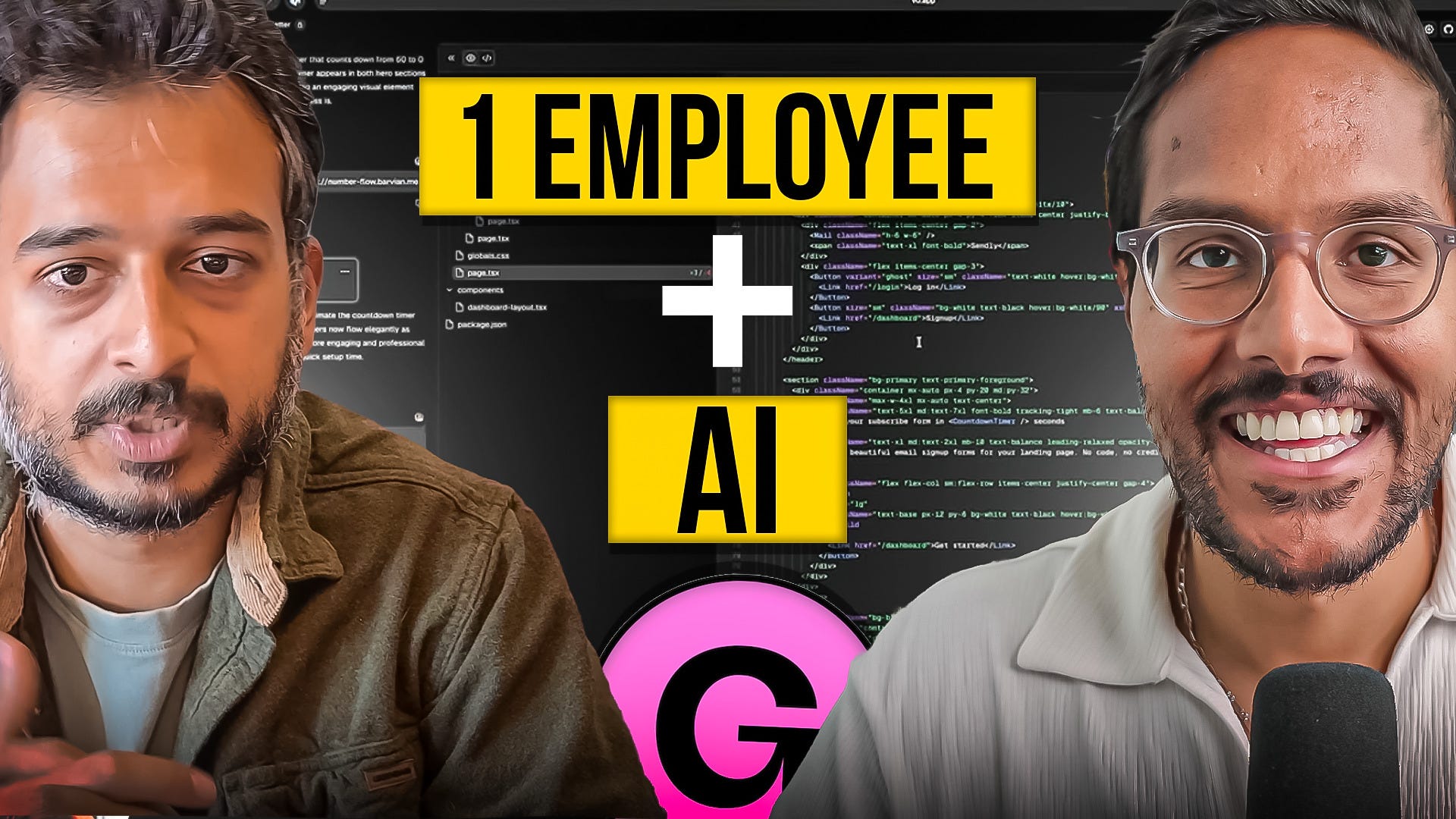
To enable AI agents to effectively modify your front-end, you must first remove global CSS files. These create hidden dependencies that make simple changes risky. Adopting a utility-first framework like Tailwind CSS allows for localized, component-level styling, making it vastly easier for AI to understand context and implement changes safely.
New AI-powered browsers struggle to index content locked in PDFs. To ensure your information is discoverable and summarized correctly by these tools, you must replicate gated content in standard, scannable HTML on your website.
The future of search isn't just about Google; it's about being found in AI tools like ChatGPT. This shift to Generative Engine Optimization (GEO) requires creating helpful, Q&A-formatted content that AI models can easily parse and present as answers, ensuring your visibility in the new search landscape.

AI-powered browsers can instantly open tabs for all your competitors and then analyze their sites based on your prompts. Ask them to compare pricing pages, identify email collection methods, or summarize go-to-market strategies to quickly gather competitive intelligence.
With 80-90% of AI-powered searches resulting in no clicks, traditional SEO is dying. The new key metric is "share of voice"—how often your brand is cited in AI-generated answers. This requires a fundamental strategy shift to Answer Engine Optimization (AEO), focusing on becoming an authoritative source for LLMs rather than just driving website traffic.
The rise of AI agents means website traffic will increasingly be non-human. B2B marketers must rethink their playbooks to optimize for how AI models interpret and surface their content, a practice emerging as "AI Engine Optimization" (AEO), as agents become the primary researchers.

As users increasingly get answers from AI assistants, marketing strategy must evolve from Search Engine Optimization (SEO) to Generative Engine Optimization (GEO). This means creating diverse, authoritative content across multiple platforms (podcasts, PR, articles) with the goal of being cited as a trusted source by AI models themselves.
