Get your free personalized podcast brief
We scan new podcasts and send you the top 5 insights daily.
In the AI era, traditional productivity proxies like lines of code are failing. A better measure is a team's ability to complete high-quality "at-bats": the full cycle from idea generation to building, feedback, and validation. This metric captures execution efficiency, team culture, and the ability to learn quickly.

Related Insights
For early-stage AI companies, performance should be measured by the speed of iteration, shipping, and learning, not just traditional metrics like revenue. In a rapidly evolving landscape, the ability to quickly get signals from the market and adapt is the primary indicator of future success.

AI drastically lowers the cost of exploration. The best teams leverage this by building many prototypes and exploring multiple directions, knowing most will be discarded. This 'wasted work' is a sign of effective discovery, leading to better final products.

As AI handles more routine tasks, traditional productivity metrics like 'tasks completed' become obsolete. The focus must shift from output to outcomes. It no longer matters what was done on a given day, but rather how tools were used to achieve a specific business goal.

Measuring AI's impact by output metrics like 'percent of agent-written code' or 'number of PRs merged' is a trap. These metrics say nothing about value. Instead, focus on counterbalance metrics that measure quality and meaningful impact, such as a reduction in bugs or positive user feedback.

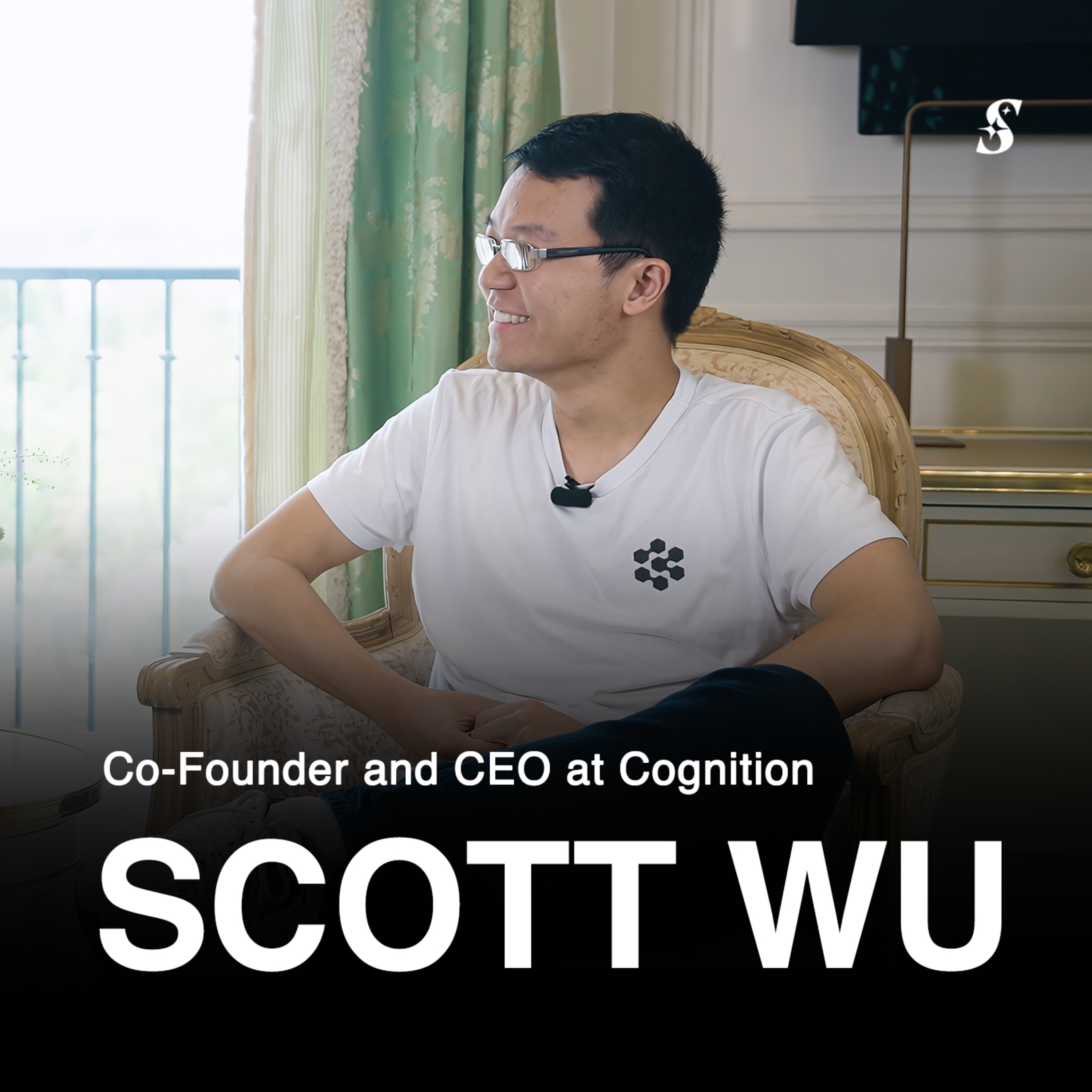
CEO Scott Wu dismisses "literal tokens" as a vanity metric for AI productivity. Instead, Cognition measures the impact of its AI agent, Devin, by tracking core business KPIs and customer outcomes. This shifts the focus from raw output to tangible business value and ROI.
Historically, the 'build' phase was the primary bottleneck in software development. With AI making building nearly instantaneous, the critical path to success has shifted. Mastery of the 'define' (scoping) and 'feedback' (learning) stages is now what separates winning teams from the rest.

A key sign of successful AI adoption isn't a reduced workload, but an increase in the team's ambition and capacity for experimentation. By lowering the cost and time of innovation, AI empowers teams to generate and test more ideas, which is a more valuable outcome than simply doing the same work faster.

Solely measuring a team's output fails to capture the health of their collaboration. A more robust assessment includes tracking goal achievement, team psychological safety, role clarity, and the speed of execution. This provides a holistic view of team effectiveness.
Vanity metrics like "AI lines of code" are misleading. Coinbase measures AI success by its impact on the end-to-end development cycle: the total time from a ticket's creation to the change landing with a user. This metric holistically captures gains and focuses the team on true velocity.

AI tools can generate vast amounts of verbose code on command, making metrics like 'lines of code' easily gameable and meaningless for measuring true engineering productivity. This practice introduces complexity and technical debt rather than indicating progress.