Get your free personalized podcast brief
We scan new podcasts and send you the top 5 insights daily.
The CheckMate 9LA regimen provides exceptional benefit to PD-L1 negative and squamous histology NSCLC patients. This is significant because these subgroups often respond poorly to other immunotherapy combinations, with Dr. Carbone noting some trials where the control arm outperformed pembrolizumab in these patients.

Related Insights
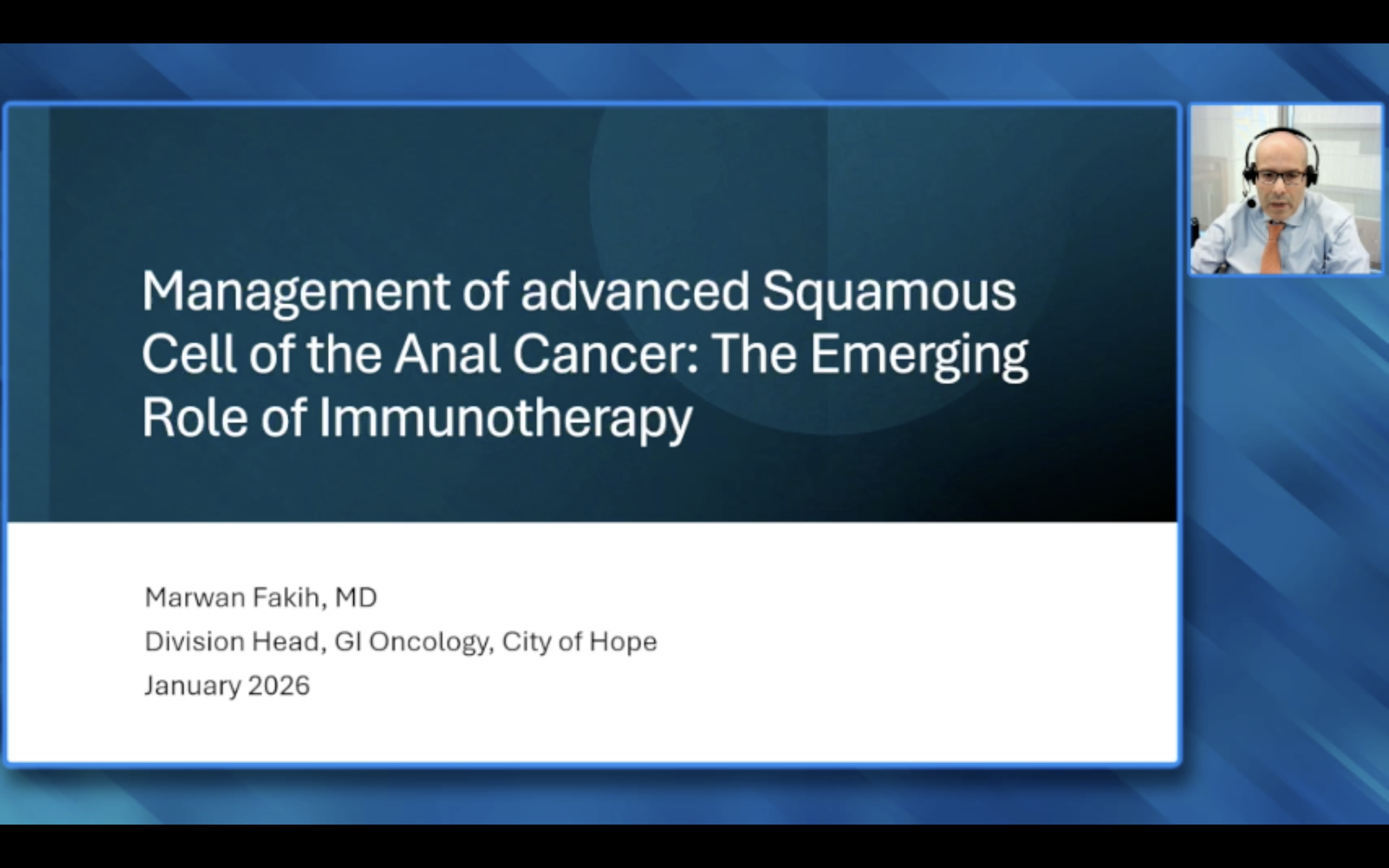
The NCI 9673 trial demonstrated that adding the CTLA-4 inhibitor ipilimumab to the PD-1 inhibitor nivolumab did not improve response rate, PFS, or overall survival in patients with previously treated anal cancer. This finding discourages this combination approach, avoiding unnecessary toxicity.
Synthakyne's drug demonstrated a 75% response rate in lung cancer patients with STK11 and KEAP1 mutations, a subgroup where the published response rate for standard care is only 7%. This suggests the drug is highly effective in the most immunologically resistant patient populations, a significant differentiator.

The failure of the concurrent chemo-immuno-radiation approach has not stalled progress. Instead, new clinical trials are actively exploring novel strategies like SBRT boosts, dual checkpoint inhibitors, radiosensitizing nanoparticles, and induction immunotherapy to improve upon the current standard of care.

The HARMONY-2 study showed Ivanesimab delivered a median progression-free survival of 11.3 months compared to 5.8 months for Pembrolizumab in PD-L1 positive NSCLC. Analysis confirmed Pembrolizumab performed as expected, suggesting the dual VEGF/PD-1 blockade provides a genuinely superior clinical benefit over PD-1 inhibition alone.
Data from the Checkmate 743 trial shows that patients who stopped dual immunotherapy (Nivo/Ipi) due to toxicity can still achieve long-term benefits. A third of these patients had an ongoing response at three years, despite stopping treatment after only four months on average, providing confidence in the regimen.
In the HARMONY A study, Ivanesimab plus chemotherapy significantly improved progression-free survival in EGFR-mutant non-small cell lung cancer patients. This is notable because prior trials showed that adding standard PD-1 inhibitors to chemotherapy was ineffective for this specific patient population.
Despite major advances in immunotherapy, patient selection remains crude compared to targeted therapies. PD-L1 is still the primary, yet imperfect, biomarker used. Dr. Carbone highlights an urgent need to develop better predictive biomarkers to customize immunotherapy regimens, as is standard for targeted agents.
The failure of the Checkmate 914 adjuvant trial, which used a six-month duration of nivolumab plus ipilimumab, suggests this shorter treatment window may be inadequate. In contrast to positive trials with one year of therapy, this outcome indicates that treatment duration is a critical variable for achieving a disease-free survival benefit in the adjuvant RCC setting.

Frontline treatment selection hinges on histology. Non-epithelioid mesothelioma responds poorly to chemotherapy, making dual immunotherapy (Nivo/Ipi) the clear choice. For epithelioid cases, chemo-immunotherapy is a strong option, especially for symptomatic patients, due to its higher and faster response rate.
Data shows that patients who permanently stopped ipilimumab due to immune-related side effects still had exceptionally good outcomes. This gives clinicians confidence to manage toxicity by discontinuing the CTLA-4 inhibitor portion of the regimen while continuing nivolumab, without fearing a loss of efficacy.