Get your free personalized podcast brief
We scan new podcasts and send you the top 5 insights daily.
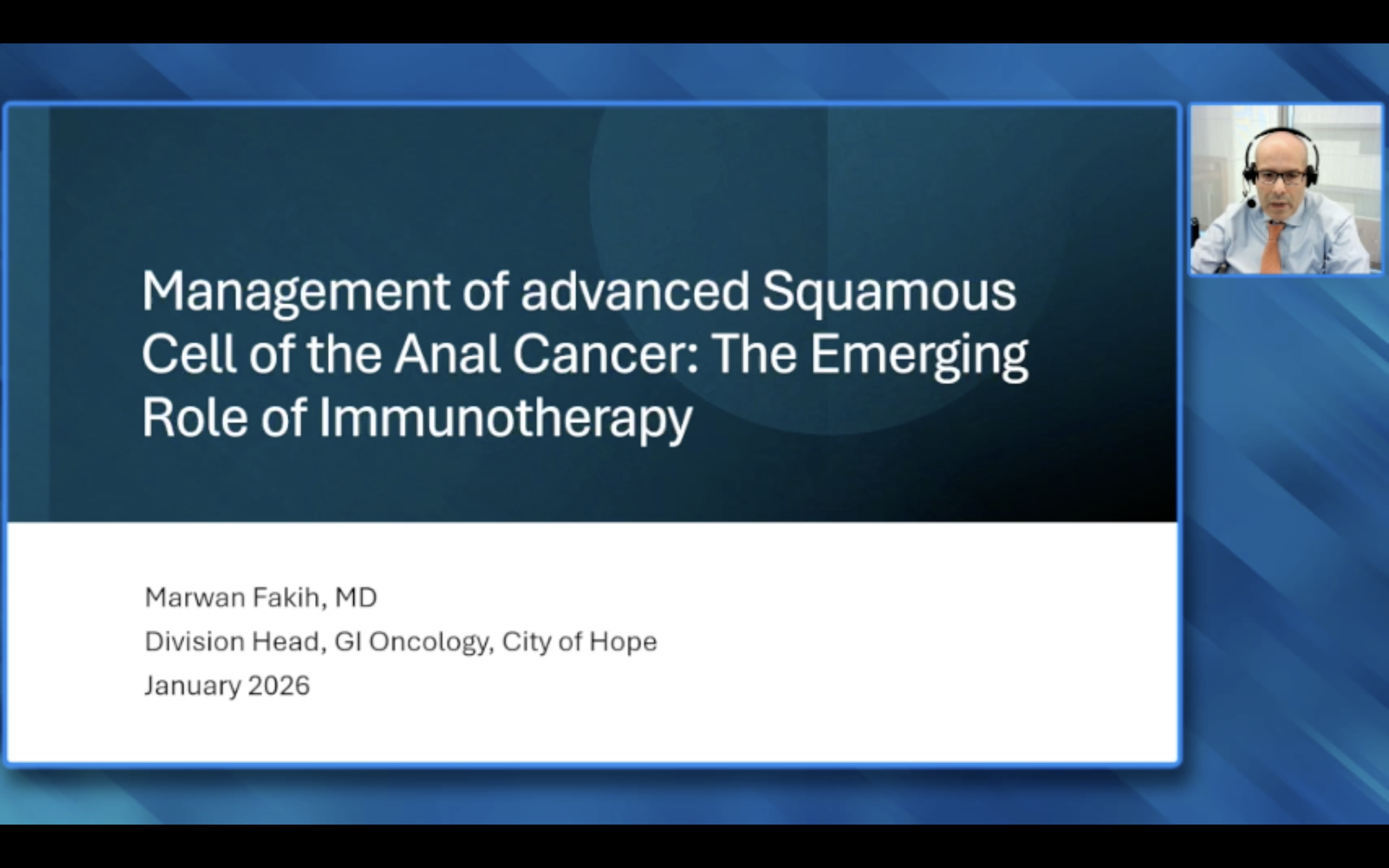
The NCI 9673 trial demonstrated that adding the CTLA-4 inhibitor ipilimumab to the PD-1 inhibitor nivolumab did not improve response rate, PFS, or overall survival in patients with previously treated anal cancer. This finding discourages this combination approach, avoiding unnecessary toxicity.
Related Insights
Data from the Podium-303 trial's crossover arm suggests that waiting to use a PD-1 inhibitor after progression on chemotherapy is less effective than using it concurrently from the start. This supports the synergistic effect of chemo-immunotherapy and favors the concurrent approach as the standard of care.
The rationale for developing Sigvotatug Vedotin extends beyond its direct cytotoxic effect. Preclinical data shows that blocking the IB6 pathway can increase the potency of PD-1/PD-L1 checkpoint inhibitors, suggesting a powerful synergistic effect that could lead to highly effective future combination therapies.
Data from the Checkmate 743 trial shows that patients who stopped dual immunotherapy (Nivo/Ipi) due to toxicity can still achieve long-term benefits. A third of these patients had an ongoing response at three years, despite stopping treatment after only four months on average, providing confidence in the regimen.
While the feared side effect of severe lung inflammation (pneumonitis) did not increase, other immune-mediated adverse events did. This led to higher rates of treatment discontinuation in the experimental arm, potentially negating any benefits of the concurrent approach and contributing to the trial's failure.

For endometrial or cervical cancer patients who progress after receiving a checkpoint inhibitor, re-challenging with a single-agent immunotherapy is a less desirable approach. Emerging data suggests that a combination therapy—such as an ICI paired with a TKI like lenvatinib or a bispecific antibody—offers a more promising chance of response.

In the Podium-303 trial, adding retifanlimab to chemotherapy improved the overall response rate by 11%. However, its most significant impact was doubling the median duration of response from 7.2 to 14 months, providing a much more durable benefit for patients after chemotherapy is stopped.
Clinical trials combining potent ARPIs like abiraterone and enzalutamide have consistently failed. Once the androgen receptor pathway is maximally suppressed by one agent, adding another with a similar mechanism provides no further clinical advantage, much like hammering a nail that is already flush with the wood.

The failure of the Checkmate 914 adjuvant trial, which used a six-month duration of nivolumab plus ipilimumab, suggests this shorter treatment window may be inadequate. In contrast to positive trials with one year of therapy, this outcome indicates that treatment duration is a critical variable for achieving a disease-free survival benefit in the adjuvant RCC setting.
In high-risk non-muscle invasive bladder cancer (NMIBC), trials like CREST and POTOMAC show adding a systemic immune checkpoint inhibitor to BCG therapy introduces significant toxicity. The benefit is primarily in local control, which may not justify the risk, especially with other effective intravesical options available.
While checkpoint inhibitors are standard for dMMR endometrial cancer, a clear clinical boundary is emerging for the pMMR subgroup. Based on trial data showing no benefit for fully resected disease (e.g., B21 trial), oncologists are not offering immunotherapy to pMMR patients without measurable disease, avoiding significant toxicity without proven efficacy.