Get your free personalized podcast brief
We scan new podcasts and send you the top 5 insights daily.
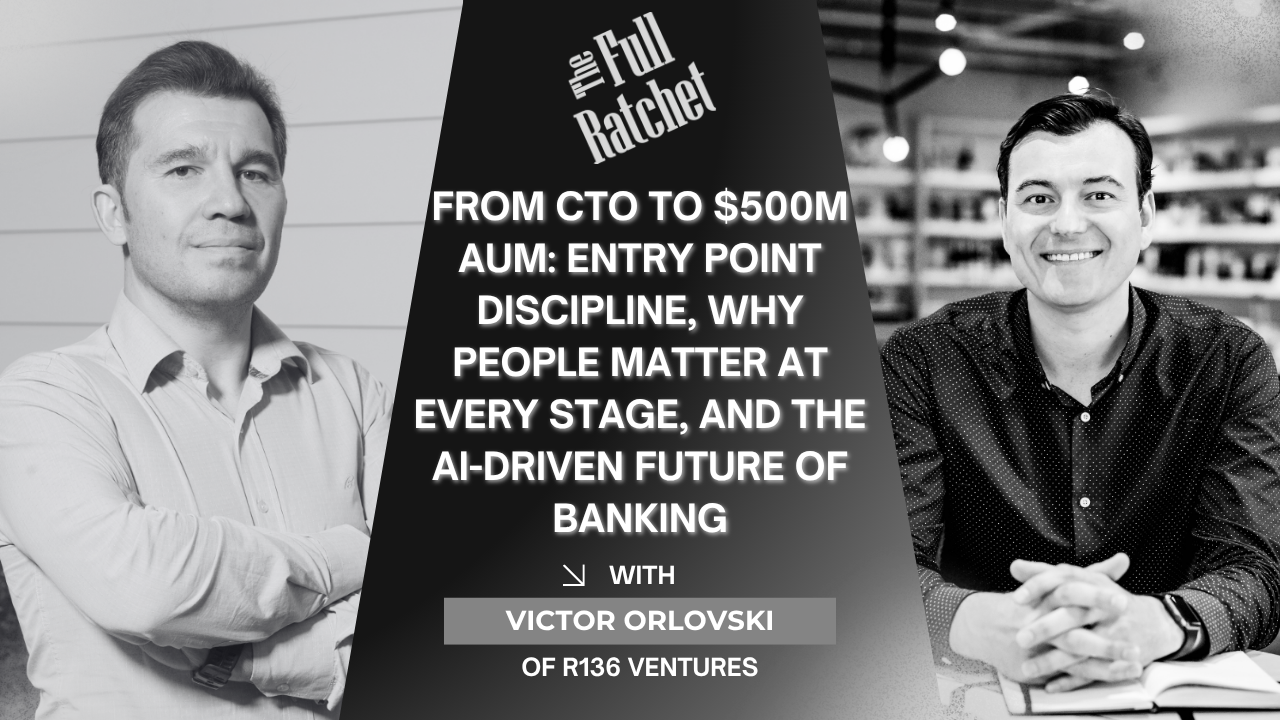
Investor Victor Orlovski predicts that banking, alongside media, will be one of the first industries to become fully automated. He argues that algorithms can handle every function, from operations to strategy, more effectively than humans, eliminating the need for any employees, including a CEO.
Related Insights
Unlike past industrial shifts, AI's impact won't be contained to specific industries. Once AI can perfectly replicate a human worker behind a keyboard, video, and mouse, it will trigger a simultaneous displacement wave across all remote-capable jobs.

The primary economic incentive driving AI development is not replacing software, but automating the vastly larger human labor market. This includes high-skill jobs like accountants, lawyers, and auditors, representing a multi-trillion dollar opportunity that dwarfs the SaaS industry and dictates where investment will flow.
As AI agents handle technical execution, the most valuable human skill becomes ideation. Replit CEO Amjad Massad predicts this will dissolve rigid corporate hierarchies in favor of adaptable teams of generalists who collaborate with autonomous AI tools to bring ideas to life.
Federal Reserve Chair Jerome Powell stated that after accounting for statistical anomalies, "job creation is pretty close to zero." He directly attributes this to CEOs confirming that AI allows them to operate with fewer people, marking a major official acknowledgment of AI's deflationary effect on the labor market.
Using the historical parallel of ATMs, CEO Sim Shabalala argues that AI won't eliminate human roles but will automate routine tasks. This frees humans for higher-order work involving empathy, complex problem-solving, and valuable client interaction.
Backed by top tech leaders, the startup Mechanize operates on the thesis that fully automating all jobs is a technologically determined and desirable future. Their public goal is to accelerate this 'inevitable' outcome, revealing a deliberate and well-funded movement to replace human labor entirely, not just augment it.
The idea of a solo founder running a billion-dollar company is more a marketing gimmick than a future reality. While technologically feasible with AI, individuals won't want to handle all the associated operational burdens like bookkeeping and taxes. The logical endpoint of AI automation isn't a one-person company, but a zero-person, fully automated business.
By paying over 100 former Wall Street bankers to train its models on complex financial tasks, OpenAI is creating a template for vertical AI dominance. This 'expert-as-a-contractor' model will be replicated across law, accounting, and consulting to systematically automate lucrative knowledge work sectors.
AI will handle most routine tasks, reducing the number of average 'doers'. Those remaining will be either the absolute best in their craft or individuals leveraging AI for superhuman productivity. Everyone else must shift to 'director' roles, focusing on strategy, orchestration, and interpreting AI output.

As AI systems become infinitely scalable and more capable, humans will become the weakest link in any cognitive team. The high risk of human error and incorrect conclusions means that, from a purely economic perspective, human cognitive input will eventually detract from, rather than add to, value creation.
