Get your free personalized podcast brief
We scan new podcasts and send you the top 5 insights daily.
There's a clear division of labor for writing at Anthropic. AI handles rote summarization and data readouts. But for documents requiring original thought or vision—like strategic essays—using AI is culturally discouraged, as the act of writing is inseparable from the act of thinking.

Related Insights
The New York Times test showing readers prefer AI writing misses the point. The critical question for professionals is determining when to use AI. A useful framework involves a spectrum from "all human" for personal, creative work where the process is the purpose, to "all machine" for repetitive, high-volume tasks.

The aversion to AI-generated text will fade for internal communications like emails and strategy docs. A human-guided AI often produces clearer, more effective writing than the average person. The key is human accountability: the sender must stand behind every line, even if an AI wrote it.

Medium's CEO argues that writing's future is secure because its core function is the process of structured thinking, not just content output. The act of articulating ideas reveals flaws and deepens understanding for the writer—a cognitive benefit that delegating to AI would eliminate.
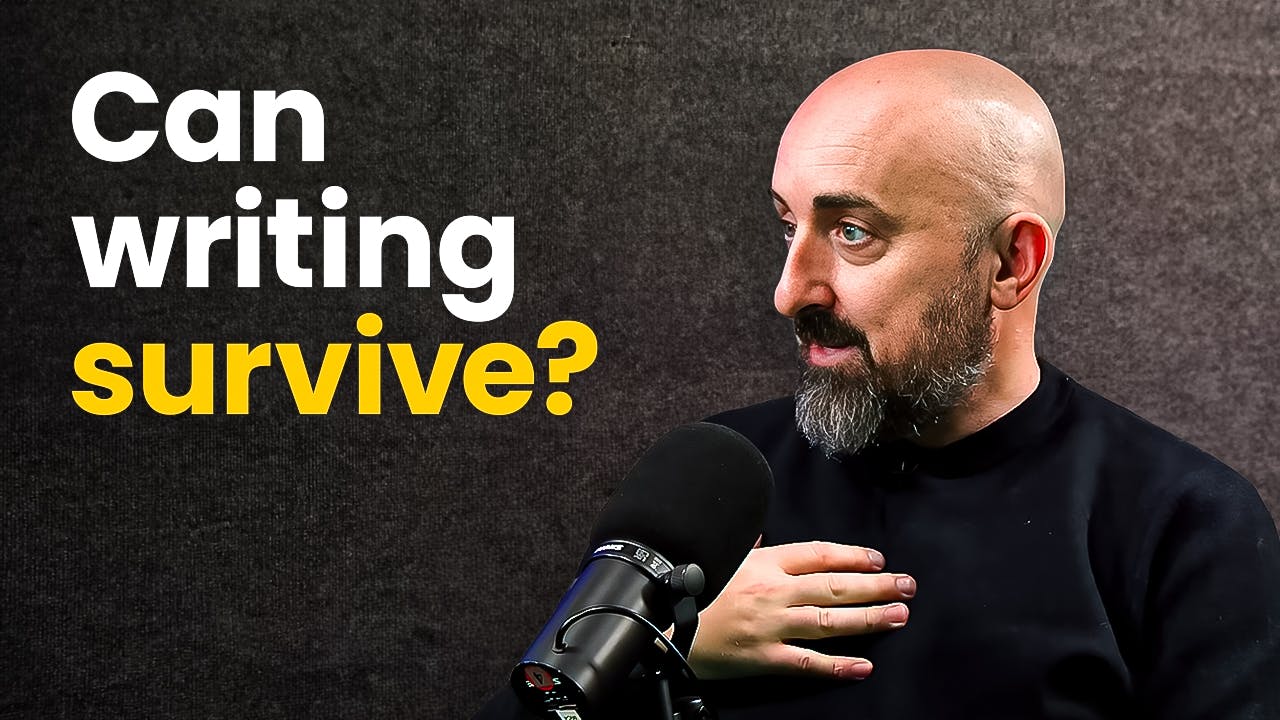
Tara Seshan suggests a disciplined approach to using AI for writing. Outsource tasks like summaries and status updates ('reporting'), but manually author strategy docs ('thinking') because the writing process itself is crucial for idea clarification.
The problem with AI-generated content isn't just generic phrasing but the erosion of reader trust and believability. An effective workflow involves a human writing the initial draft to embed genuine ideas and voice, then using AI tools specifically to strip out repetitive patterns and clean up the text.

AI excels at replicating patterns from its training data. However, top-tier authors provide value by subverting expectations and introducing surprising connections—a skill rooted in creative, pattern-breaking thought that AI struggles with. The act of writing is the act of thinking, which can't be outsourced.

The best use of AI in content creation isn't for writing the first draft. Instead, apply it to the tedious parts of the process you dislike, such as data processing, topic ideation, or even editing, to accelerate the path to a high-quality, human-created piece.

Even when AI can perform a task better, professionals should consciously reserve activities for themselves. Tasks core to one's professional identity, credibility, and personal fulfillment—like authentic writing for an expert—should remain human-driven. The mantra is "just because it can doesn't mean it should."
AI automates the execution-heavy middle part of tasks. This elevates the human role, allowing professionals to focus their expertise on the critical bookends of a project: the upfront strategy and the final review, where taste and judgment are paramount.
Effective AI content strategy uses tools to handle first drafts and outlines, accelerating production and ensuring consistency. This frees up humans to perform the crucial roles of editing, shaping perspective, and injecting unique, lived experiences, which AI cannot replicate. The goal is amplification, not automation.