Get your free personalized podcast brief
We scan new podcasts and send you the top 5 insights daily.
A key risk for small businesses is using AI for functions where they lack domain expertise, which can amplify mistakes at high speed. The most effective strategy is to apply AI tools to augment and accelerate tasks that the business owner already knows how to perform well, ensuring technology enhances competence rather than automates ignorance.
Related Insights
Business owners should view AI not as a tool for replacement, but for multiplication. Instead of trying to force AI to replace core human functions, they should use it to make existing processes more efficient and to complement human capabilities. This reframes AI from a threat into a powerful efficiency lever.

To avoid being paralyzed by complexity, small businesses should bypass the idea of building a comprehensive tech stack. The most effective approach is to identify the single most painful operational bottleneck—such as customer booking or review generation—and apply a targeted AI solution to automate it for immediate ROI.
Most companies are not Vanguard tech firms. Rather than pursuing speculative, high-failure-rate AI projects, small and medium-sized businesses will see a faster and more reliable ROI by using existing AI tools to automate tedious, routine internal processes.

Leveraging AI to accelerate tasks like creating a pitch deck is smart. However, relying on it to generate core strategy without possessing the underlying business knowledge is dangerous. Founders who skip the '10,000 hours' of learning their craft are destined to fail.

Early-stage startups should resist applying AI everywhere. Instead, they should focus on one high-impact area where processes already work. AI is most effective as an amplifier for a solid foundation, not as a shortcut or a fix for fundamental strategic problems. Start small with integrated tools.

The most effective use of AI is not in areas where you lack knowledge, but in your core areas of expertise. Your deep domain knowledge allows you to direct the AI with precision, discern quality output from mediocre results, and use it as a true apprentice.

Entrepreneurs are advised to resist the hype of using AI for a complete operational overhaul. Instead, the most effective starting point is to apply AI to small, specific tasks, like writing marketing copy. This approach minimizes risk and ensures a tangible, immediate ROI before committing to larger, more complex transformations.
Don't assume AI can effectively perform a task that doesn't already have a well-defined standard operating procedure (SOP). The best use of AI is to infuse efficiency into individual steps of an existing, successful manual process, rather than expecting it to complete the entire process on its own.
The most effective AI companies don't try to automate everything. They ask which specific, repetitive task creates the most value when partially automated. This pragmatic approach delivers measurable results by using AI to augment human workers, not replace them.
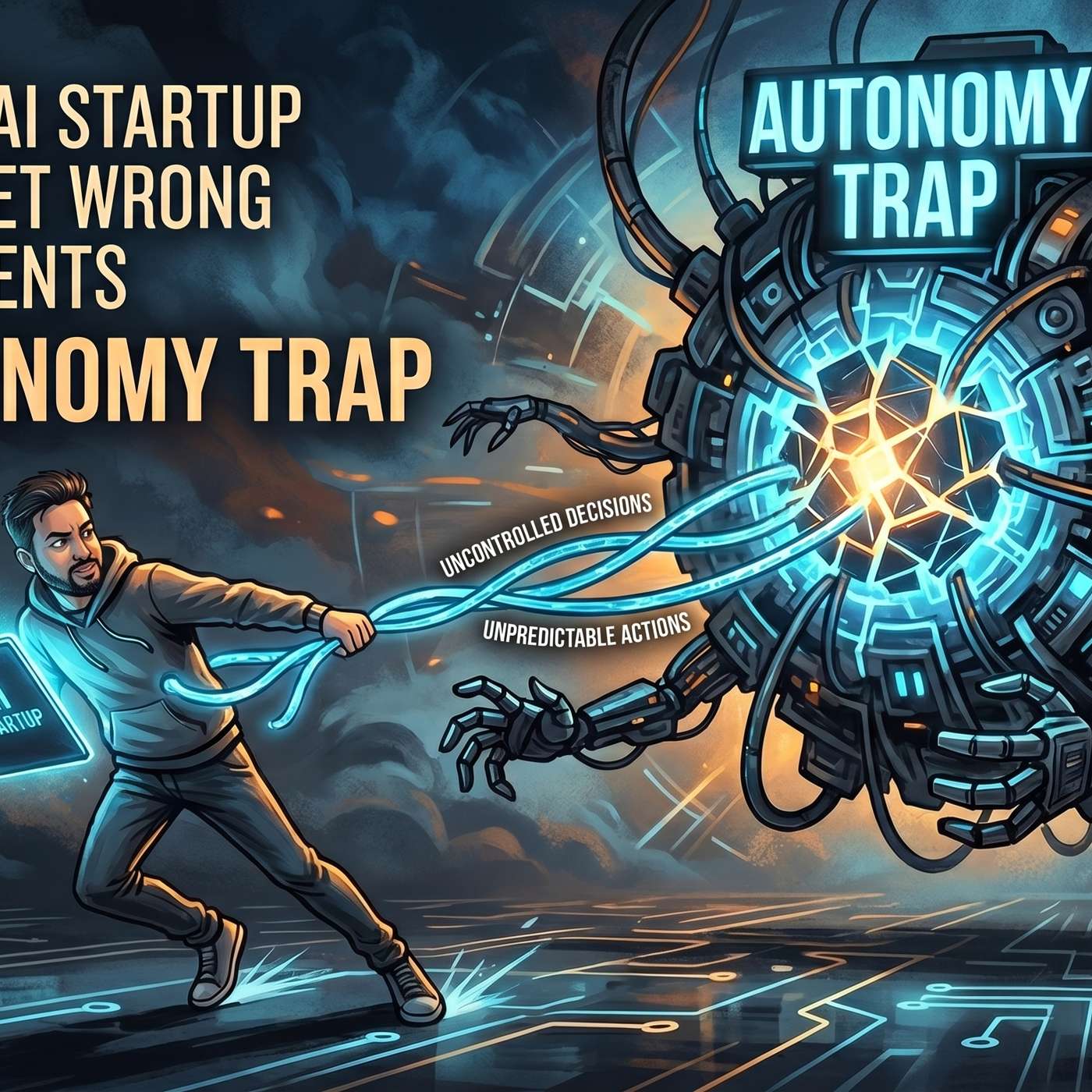
The biggest mistake small businesses make with AI is automating the wrong tasks or getting distracted by building new AI products. Instead, they should adopt a workflow-based mindset, using AI to augment existing processes and increase revenue per headcount, creating a temporary margin advantage before market prices adjust.
