Get your free personalized podcast brief
We scan new podcasts and send you the top 5 insights daily.
The biggest mistake small businesses make with AI is automating the wrong tasks or getting distracted by building new AI products. Instead, they should adopt a workflow-based mindset, using AI to augment existing processes and increase revenue per headcount, creating a temporary margin advantage before market prices adjust.

Related Insights
The common use of AI for trivial tasks is a distraction. The real opportunity for businesses is to apply AI to core operational workflows, dramatically increasing output per employee. This creates a window for massive margin expansion before market prices adjust.

Most companies are not Vanguard tech firms. Rather than pursuing speculative, high-failure-rate AI projects, small and medium-sized businesses will see a faster and more reliable ROI by using existing AI tools to automate tedious, routine internal processes.

Many organizations miss AI's transformative potential by limiting its use to optimizing current workflows. The real opportunity lies in fundamentally rethinking how work is done, much like AWS enabled entirely new business models beyond just cheaper hosting.
AI's primary value isn't replacing employees, but accelerating the speed and quality of their work. To implement it effectively, companies must first analyze and improve their underlying business processes. AI can then be used to sift through data faster and automate refined workflows, acting as a powerful assistant.

Simply making existing processes faster with AI yields marginal gains. The real wealth-building strategy is using AI to fundamentally rethink your business, transforming value propositions and creating new revenue streams. The goal should be transformation, not just acceleration.

The most common failure in AI implementation is treating it as a technology project to automate existing workflows. True success requires a transformational mindset, using AI as a catalyst to completely redesign how work gets done and how human and AI agents collaborate.

Don't assume AI can effectively perform a task that doesn't already have a well-defined standard operating procedure (SOP). The best use of AI is to infuse efficiency into individual steps of an existing, successful manual process, rather than expecting it to complete the entire process on its own.
The most effective AI companies don't try to automate everything. They ask which specific, repetitive task creates the most value when partially automated. This pragmatic approach delivers measurable results by using AI to augment human workers, not replace them.
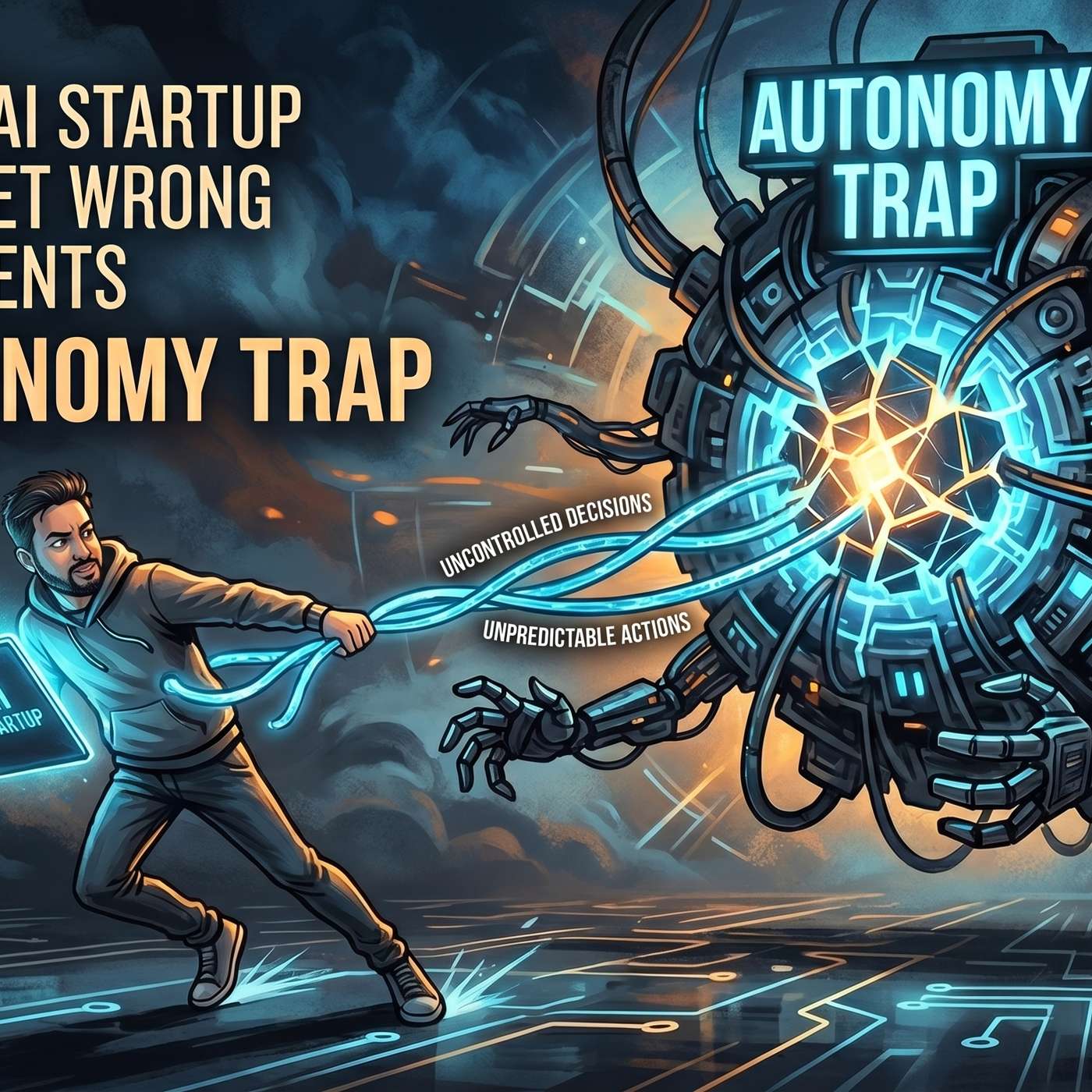
Don't get distracted by flashy AI demonstrations. The highest immediate ROI from AI comes from automating mundane, repetitive, and essential business functions. Focus on tasks like custom report generation and handling common customer service inquiries, as these deliver consistent, measurable value.

Don't put AI on a broken process. Before applying AI, first map and optimize your current workflows. AI can't fix fundamental flaws like too many approvals or unnecessary handoffs; it can only accelerate an already efficient process.
