Get your free personalized podcast brief
We scan new podcasts and send you the top 5 insights daily.
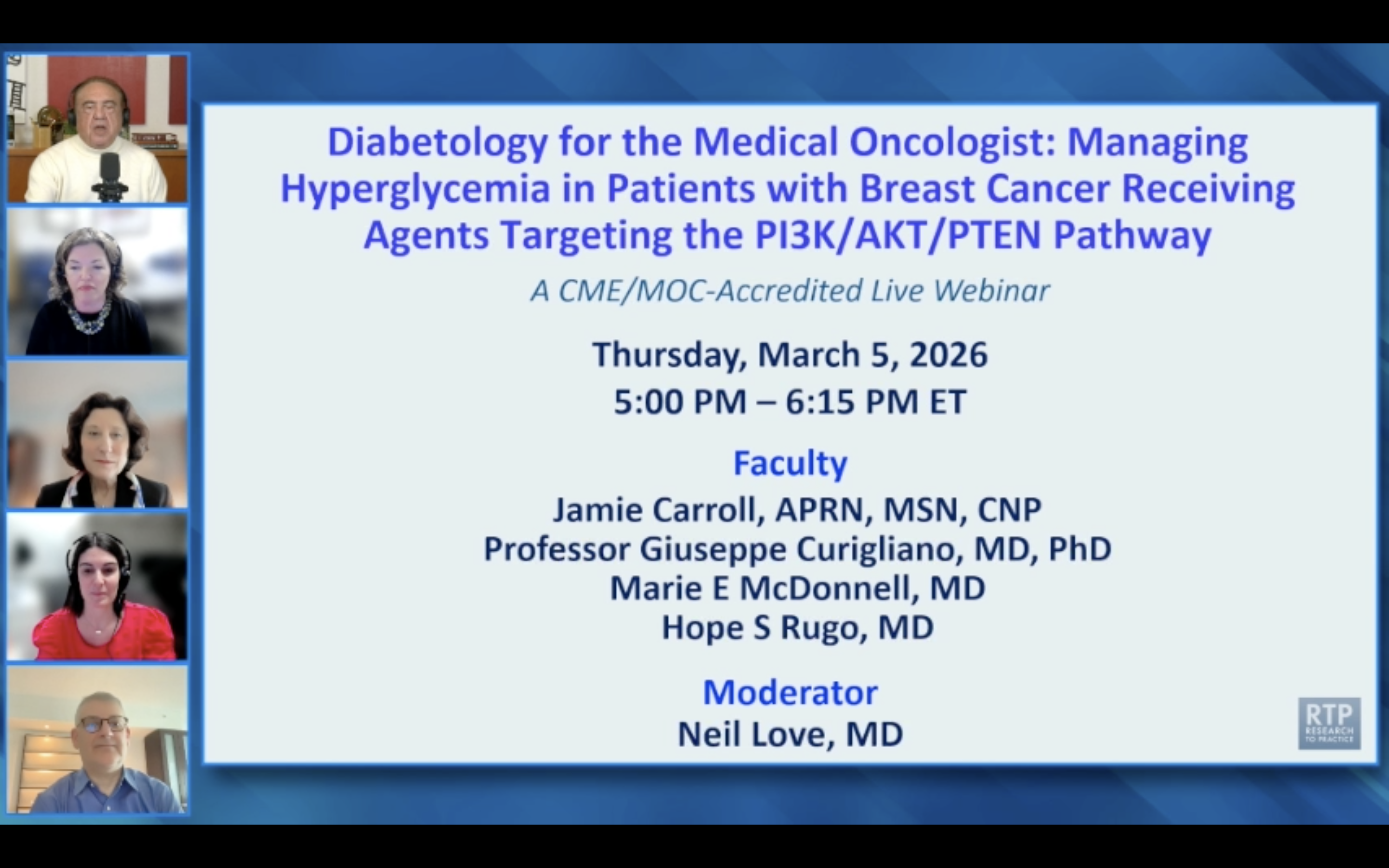
A critical and often overlooked factor in managing hyperglycemia is hydration. Volume depletion from drug-induced diarrhea impairs the kidneys' ability to excrete glucose. This traps sugar in the body, creating a vicious cycle that dramatically elevates blood glucose levels.
Related Insights
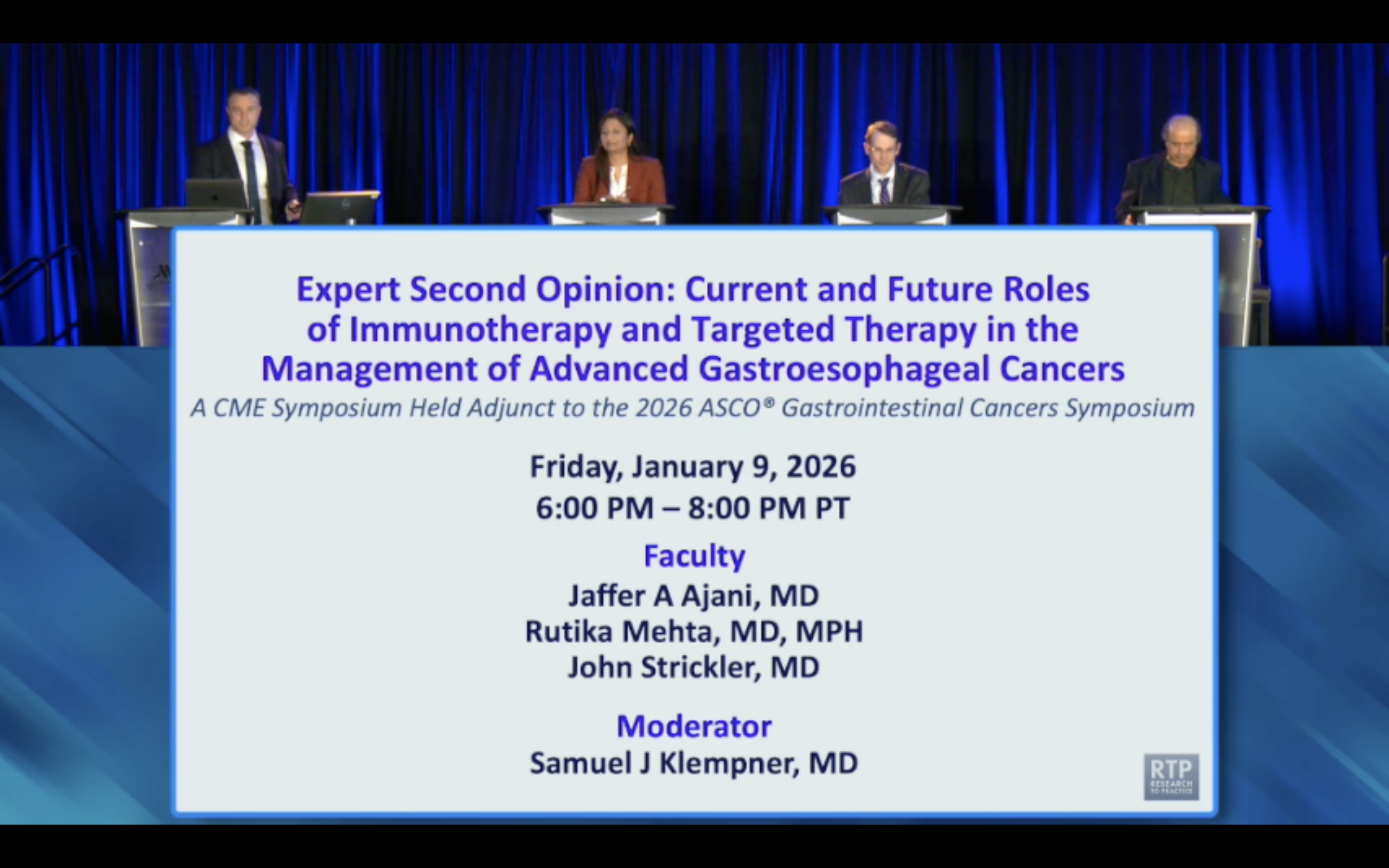
Clinical trials with zanidatumab revealed significant diarrhea primarily in the first cycle. The successful management strategy involves mandatory loperamide twice daily for the first seven days to improve tolerability and prevent treatment discontinuation, a crucial implementation pearl.
While known for weight loss, GLP-1 agonists are also highly effective for managing hyperglycemia from both steroids and PI3K inhibitors. Using low or "micro" doses can be very helpful in cancer patients, providing glucose control while minimizing GI side effects like nausea.
Advances in drug design mean newer PI3K inhibitors are more targeted, resulting in significantly less off-target toxicity. For example, some investigational agents have a hyperglycemia risk under 15%, a substantial improvement over earlier drugs, making them easier to manage clinically.
Clinicians are hesitant to use insulin for PI3K inhibitor-induced hyperglycemia. The primary concern is that exogenous insulin, a potent growth factor, could theoretically counteract the therapy's anti-tumor effect by promoting cancer cell survival, although this risk remains unproven.
A patient with normal baseline glucose on an AKT inhibitor can experience a sudden, severe spike in blood sugar when they get sick (e.g., fever, infection). The illness acts as a physiological stressor, creating a "perfect storm" that demands immediate attention and patient education.
New targeted therapies like Zanidatamab and Zolbetuximab show great promise but cause significant side effects like diarrhea and nausea. Their successful clinical adoption hinges on proactive management using detailed guidelines and prophylactic medications, as toxicity can be severe enough to force treatment discontinuation despite the drug's efficacy.

For patients sensitive to standard loperamide tablets who experience rebound constipation, the liquid formulation offers more flexible, precise dosing. This allows for better symptom control of diarrhea without overcorrecting and causing constipation, improving overall patient tolerance.

When patients experience a consistent pattern of diarrhea, clinicians should move from a reactive, per-episode dosing strategy to a proactive, scheduled regimen of loperamide. This provides better control and prevents symptoms from escalating, with the option to de-escalate as the patient stabilizes.
To manage the significant diarrhea associated with the new drug zanidatumab, a proactive approach is critical. The successful HORIZON-GEA trial protocol included mandatory loperamide twice daily for the first seven days of cycle one, a strategy which effectively managed toxicity without leading to treatment discontinuation.

The hyperglycemia from PI3K/AKT inhibitors is due to insulin resistance, not lack of insulin. Treatment must focus on insulin sensitizers (metformin, SGLT2 inhibitors). Using agents that increase insulin secretion is counterproductive as it can reactivate the PI3K cancer pathway.