Get your free personalized podcast brief
We scan new podcasts and send you the top 5 insights daily.
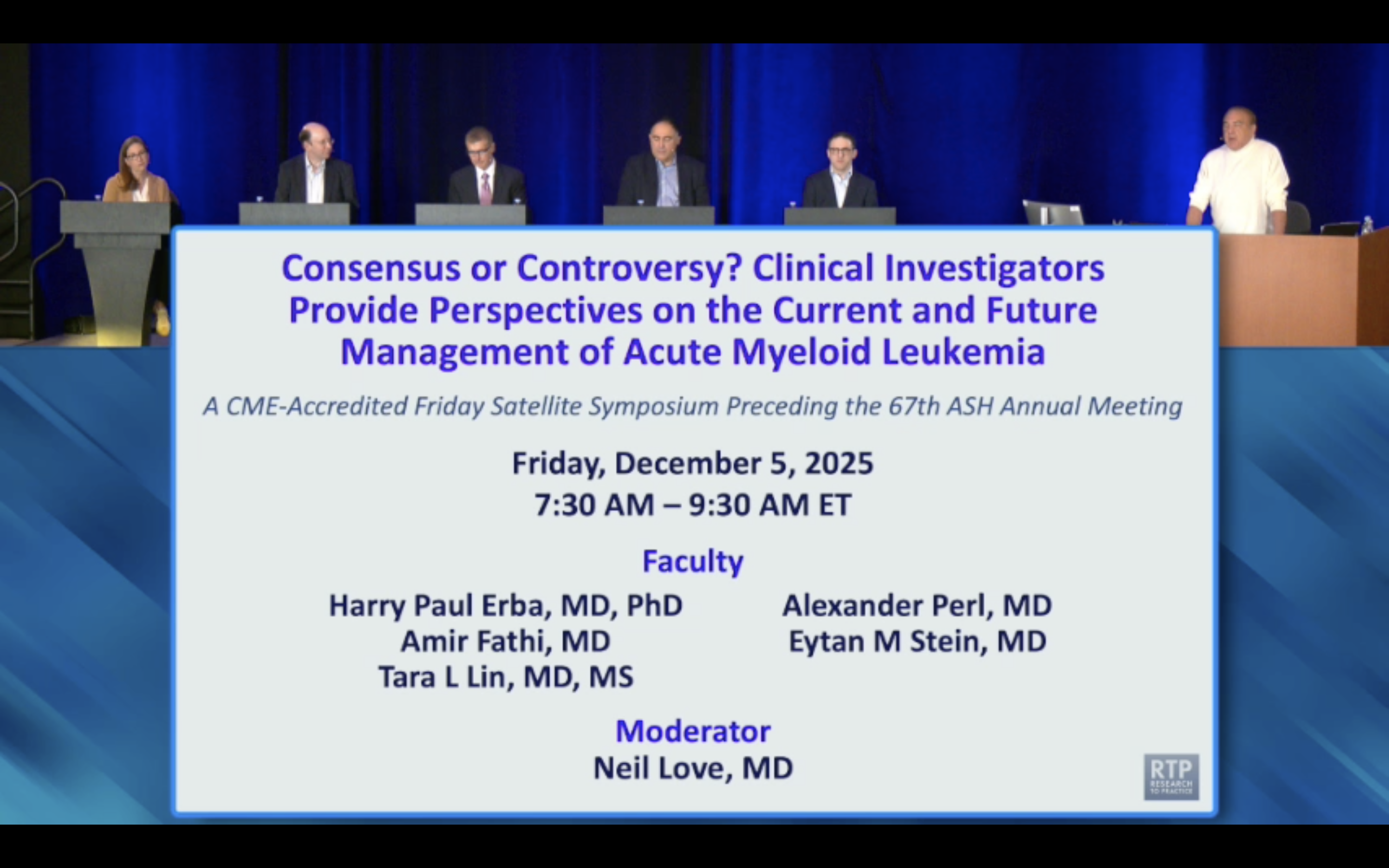
Initial studies combining menin inhibitors with venetoclax/azacitidine showed high remission rates but also high mortality. Using each agent at its full, 28-day dose caused severe, fatal myelosuppression, forcing protocol amendments to shorten drug exposure to manage toxicity.
Related Insights
Despite impressive data supporting HMA/Venetoclax, its application in younger, fit patients must be cautious. The pivotal VIALE-A trial excluded key subgroups like FLT3, core binding factor, and certain NPM1 patients, for whom intensive chemotherapy remains the standard.
The failure of an adjuvant trial for the TKI pazopanib was likely caused by a protocol change that reduced the dose to manage transaminitis. While well-intentioned to improve tolerability and adherence, the lower dose was sub-therapeutic. This serves as a critical lesson that managing side effects by compromising dose can nullify a drug's potential efficacy.

Menin inhibitors achieve high rates of MRD-negative remissions. However, the median duration is very short (4-6 months), suggesting current MRD assays may not adequately capture residual disease and that "MRD negativity" is not a reliable predictor of long-term benefit for this drug class.
The FLAG-IDA plus venetoclax regimen achieves very high MRD-negative remission rates. However, its similar efficacy in both frontline and first salvage settings suggests it might be more strategically deployed as a salvage therapy, avoiding its high toxicity in all patients upfront.
An expert argues the path to curing metastatic cancer may mirror pediatric ALL's history: combining all highly active drugs upfront. Instead of sequencing treatments after failure, the focus should be on powerful initial regimens that eradicate cancer, even if it means higher initial toxicity.
To combat the significant myelosuppression from the standard 28-day venetoclax cycle in AML, many clinicians are adopting a strategy of performing a bone marrow biopsy around day 21 and pausing the drug if blast clearance is achieved to allow for hematologic recovery.
Actuate employed a master protocol that tested their drug alongside eight different standard-of-care chemotherapies in patients who had already failed them. This design efficiently demonstrated the drug's ability to reverse chemo-resistance across multiple histologies, informing their Phase 2 strategy.

The differentiation syndrome with menin inhibitors can be far more severe than with other agents, manifesting as a life-threatening, HLH-like state with massive inflammatory marker elevation (e.g., ferritin >300,000) that may be unresponsive to high-dose steroids.
While Tumor Lysis Syndrome with venetoclax in newly diagnosed AML is rare, clinicians should be aware of a different, insidious complication: a potentially severe Cytokine Release Syndrome (CRS)-like reaction, particularly in patients with monocytic leukemia.
The failure of the TROPiCS-04 trial for sacituzumab govitecan may not indicate the TROP2 ADC class is ineffective. Experts suggest problems with dosing and toxicity management (e.g., neutropenia) during the trial could be the real culprit, arguing that the drug class still holds promise.