Get your free personalized podcast brief
We scan new podcasts and send you the top 5 insights daily.
In trials like ASCENT-4, where over 80% of the control arm received sacituzumab govitecan upon progression, the true overall survival (OS) benefit is obscured. This makes progression-free survival (PFS) a more reliable endpoint for evaluating the drug's first-line efficacy.
Related Insights
The FDA's critique of both CREST and Potomac trials highlights that while event-free survival (EFS) endpoints were met, the lack of improvement in overall survival or prevention of muscle-invasive disease makes the risk/benefit profile questionable for an early-stage cancer, where treatment-related harm is a primary concern.

The common practice of switching from one ARPI to another upon disease progression is now considered ineffective for most patients. With the advent of proven alternatives like chemotherapy and lutetium, using an "ARPI switch" as the sole control arm in clinical trials is no longer ethically or scientifically sound.
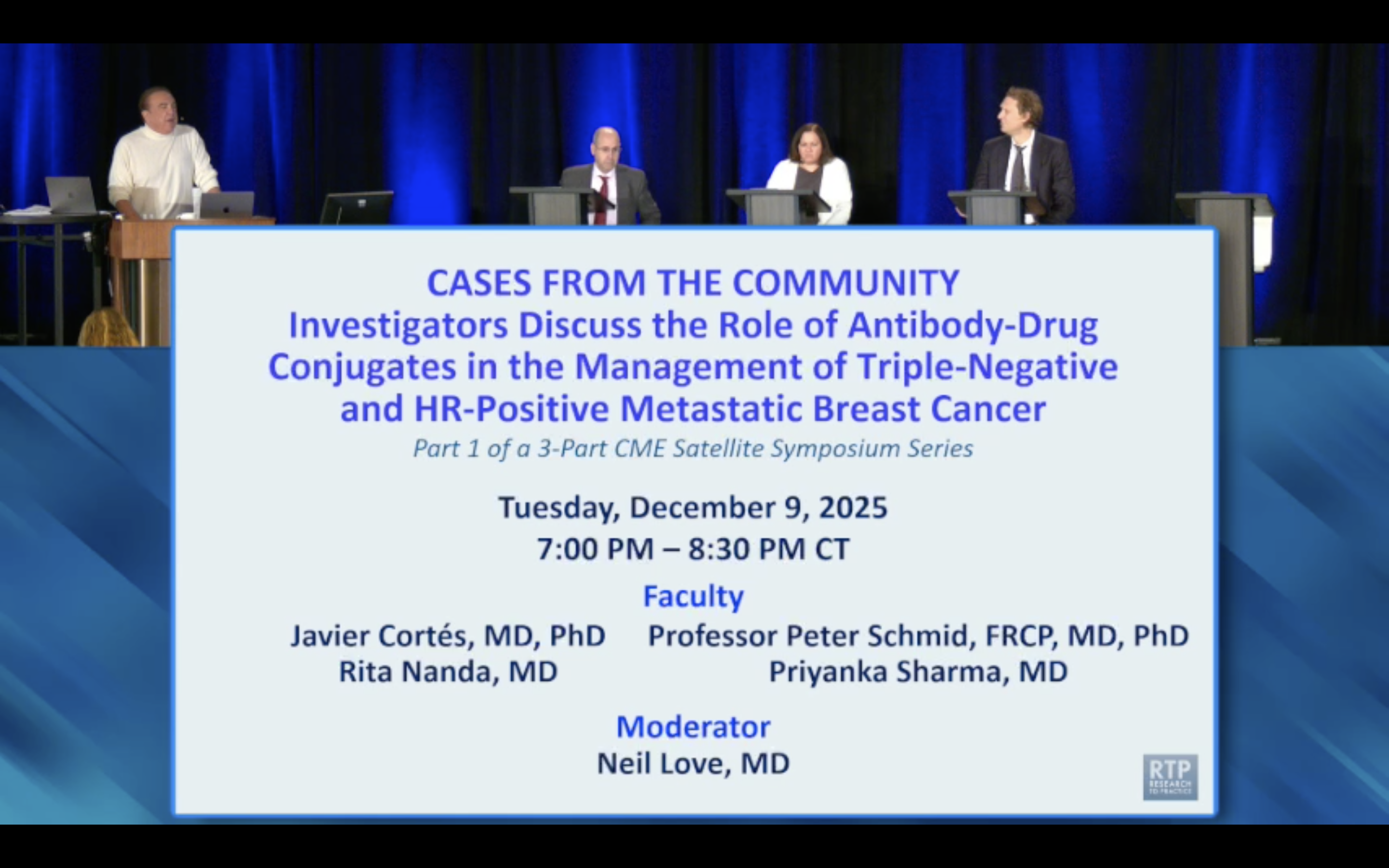
In metastatic breast cancer, approximately one-third of patients are unable to proceed to a second line of therapy due to disease progression or declining performance status. This high attrition rate argues for using the most effective agents, such as ADCs, in the first-line setting.
An overall survival (OS) benefit in an adjuvant trial may not be meaningful for patients in systems (e.g., the U.S.) with guaranteed access to the same effective immunotherapy upon recurrence. The crucial, unanswered question is whether treating micrometastatic disease is inherently superior to treating macroscopic disease later, a distinction current trial data doesn't clarify.
The failure of the TROPiCS-04 trial for sacituzumab govitecan may not indicate the TROP2 ADC class is ineffective. Experts suggest problems with dosing and toxicity management (e.g., neutropenia) during the trial could be the real culprit, arguing that the drug class still holds promise.
Emerging data shows that a second ADC, particularly one with the same payload, often has limited efficacy. This suggests clinicians must be highly strategic in selecting the first ADC, as it may be their most impactful opportunity for this class of drugs.
A significant criticism of the pivotal KEYNOTE-564 trial is that only half the patients in the control arm received standard-of-care immunotherapy upon relapse. This lack of subsequent optimal treatment complicates the interpretation of the overall survival benefit, raising questions about its true magnitude.
The differing efficacy and toxicity profiles of TROP2 ADCs like sacituzumab govitecan and Dato-DXD suggest that the drug's linker and payload metabolism are crucial determinants of clinical outcome. This indicates that focusing solely on the target antigen is an oversimplification of ADC design and performance.
Experts believe the stark difference in complete response rates (5% vs 30%) between two major ADC trials is likely due to "noise"—variations in patient populations (e.g., more upper tract disease) and stricter central review criteria, rather than a fundamental difference in the therapies' effectiveness.
Clinical trial data shows that despite specific toxicities, antibody-drug conjugates (ADCs) can be better tolerated overall than standard chemotherapy. For example, trials for both sacituzumab govitecan and dato-DXd reported fewer patients discontinuing treatment in the ADC arm compared to the chemotherapy arm.