Get your free personalized podcast brief
We scan new podcasts and send you the top 5 insights daily.
The current AI-driven downturn in SaaS valuations will primarily eliminate low-end, commoditized tools. Large enterprise platforms are protected because implementing AI effectively is complex and requires the deep, trusted C-suite relationships and integration capabilities that incumbents possess.

Related Insights
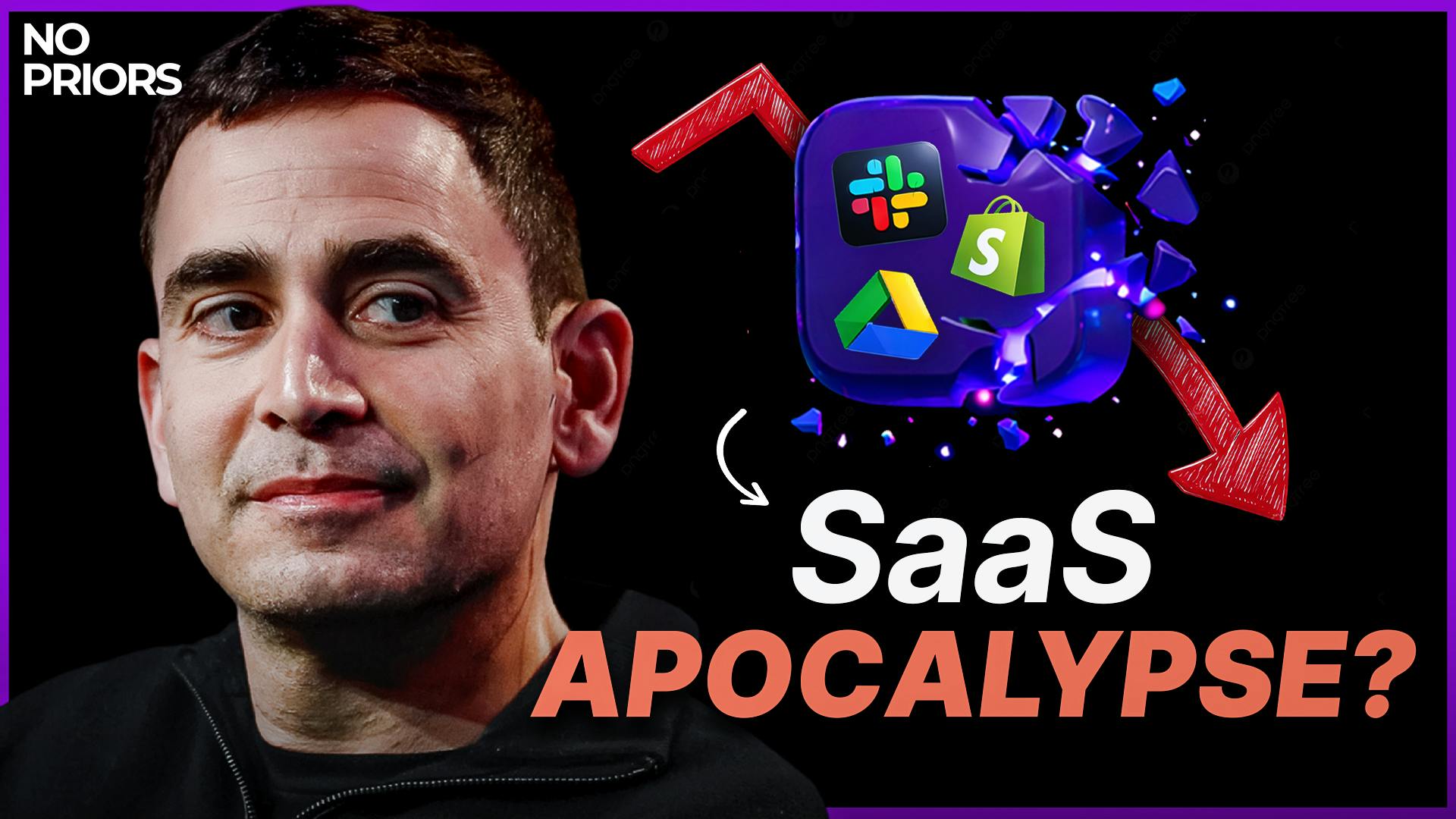
The "SaaSpocalypse" is not an indiscriminate event. A clear divergence is emerging between SaaS companies that are successfully integrating AI to strengthen their business models and those legacy companies that are unable to pivot, becoming "sloppable."

The "SaaSpocalypse" isn't about current revenues but a collapse in investor confidence. AI introduces profound uncertainty about future cash flows, causing the market to heavily discount what was once seen as bond-like predictability. SaaS firms must now actively prove they are beneficiaries of AI to regain their premium valuations.
While AI can replicate the functionality of a SaaS tool, it doesn't replicate the company infrastructure: sales, customer support, trust, and brand. With venture funding for new SaaS startups drying up, it's harder than ever for new entrants to reach critical mass, thus protecting established incumbents.

Unlike the slow denial of SaaS by client-server companies, today's SaaS leaders (e.g., HubSpot, Notion) are rapidly integrating AI. They have an advantage due to vast proprietary data and existing distribution channels, making it harder for new AI-native startups to displace them. The old playbook of a slow incumbent may no longer apply.

Bill McDermott argues the threat of AI replacing SaaS is not uniform. Niche applications serving a single department with low strategic value are vulnerable. In contrast, platforms that are systems of record or integrate workflows across multiple departments have a significant competitive moat.
The "SaaS apocalypse" will target "beta" software—tools that make companies more similar to their competitors. Conversely, "alpha" software—platforms that allow a company to express its unique strategy and competitive advantage—will thrive as AI makes customization and differentiation easier.

The "SaaSpocalypse" narrative misses a key reason large enterprises buy from vendors like Salesforce. It's not just about features, but accountability—like hiring McKinsey, it provides "air cover" and "a throat to choke." This institutional trust is a powerful moat against nascent, AI-generated tools.
Investor Joe Lonsdale offers a heuristic for the 'SaaSpocalypse': low-end SaaS, particularly PE-backed companies that prioritized sales over deep tech, is in trouble. However, complex software that required over $100 million in engineering to build has a significant moat and is defensible against AI-driven disruption for the foreseeable future.
The idea that AI will eliminate SaaS is overblown because it incorrectly projects small startup behavior onto large enterprises. Fortune 100s face immense change management, security, and maintenance challenges, making replacing established vendors with internal AI-coded tools impractical.
The threat of AI to SaaS is overstated for companies that own either a deep relationship with the user or a critical system of record. "Glue layer" SaaS companies without these moats are most at risk, while those like Salesforce (owning the customer relationship) are more durable.