Get your free personalized podcast brief
We scan new podcasts and send you the top 5 insights daily.
Instead of vertically integrating all manufacturing, quantum computer startup Yakumo adopts a strategy similar to automaker Toyota. They act as a full-stack integrator, designing the overall system and assembling critical components—like high-fidelity lasers—sourced from a specialized global supply chain spanning Japan and Denmark.

Related Insights
Subcontracting creates fixed interfaces between teams, leading to a "calcified architecture" where system-level optimization is impossible. Vertically integrating engineering and manufacturing in-house allows for dynamic trade-offs between disciplines, accelerating innovation and reducing costs.
![Scott Nolan - SpaceX, Founders Fund, and Rebuilding American Uranium Enrichment - [Invest Like the Best, EP.467] thumbnail](https://megaphone.imgix.net/podcasts/5edee546-3776-11f1-b41d-a76759576e87/image/908aaa6e87baf2b3d364892c4b7f9fd8.jpg?ixlib=rails-4.3.1&max-w=3000&max-h=3000&fit=crop&auto=format,compress)
Unlike the monolithic semiconductor industry, quantum computing encompasses varied approaches like superconducting, atomic, and photonic systems. Each has a distinct, partially overlapping supply chain, making a unified industrial policy incredibly difficult to formulate and execute.

Identifying the defense industrial base as "rotted out," Mock Industries is taking a bottom-up approach. Instead of just building platforms, it vertically integrates to produce high-performance subsystems (radars, engines) and sells them to other primes, aiming to fix the entire ecosystem.

China's heavy investment in quantum component manufacturing, like photonic integrated circuits (PICs), allows its researchers to go from idea to physical prototype in just two weeks. In the US, the same process can take 12-18 months, giving China a massive advantage in iteration speed and adaptability.
To build a new American semiconductor foundry by 2028, Substrate is rejecting the modern specialized model. Instead, it's vertically integrating by designing and building its own lithography tools. This return to the industry's roots is aimed at reducing complexity and cost, enabling them to move faster.

As the US re-shores manufacturing, VCs are strategically investing in domestic component makers (e.g., motors, magnets) that can supply multiple portfolio companies. This de-risks the entire ecosystem by creating a reliable, local supply chain for critical parts.

The supply chain for today's quantum prototypes is globally distributed. The true geopolitical prize is to control the future, at-scale manufacturing ecosystem for fault-tolerant quantum computers—an arena where no nation currently has a decisive advantage.
Figure designs nearly every component of its robots in-house, from motors to batteries. This extreme vertical integration, though costly upfront, prevents being at the mercy of third-party vendor timelines, code problems, or supply chain issues, enabling faster iteration and deeper system control.
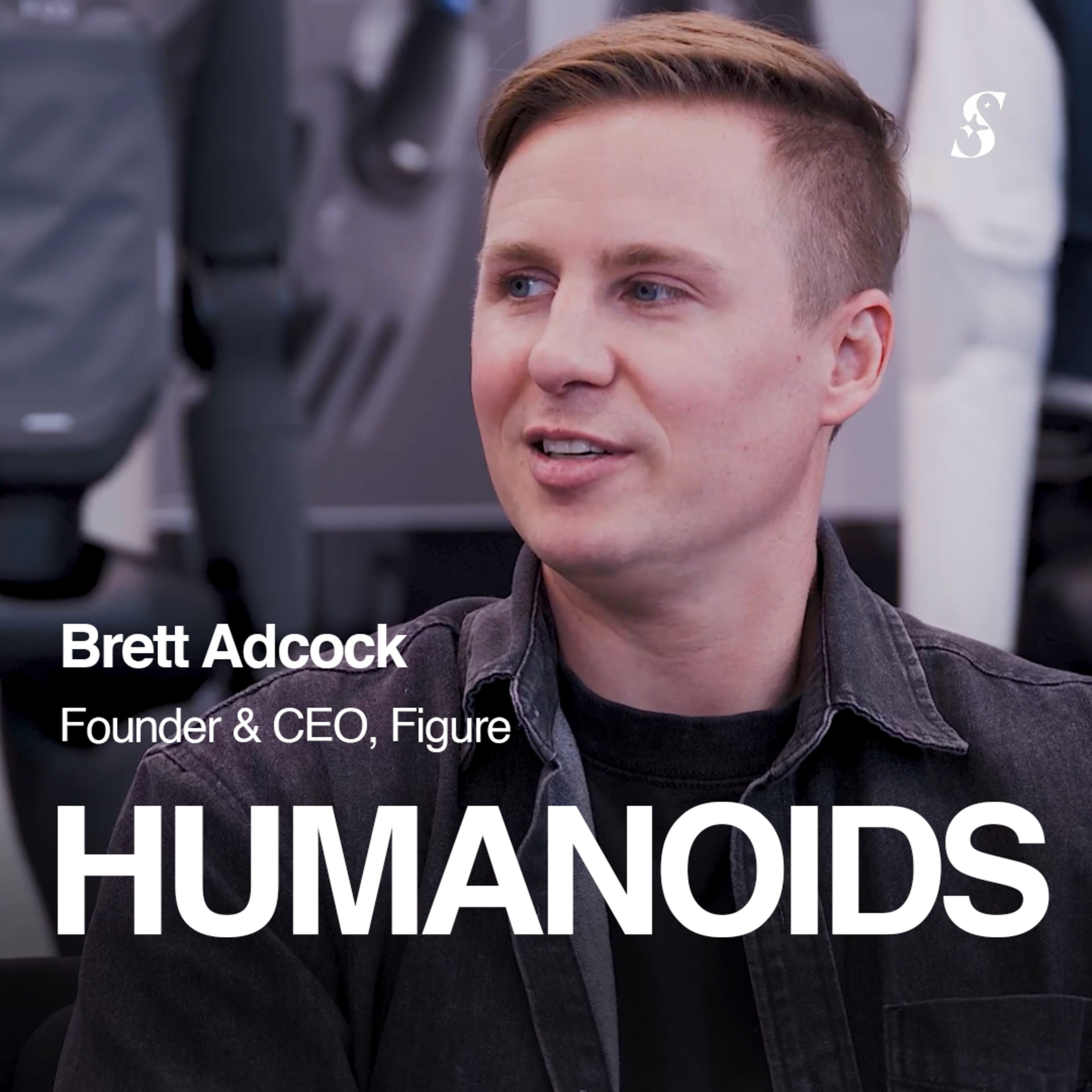
For large funds seeking massive returns, companies that control their entire value chain are more attractive than those making a single component. Full-stack companies can avoid supply chain dependencies and capture more value, making them a better fit for billion-dollar fund scale.
Etched builds its own chips, boards, cold plates, interconnects, and even its own racks. This full-stack ownership allows for extreme parallelization and iteration speed, a key advantage over startups that rely on a fragmented supply chain and multiple vendors.
![Etched - Building AI Hardware to Make Inference Faster and Cheaper - [Invest Like the Best, EP.480] thumbnail](https://megaphone.imgix.net/podcasts/532910c4-743d-11f1-b7dc-b31915c88b79/image/810c9e3a23b5c4ea0a56e5e4cc8d7e47.jpg?ixlib=rails-4.3.1&max-w=3000&max-h=3000&fit=crop&auto=format,compress)