Get your free personalized podcast brief
We scan new podcasts and send you the top 5 insights daily.
The survivability of nuclear-armed submarines, the cornerstone of second-strike capability, relies on their ability to hide. AI's capacity to parse vast sensor data to find faint signals could 'turn the oceans transparent,' making these massive vessels detectable and upending decades of nuclear deterrence strategy.

Related Insights
The U.S. Navy's ability to track Soviet submarines while keeping its own hidden threatened the USSR's second-strike capability, the cornerstone of nuclear deterrence. This technological and financial asymmetry pushed the Soviets toward de-escalation and ultimately, ending the war.

A global AI safety regime should learn from nuclear arms control by focusing on the physical infrastructure that enables strategic capabilities. Instead of just seeking promises, it should aim to control access to chokepoints like advanced chip manufacturing and the massive data centers required for frontier models.
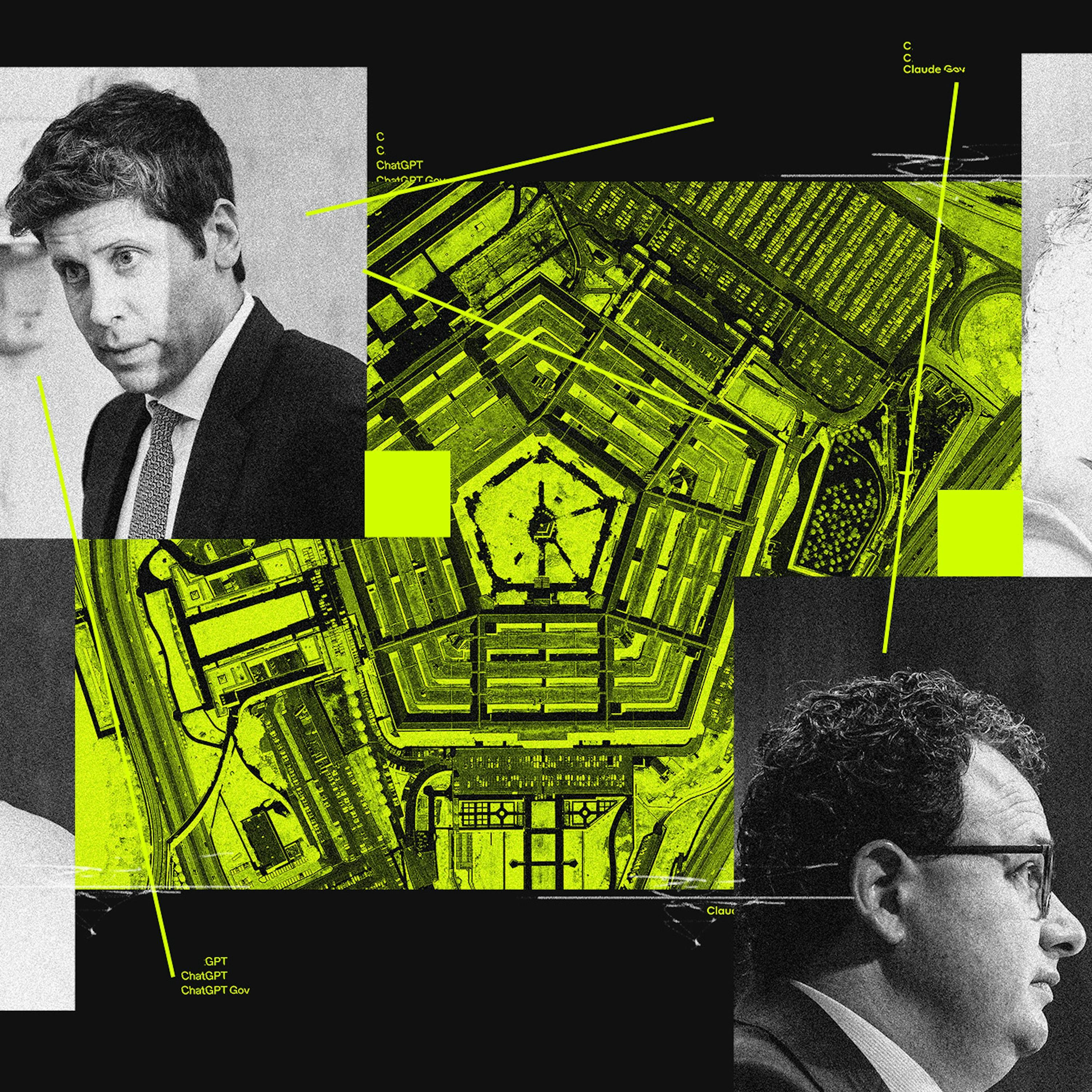
In the Iran conflict, AI like Claude is finally solving the military's chronic problem of having more intelligence data than it can analyze. The AI processes vast sensor data in real-time to identify critical, time-sensitive targets like mobile missile launchers.

The catastrophic consequence of even a single nuclear submarine escaping a first strike creates an incredibly high burden of proof. An attacker must be virtually 100% confident in eliminating all retaliatory forces simultaneously, a level of certainty that is practically unattainable.

AI experts who understand emerging technologies lack deep knowledge of nuclear deterrence strategy. Conversely, the nuclear policy community is not fully versed in frontier AI. This knowledge gap hinders accurate risk assessment and the development of sound policy.
AI can optimize nuclear targeting by more efficiently identifying mobile targets and assessing battle damage. This increased efficiency could reduce the number of weapons needed for a specific objective, potentially alleviating pressure to massively expand the US arsenal and creating future arms control opportunities.
Building massive sensor networks or missile defense systems is physically observable, giving adversaries time to develop countermeasures. In contrast, a sudden leap in AI-enabled intelligence processing can be invisible, creating a surprise window of vulnerability with no warning.
Developing nuclear weapons is technically difficult. AI can lower this barrier by optimizing complex processes like centrifuge design, explosives modeling, and supply chain management. It can also help nascent programs evade export controls, making a bomb more attainable for smaller states without established nuclear industries.
Public fear focuses on AI hypothetically creating new nuclear weapons. The more immediate danger is militaries trusting highly inaccurate AI systems for critical command and control decisions over existing nuclear arsenals, where even a small error rate could be catastrophic.
To maintain a second-strike capability, a country doesn't need equally advanced AI. Low-tech countermeasures like decoys, covering roads with netting, or simply moving missile launchers more frequently can create enough uncertainty to thwart a sophisticated, AI-driven first strike.