Get your free personalized podcast brief
We scan new podcasts and send you the top 5 insights daily.
Instead of replacing core sales tools like Salesforce or Gong, Anthropic used its own AI, Claude, as the "connective tissue" between them. Claude unifies the customer journey by making these disparate systems communicate and share context, creating a coherent experience for reps and customers rather than being just another bolted-on application.

Related Insights
Agent Skills and the Model Context Protocol (MCP) are complementary, not redundant. Skills package internal, repeatable workflows for 'doing the thing,' while MCP provides the open standard for connecting to external systems like databases and APIs for 'reaching the thing.'
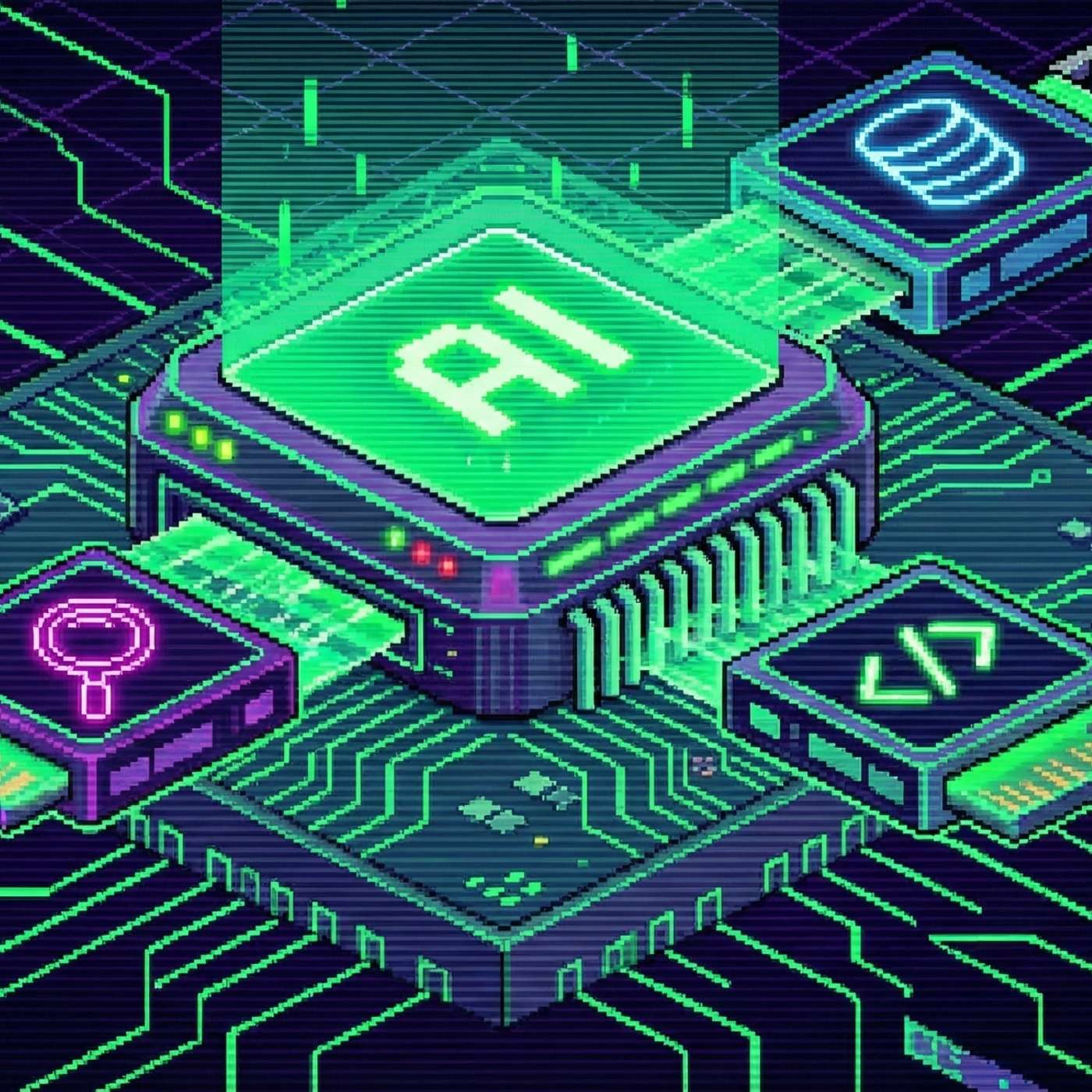
The term "AI-native" is misleading. A successful platform's foundation is a robust sales workflow and complex data integration, which constitute about 70% of the system. The AI or Large Language Model component is a critical, but smaller, 30% layer on top of that operational core.

Claude's ability to control the user's screen, mouse, and keyboard is a breakthrough for enterprises. It allows the AI to operate legacy or custom-built applications that lack modern APIs. This circumvents a major roadblock to AI adoption, breathing new life into older, business-critical software systems.

Anthropic's destiny was fundamentally changed by Claude Code, a developer tool that started as a side project. Its massive success, generating $2.5B in ARR and becoming the primary use case for Anthropic's models, demonstrates that the most powerful and immediate application of AI is creating and improving the software that powers the world.
Anthropic's 'Claude for Small Business' integrates with existing tools like QuickBooks. However, a more aggressive and truly disruptive strategy would be to bypass them entirely, using APIs like Plaid to build a completely new, AI-native bookkeeping and finance solution from the ground up.

Recent updates from Anthropic's Claude mark a fundamental shift. AI is no longer a simple tool for single tasks but has become a system of autonomous "agents" that you orchestrate and manage to achieve complex outcomes, much like a human team.

Instead of competing on diagnostics, Anthropic is positioning its Claude model as an 'orchestrator' to unify disparate health data for patients and providers. This strategy targets a major pain point—system navigation and data integration—rather than directly challenging established medical AI use cases, carving out a unique enterprise niche.
Anthropic's goal for Claude is to be a "virtual coworker," not just a personalized chatbot. This means deep integration into team workflows like Slack and meetings, allowing it to act as a true team member. This framing explains why superficial personalization features have failed to create user lock-in; the real value lies in contextual, collaborative integration.

Using an AI like Claude to interact with Salesforce doesn't make Salesforce obsolete. It's an evolution of the user interface, similar to how Slack's CEO used commands to update Salesforce years ago. The core system of record, with its deep data, business logic, and governance, remains critical.

Despite different origins (consumer vs. enterprise), both OpenAI and Anthropic are building a similar "super app." This product merges chat, coding assistants (Codex/Claude Code), and automated agents, indicating the market is consolidating around a single, integrated AI workflow tool as the dominant paradigm.