Get your free personalized podcast brief
We scan new podcasts and send you the top 5 insights daily.
Snowflake's CEO rejects a "YOLO AI" approach where model outputs are unpredictable. He insists enterprise AI products must be trustworthy, treating their development with the same discipline as software engineering. This includes mandatory evaluations (evals) for every model change to ensure reliability.

Related Insights
Leaders must resist the temptation to deploy the most powerful AI model simply for a competitive edge. The primary strategic question for any AI initiative should be defining the necessary level of trustworthiness for its specific task and establishing who is accountable if it fails, before deployment begins.

Snowflake's CEO advises against seeking a huge ROI on the first AI project. Instead, companies should run many small, inexpensive experiments—taking multiple "shots on goal"—to learn the landscape and build momentum. This approach proves value incrementally rather than relying on one big bet.
Treating AI evaluation like a final exam is a mistake. For critical enterprise systems, evaluations should be embedded at every step of an agent's workflow (e.g., after planning, before action). This is akin to unit testing in classic software development and is essential for building trustworthy, production-ready agents.
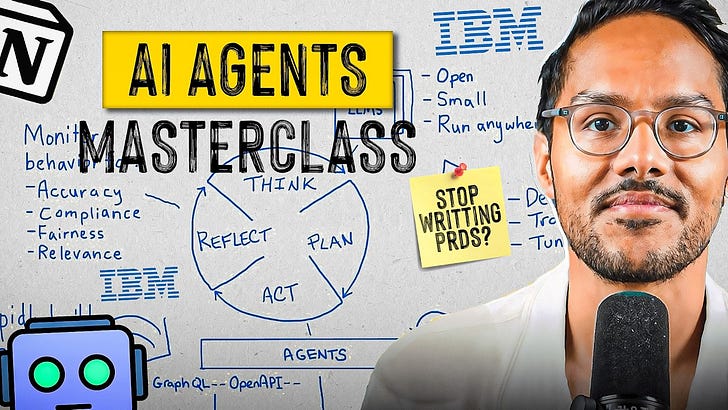
People overestimate AI's 'out-of-the-box' capability. Successful AI products require extensive work on data pipelines, context tuning, and continuous model training based on output. It's not a plug-and-play solution that magically produces correct responses.
Treating AI risk management as a final step before launch leads to failure and loss of customer trust. Instead, it must be an integrated, continuous process throughout the entire AI development pipeline, from conception to deployment and iteration, to be effective.

AI evaluation shouldn't be confined to engineering silos. Subject matter experts (SMEs) and business users hold the critical domain knowledge to assess what's "good." Providing them with GUI-based tools, like an "eval studio," is crucial for continuous improvement and building trustworthy enterprise AI.
The primary bottleneck in improving AI is no longer data or compute, but the creation of 'evals'—tests that measure a model's capabilities. These evals act as product requirement documents (PRDs) for researchers, defining what success looks like and guiding the training process.

Unlike deterministic SaaS software that works consistently, AI is probabilistic and doesn't work perfectly out of the box. Achieving 'human-grade' performance (e.g., 99.9% reliability) requires continuous tuning and expert guidance, countering the hype that AI is an immediate, hands-off solution.

Teams that claim to build AI on "vibes," like the Claude Code team, aren't ignoring evaluation. Their intense, expert-led dogfooding is a form of manual error analysis. Furthermore, their products are built on foundational models that have already undergone rigorous automated evaluations. The two approaches are part of the same quality spectrum, not opposites.

For enterprises, scaling AI content without built-in governance is reckless. Rather than manual policing, guardrails like brand rules, compliance checks, and audit trails must be integrated from the start. The principle is "AI drafts, people approve," ensuring speed without sacrificing safety.
