Get your free personalized podcast brief
We scan new podcasts and send you the top 5 insights daily.
Despite new therapies, 16-19% of patients achieve very long progression-free survival on the standard THP regimen. These "exceptional responders" often present with de novo, non-visceral disease, suggesting they are a distinct subgroup that may not require immediate escalation to newer treatments.

Related Insights
When treating refractory kidney cancer, clinicians prioritize regimens offering the most durable initial response. They argue against “saving” effective drugs for later, as disease progression is traumatic for patients and many never successfully receive subsequent lines of therapy. The goal is long-term disease control now, not preserving theoretical future options.

With pirtobrutinib, time to next treatment often exceeds progression-free survival. This discrepancy exists because disease progression is frequently slow and asymptomatic, meaning clinicians do not need to switch therapies immediately upon seeing radiographic changes, allowing for longer treatment duration.

Traditional endpoints like progression-free survival (PFS) incentivize continuous treatment. The NCI group proposes "treatment-free survival," a novel metric that quantifies time spent *off* therapy. This endpoint better captures the patient experience and rewards treatments that provide durable responses after a finite course.
In CLL, Progression-Free Survival (PFS) is a misleading metric for clinical benefit. Time-To-Next-Treatment (TTNT) is often much longer because patients can have biochemical or radiological progression by IWCLL criteria but remain asymptomatic and clinically well, delaying the need for a new therapy.

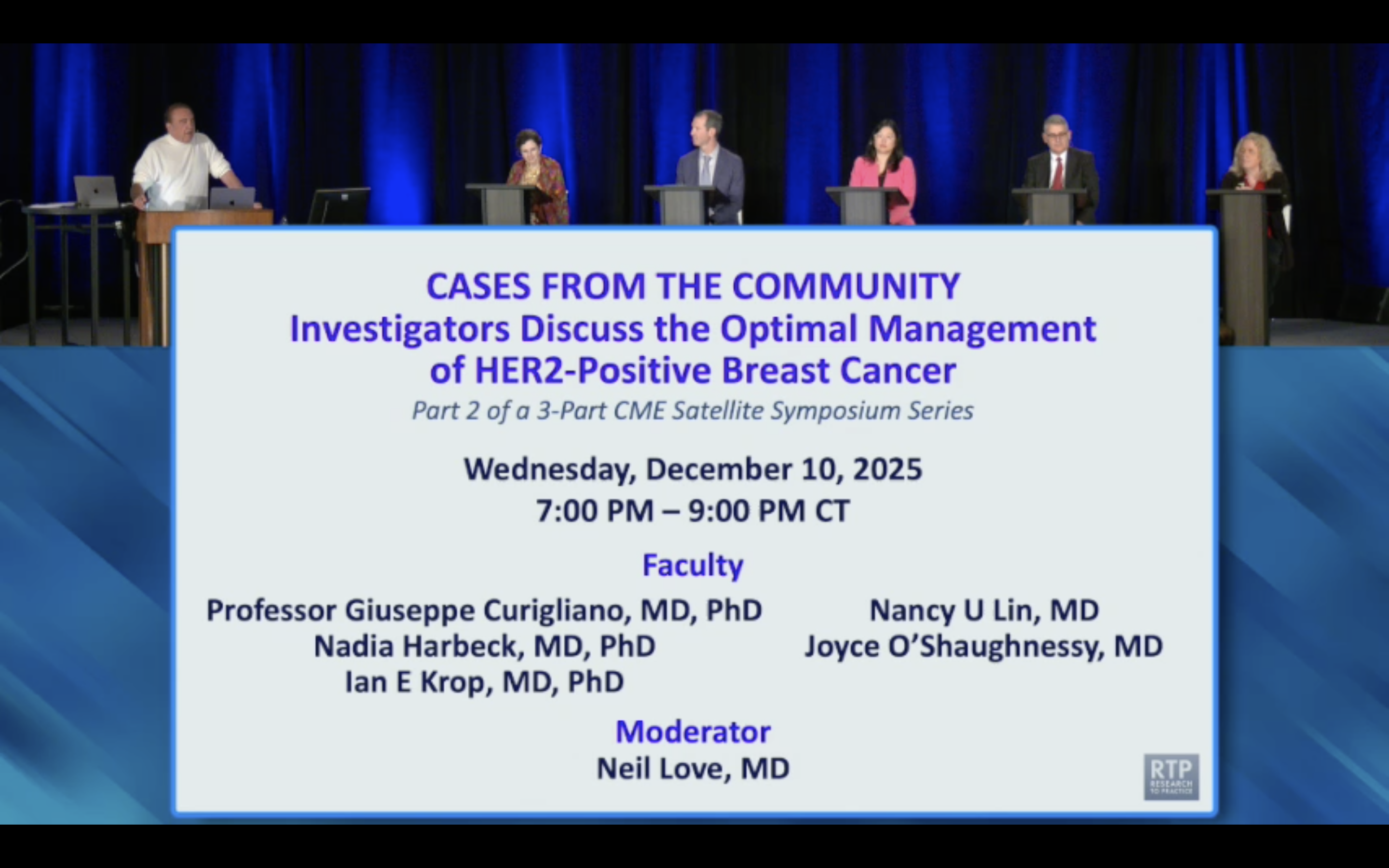
The DESTINY-Breast11 trial showed a neoadjuvant regimen of TDXD followed by THP achieved a 67.3% pathologic complete response (pCR) rate in high-risk HER2+ breast cancer. This is the highest pCR rate seen in a registrational trial, signaling a potential new standard of care.
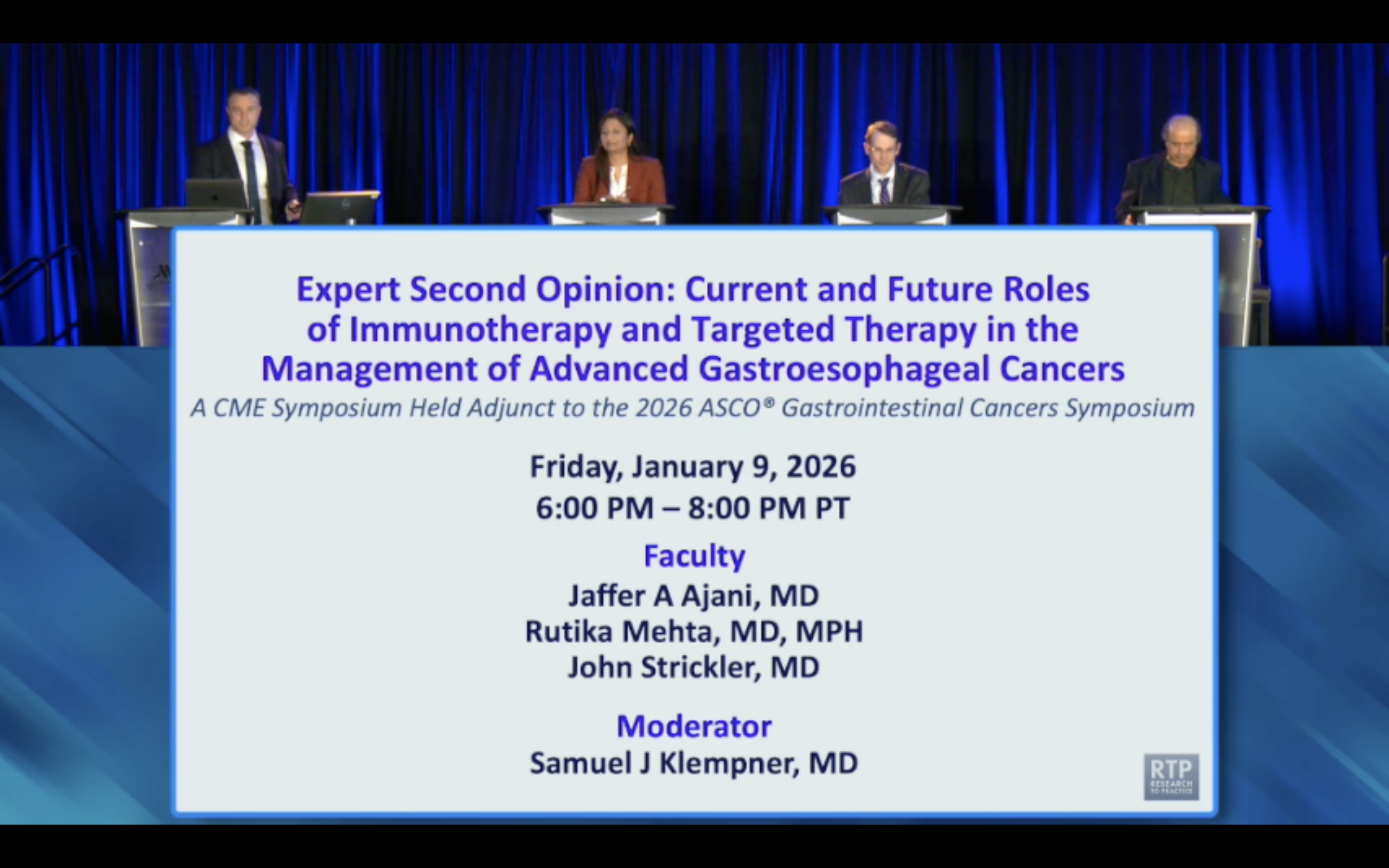
Comparing control arms from the TOGA (11 months OS), KEYNOTE-811 (16 months), and HORIZON (19 months) trials reveals a steady improvement in patient outcomes. This trend, likely due to better second-line therapies and supportive care, makes it harder for new agents to show a relative benefit.
While continuous therapy remains the official standard of care for mHSPC, there's a growing consensus for individualized de-intensification. For patients with a sustained, undetectable PSA (e.g., for two years), clinicians are increasingly comfortable discussing stopping all treatments to improve quality of life and reduce toxicity.
Even when testing drugs in heavily pre-treated patients, clinical trials incorporate subtle biological selection criteria. For instance, the COMPASS trial excludes patients with visceral metastases, a tactic to enrich for a population more likely to respond and avoid the most aggressive disease subtypes.
The progression-free survival (PFS) curves for Belzutifan regimens consistently overlap with controls for 6-8 months before separating. This signature “Belzutifan effect,” seen across multiple trials, suggests the drug provides durable, long-term disease control for a subset of patients rather than immediate, broad efficacy, hinting at a distinct biological mechanism.
A contrarian viewpoint, dubbed the "Gillison Paradox," argues that patients achieving a complete response are precisely the ones who should receive more therapy. Their strong response indicates drug sensitivity, making it logical to continue treatment to eradicate any remaining micrometastatic disease, rather than de-escalating.