Get your free personalized podcast brief
We scan new podcasts and send you the top 5 insights daily.
The company adapts its go-to-market strategy based on local regulations. In "retail choice" markets, it sells power directly to consumers. In regulated markets, it partners with utility companies, who pay for access to control the batteries, ensuring revenue streams across different market structures.
Related Insights
According to Base Power CEO Zach Dell, breakthroughs in battery chemistry are less critical than optimizing the entire system. The majority of a deployed battery's cost comes from components "above the cell," including the pack, power electronics, deployment, customer acquisition, and maintenance. This makes vertical integration essential for driving down the true cost of power.

The primary bottleneck for new energy projects, especially for AI data centers, is the multi-year wait in interconnection queues. Base's strategy circumvents this by deploying batteries where grid infrastructure already exists, enabling them to bring megawatts online in months, not years.

Base's core thesis is that the shift to solar and battery storage is inevitable not because of ESG trends, but because it represents the lowest marginal cost to add power to the grid. This economic argument is more fundamental and compelling than climate narratives alone.
Unlike competitors focused on pairing small batteries with solar for wealthy homeowners, Base Power's strategy is to deploy large batteries at the edge of the grid to provide grid support. This transforms individual home batteries into a decentralized network, creating a fundamentally different value proposition.
Regulations forbid battery operators from selling electricity back to the grid unless it's 100% from renewables. This blocks the primary business model of energy arbitrage (buying low, selling high), confining batteries to small, saturated ancillary service markets and crippling the storage industry.
![Taiwan's War on Renewables [Fully Produced Radio Show!] thumbnail](https://megaphone.imgix.net/podcasts/ea2b2a28-6bfc-11f1-861d-dbb1c081b969/image/6e2a7fb9b3341e0e4138f617d8c58e86.png?ixlib=rails-4.3.1&max-w=3000&max-h=3000&fit=crop&auto=format,compress)
By designing, manufacturing, installing, and operating its own batteries, Base Power creates a flywheel. Greater scale lowers costs, which allows for lower consumer prices, which in turn drives more scale and demand. This strategy is key in a commodity industry.

The restructuring of the U.S. electricity sector wasn't purely ideological. It was a direct response to regulated utilities making massive, incorrect bets on demand growth, building unneeded power plants, and causing prices to skyrocket for captive customers. Competition was introduced to shift this investment risk from consumers to private investors.

In commoditized industries like energy, customers are accustomed to poor service and non-existent brands. Base identifies this as a massive opportunity. By focusing on creating the first "beloved brand in energy," they aim to build a powerful competitive moat that incumbents cannot easily replicate.
Base Power differentiates itself by designing its system to back up an entire home by default, unlike competitors that often only back up select circuits. This eliminates a complex decision for the customer during installation and provides a clearer, more comprehensive value proposition.
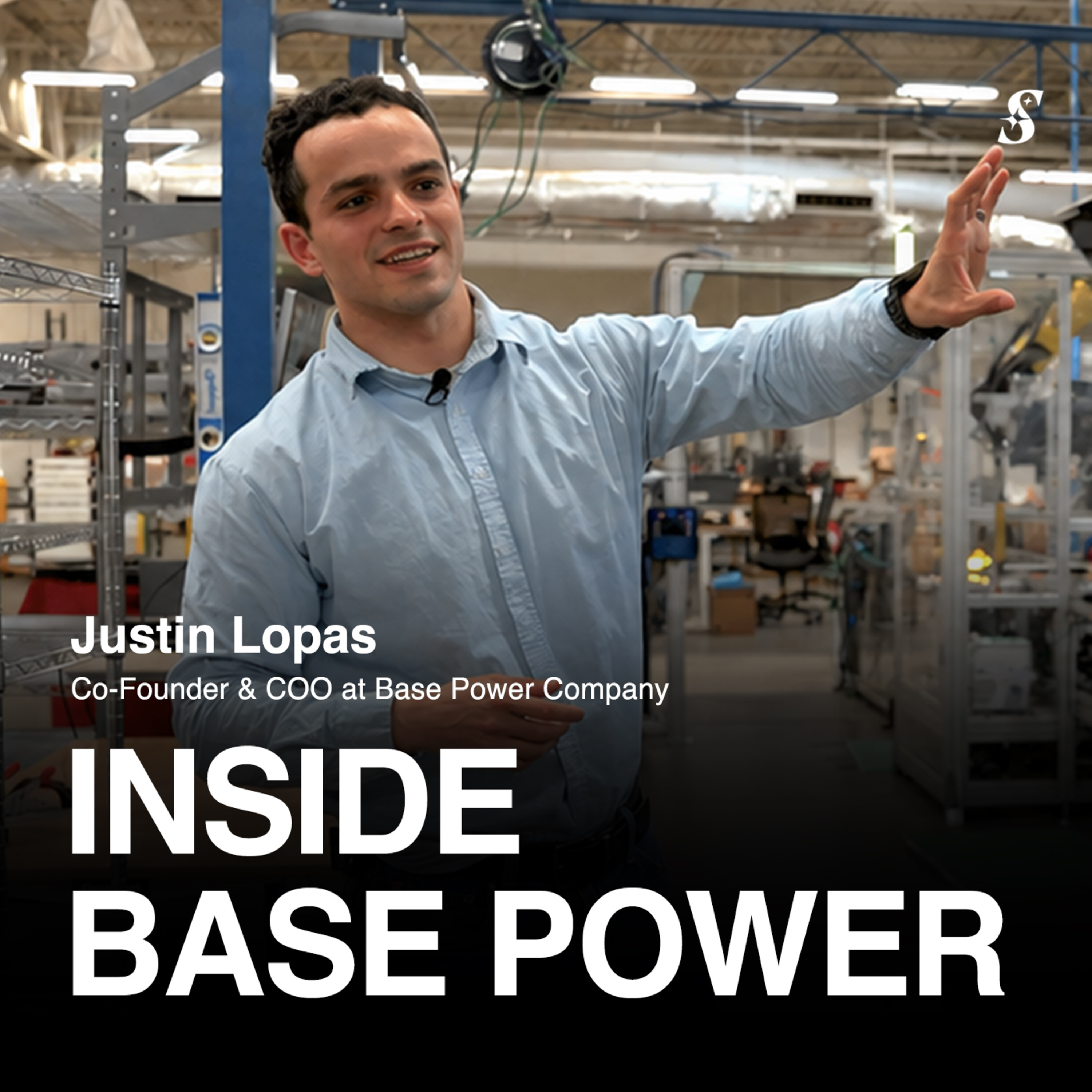
Instead of outsourcing, Base Power manufactures its batteries in-house in the US. This strategy gives them direct control over the production line, allowing for rapid hardware changes, reduced lead times, and lower costs compared to relying on contract manufacturers.