Get your free personalized podcast brief
We scan new podcasts and send you the top 5 insights daily.
Due to cumulative toxicity concerns with TDXD, particularly ILD, clinicians express more comfort with the shorter 4-cycle neoadjuvant course from DESTINY-Breast11 than the prolonged 14-cycle adjuvant therapy in DESTINY-Breast05, favoring front-loading the treatment.

Related Insights
In neoadjuvant settings, ctDNA monitoring allows for real-time therapy adjustment. Data from the iSpy platform shows 80% of hormone-positive patients clear ctDNA with half the chemotherapy, enabling de-escalation, while the remaining 20% can be identified for escalated treatment.
An advisory panel split 50/50 on a two-year immunotherapy regimen but voted 7-to-1 for a one-year drug with similar efficacy. This reveals that for adjuvant therapies in non-metastatic cancer, halving the treatment duration and toxicity exposure can decisively shift the risk/benefit calculation in favor of approval.

Data from DESTINY-Breast09 shows TDXD plus pertuzumab dramatically improved progression-free survival in first-line metastatic HER2+ breast cancer. This unprecedented efficacy raises new questions about optimal treatment duration and the potential for de-escalated maintenance therapy after induction.
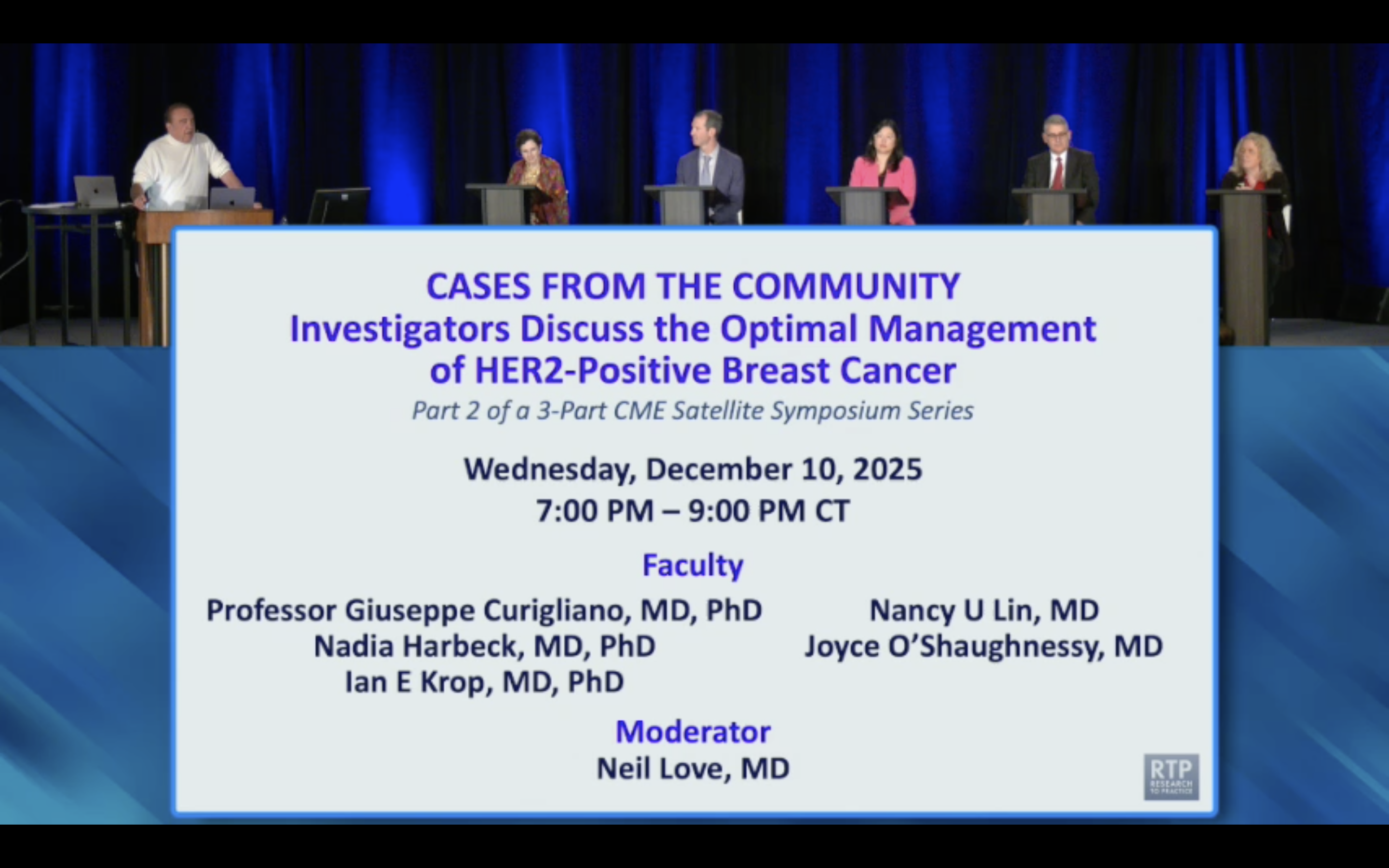
Positive data from both DESTINY-Breast09 (TDXD-based) and PATINA (CDK4/6i maintenance) create a new dilemma. With similar PFS outcomes, the first-line choice for metastatic HER2+/HR+ patients now hinges on toxicity profiles and patient preference rather than a single efficacy winner.
The DESTINY-Breast11 trial showed a neoadjuvant regimen of TDXD followed by THP achieved a 67.3% pathologic complete response (pCR) rate in high-risk HER2+ breast cancer. This is the highest pCR rate seen in a registrational trial, signaling a potential new standard of care.
In metastatic breast cancer, approximately one-third of patients are unable to proceed to a second line of therapy due to disease progression or declining performance status. This high attrition rate argues for using the most effective agents, such as ADCs, in the first-line setting.
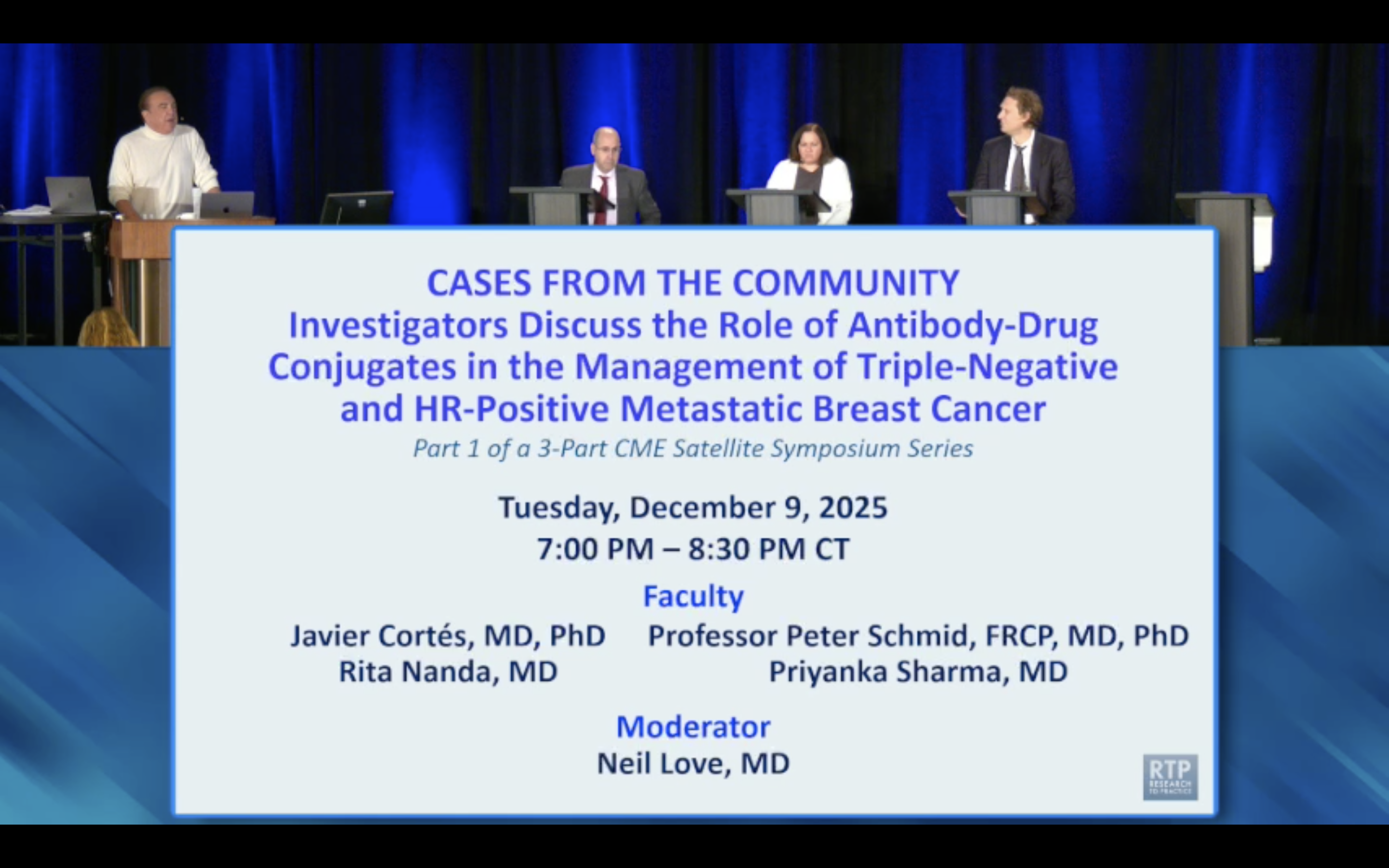
The PR21 trial showed better overall survival for docetaxel followed by Lutetium, despite similar progression-free survival. The likely reason is not drug superiority but patient behavior: a higher percentage of patients complete the second therapy when starting with chemo, highlighting how treatment fatigue significantly impacts survival.
A subtle finding in the DESTINY-Breast11 trial, where TDXD alone underperformed TDXD followed by THP, suggests that taxane-based chemotherapy might remain effective even after a patient's HER2-positive cancer becomes resistant to the antibody-drug conjugate TDXD.
While oncologists focus on the low 4% rate of Interstitial Lung Disease (ILD) from neoadjuvant TDXD, surgeons worry this complication could prevent patients from reaching potentially curative surgery, drawing parallels to issues seen with neoadjuvant immunotherapy.
Clinical trial data shows that despite specific toxicities, antibody-drug conjugates (ADCs) can be better tolerated overall than standard chemotherapy. For example, trials for both sacituzumab govitecan and dato-DXd reported fewer patients discontinuing treatment in the ADC arm compared to the chemotherapy arm.