Get your free personalized podcast brief
We scan new podcasts and send you the top 5 insights daily.
Mike Schroepfer, Meta's ex-CTO, believes that as the marginal cost of software ("bits") trends to zero, the next major wave of innovation will be in the physical world ("atoms"). His new fund, Gigascale Capital, invests in areas like energy, data centers, and manufacturing, which he sees as the new frontier.

Related Insights
According to a partner at Radical Ventures, the frontier for AI startups is expanding beyond software ('bits') into the physical world ('atoms'). The next wave of high-impact AI companies will tackle complex challenges in sectors like energy, critical minerals, and manufacturing.

The AI revolution isn't just about software. For the first time in years, venture capital is flowing into hardware like specialized semis and even into energy generation, because power is the core bottleneck for all AI progress.

As AI commoditizes software, hardware is re-emerging as a key defensibility layer for startups. A decade ago, VCs avoided hardware, but now a physical device tied to a software subscription creates powerful stickiness and justifies high valuations, representing a major shift in investment strategy.
After decades of stagnation in physical innovation, the investment cycle is shifting. As AI commoditizes software ('bits'), capital will pivot back to real-world infrastructure ('atoms') like nuclear energy and space exploration, driving the next major growth wave.

Bezos's proposed $100B AI manufacturing fund represents a monumental pivot in capital allocation. This 'manufacturing transformation vehicle' dwarfs typical venture funds, signaling a new era of mega-investments targeting the revitalization of physical world industries in the U.S. through AI.

Andreessen now largely agrees with Peter Thiel's thesis: technological progress has been confined to "bits" (software) while the world of "atoms" (physical infrastructure, manufacturing) has stagnated for 50 years. This real-world inertia will significantly slow AI's broader economic impact.

Meta's massive investment in nuclear power and its new MetaCompute initiative signal a strategic shift. The primary constraint on scaling AI is no longer just securing GPUs, but securing vast amounts of reliable, firm power. Controlling the energy supply is becoming a key competitive moat for AI supremacy.

The 50-year supremacy of asset-light software may be an anomaly. If AI makes software creation nearly free, economic value will shift back to the historical mean: tangible assets like infrastructure, energy, and regulated, liability-bearing businesses that touch the physical world.
Top AI labs realize that progress in digital, keyboard-based AI is accelerating so vertically that it will soon saturate. The next major frontier for innovation and growth will be applying AI to the physical world: robotics, manufacturing, and industrialization.

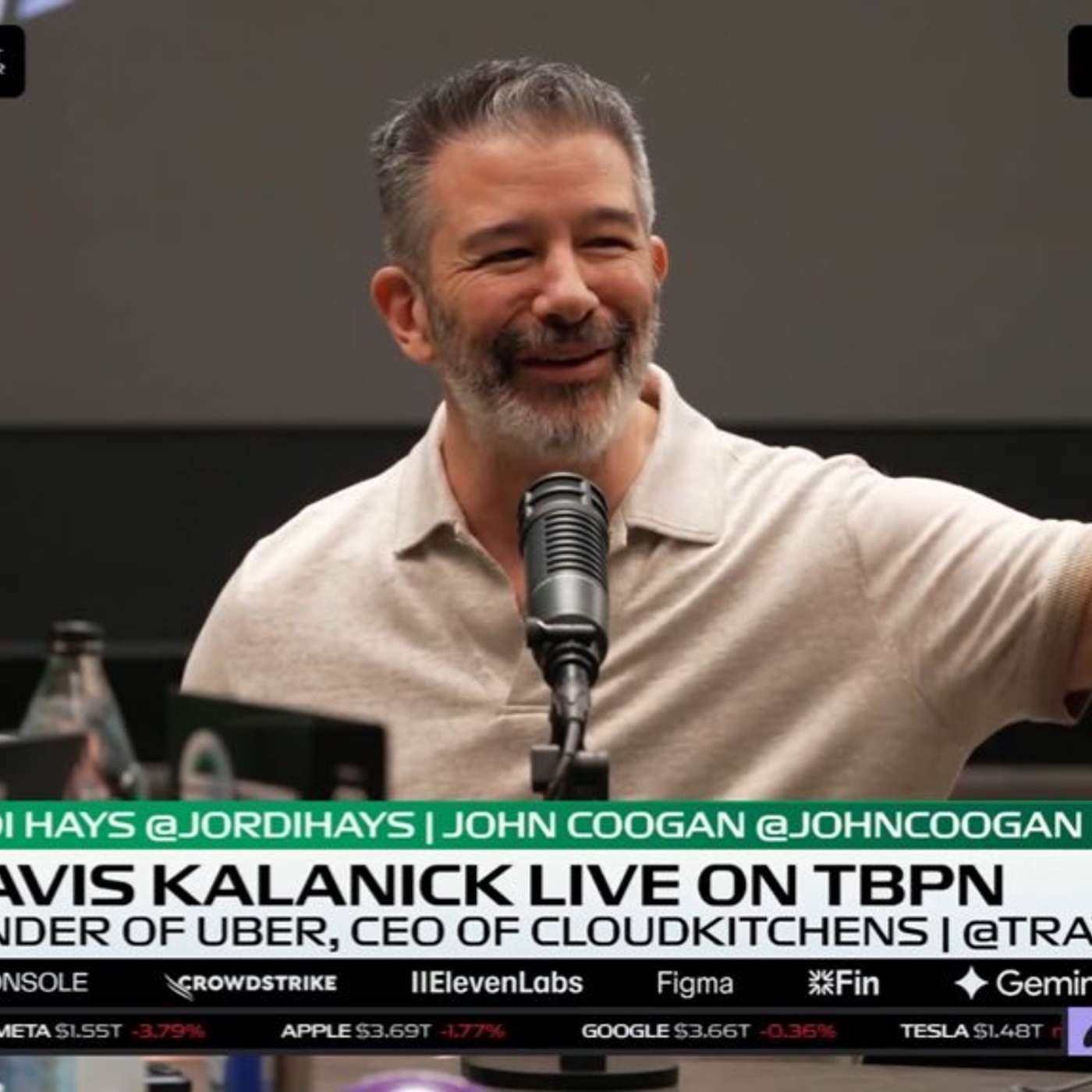
Kalanick's grand strategy is based on a framework where atoms are treated like bits. Manufacturing manipulates atoms (CPU), real estate stores them (Storage), and logistics moves them (Network). This model explains his career progression from Uber (Network) to Cloud Kitchens (Storage) and now robotics (CPU).