Get your free personalized podcast brief
We scan new podcasts and send you the top 5 insights daily.
According to Nvidia's CEO Jensen Huang, China's real threat in the AI race isn't just its technology but its centralized ability to bypass the state-by-state regulations and power constraints bogging down US companies. While the US debates 50 legislative frameworks, China rapidly deploys infrastructure, creating a significant speed advantage.
Related Insights
Facing semiconductor shortages, China is pursuing a unique AI development path. Instead of competing directly on compute power, its strategy leverages national strengths in vast data sets, a large talent pool, and significant power infrastructure to drive AI progress and a medium-term localization strategy.

While the US currently leads in AI with superior chips, China's state-controlled power grid is growing 10x faster and can be directed towards AI data centers. This creates a scenario where if AGI is a short-term race, the US wins. If it's a long-term build-out, China's superior energy infrastructure could be the deciding factor.

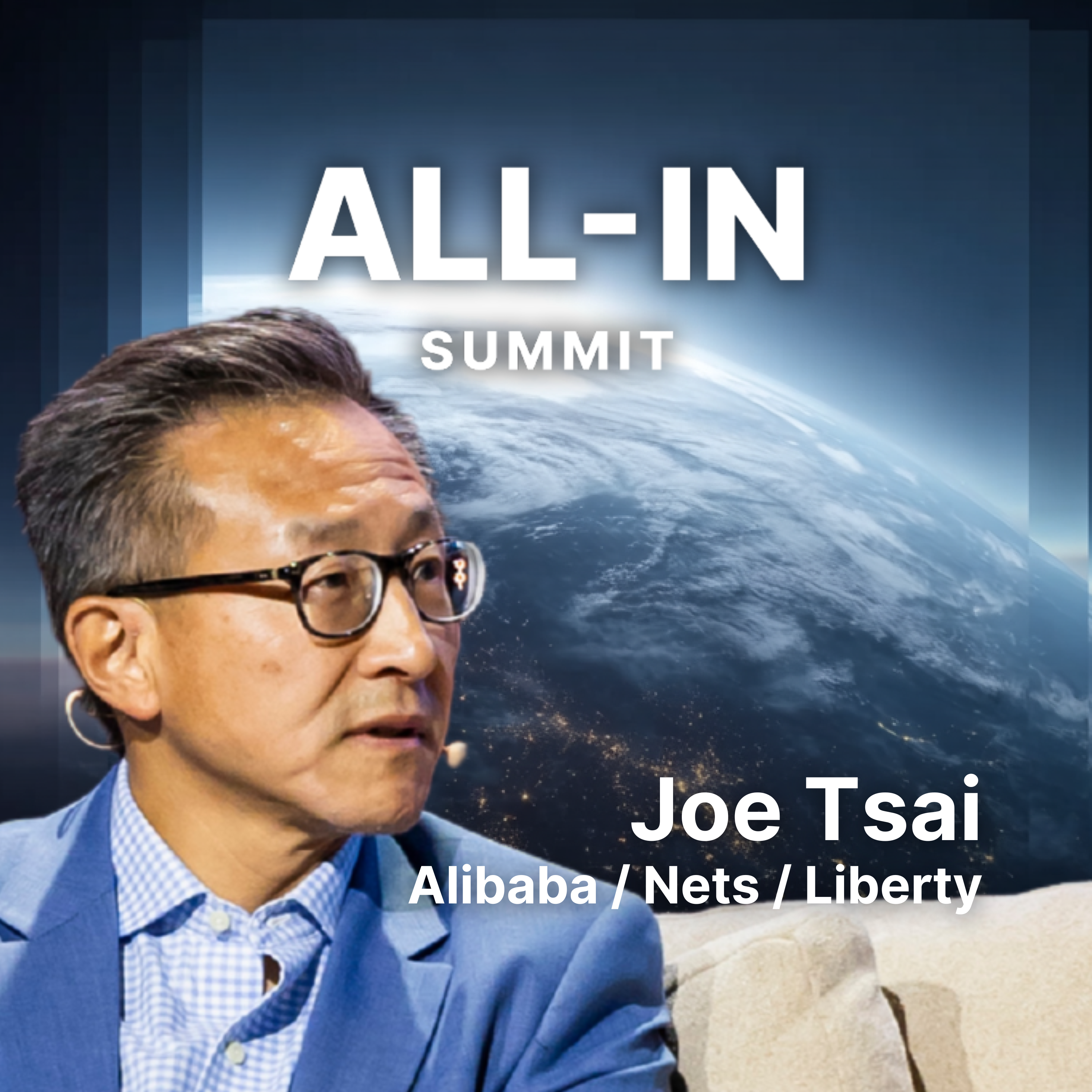
Joe Tsai reframes the US-China 'AI race' as a marathon won by adoption speed, not model size. He notes China’s focus on open source and smaller, specialized models (e.g., for mobile devices) is designed for faster proliferation and practical application. The goal is to diffuse technology throughout the economy quickly, rather than simply building the single most powerful model.
Restricting sales to China is a catastrophic mistake that creates a protected, trillion-dollar market for domestic rivals like Huawei. This funds their R&D and global expansion with monopoly profits. To win the long-term AI race, American tech must be allowed to compete everywhere.

Contrary to the narrative of a simple "tech race," the assessment is that China is already ahead in physical AI and supply chain capabilities. The expert warns that this gap is not only expected to last three to five years but may widen at an accelerating rate, posing a significant long-term competitive challenge for the U.S.
A key strategic difference in the AI race is focus. US tech giants are 'AGI-pilled,' aiming to build a single, god-like general intelligence. In contrast, China's state-driven approach prioritizes deploying narrow AI to boost productivity in manufacturing, agriculture, and healthcare now.

Attempts to undermine Chinese chip maker Huawei by allowing NVIDIA to sell chips to China are flawed. The Chinese government operates outside typical market dynamics and will ensure unlimited demand for Huawei's products, making NVIDIA a temporary gap-filler that inadvertently turbocharges China's AI industry.

While semiconductor access is a critical choke point, the long-term constraint on U.S. AI dominance is energy. Building massive data centers requires vast, stable power, but the U.S. faces supply chain issues for energy hardware and lacks a unified grid. China, in contrast, is strategically building out its energy infrastructure to support its AI ambitions.

While the US focuses on creating the most advanced AI models, China's real strength may be its proven ability to orchestrate society-wide technology adoption. Deep integration and widespread public enthusiasm for AI could ultimately provide a more durable competitive advantage.
While the West may lead in AI models, China's key strategic advantage is its ability to 'embody' AI in hardware. Decades of de-industrialization in the U.S. have left a gap, while China's manufacturing dominance allows it to integrate AI into cars, drones, and robots at a scale the West cannot currently match.
