Get your free personalized podcast brief
We scan new podcasts and send you the top 5 insights daily.
Nvidia's CEO Jensen Huang reveals the company's core strategic filter: it only takes on projects that are incredibly difficult, have never been done before, and leverage the company's unique superpowers. This ensures a defensible moat, as easier problems attract too many competitors. This strategy requires an organizational tolerance for "pain and suffering."

Related Insights
The founders initially feared their data collection hardware would be easily copied. However, they discovered the true challenge and defensible moat lay in scaling the full-stack system—integrating hardware iterations, data pipelines, and training loops. The unexpected difficulty of this process created a powerful competitive advantage.

Jensen Huang's core strategy is to be a market creator, not a competitor. He actively avoids "red ocean" battles for existing market share, focusing instead on developing entirely new technologies and applications, like parallel processing for gaming and then AI, which established entirely new industries.

Jensen Huang criticizes the focus on a monolithic "God AI," calling it an unhelpful sci-fi narrative. He argues this distracts from the immediate and practical need to build diverse, specialized AIs for specific domains like biology, finance, and physics, which have unique problems to solve.
Instead of competing for market share, Jensen Huang focuses on creating entirely new markets where there are initially "no customers." This "zero-billion-dollar market" strategy ensures there are also no competitors, allowing NVIDIA to build a dominant position from scratch.

Jensen Huang demands to know the absolute fastest possible production timeline, the "speed of light," irrespective of the initial astronomical cost. This forces suppliers to reveal their true physical limits, providing a powerful strategic baseline for decision-making beyond conventional quotes.
NVIDIA's long-term vision isn't based on incremental forecasts. CEO Jensen Huang's method is to envision the technological landscape 20 years in the future and then architect a roadmap by working backward from that endpoint. This approach enables breakthrough innovations rather than just iterative improvements.

Beyond technology, Tesla's durable advantage is its 'capacity to suffer'—a willingness, driven by Elon Musk, to endure extreme hardship like 'manufacturing hell' to solve problems. This allows the company to pursue innovations that more risk-averse competitors would abandon.

NVIDIA embraces the concept of "zero billion dollar markets," investing heavily in initiatives that have no immediate revenue potential. This long-term R&D strategy, like their decade-long work in autonomous driving, is key to creating and eventually dominating future markets.
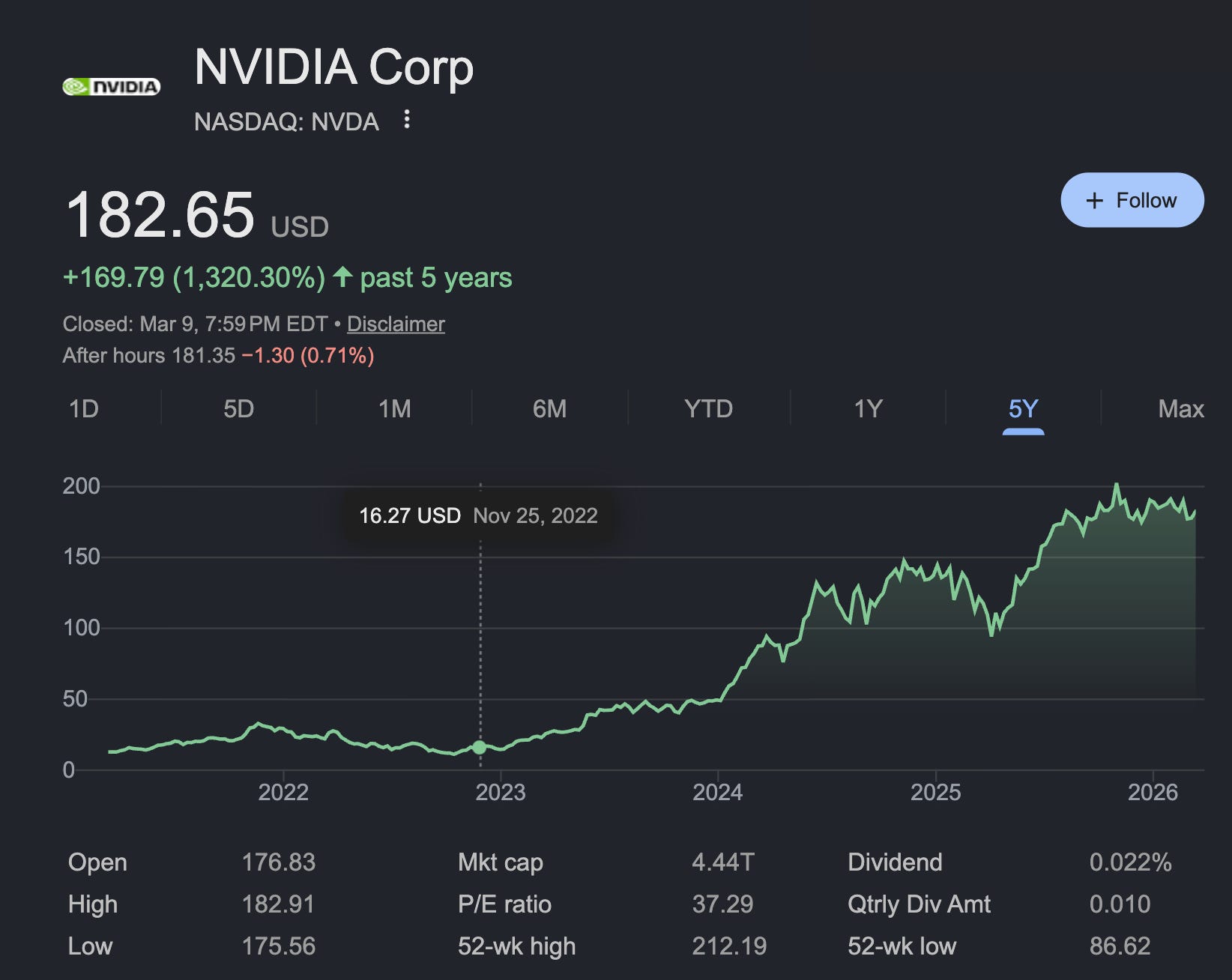
During a routine roadmap review, Nvidia's CEO unexpectedly abolished a major product line and reassigned a third of the company's engineers. This exemplifies the fearless, rapid, and decisive leadership required to navigate fast-moving tech markets.

Drawing from Verkada's decision to build its own hardware, the strategy is to intentionally tackle difficult, foundational challenges early on. While this requires more upfront investment and delays initial traction, it creates an immense competitive barrier that latecomers will struggle to overcome.