Get your free personalized podcast brief
We scan new podcasts and send you the top 5 insights daily.
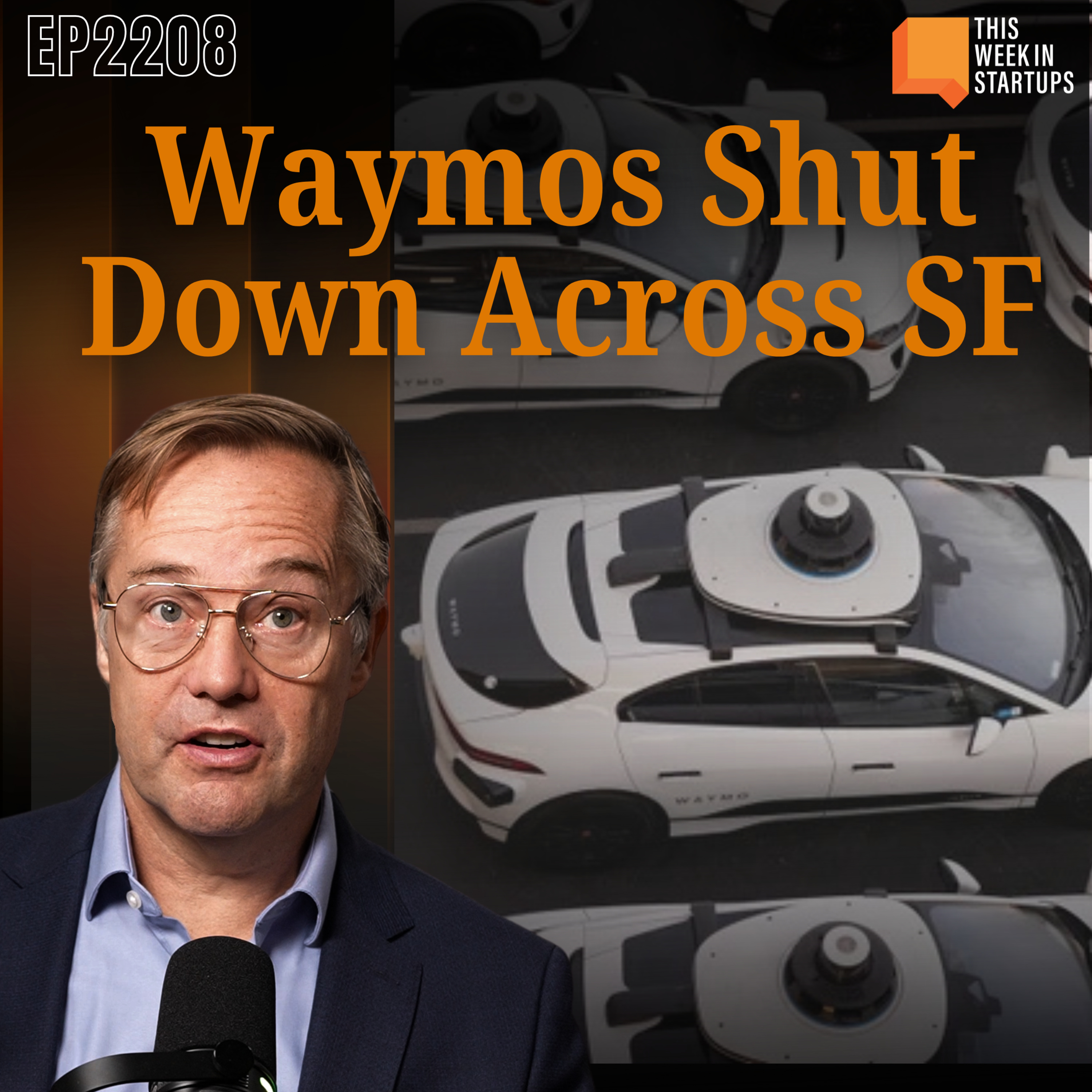
Dave argues Tesla will win long term because it has route data from all its customer cars, while Waymo only has data from cities it operates in. Sam says Waymos often seem to know the right path but then add ten minutes, though he still uses them.

Related Insights
Waymo's primary growth constraint is the number of cars it can deploy, not customer demand. In San Francisco, it rapidly achieved 25% market share with a limited fleet. This suggests its market penetration is a direct function of its ability to scale its physical infrastructure across new cities.

Tesla's camera-only system gives it a significant cost advantage over Waymo's LiDAR-equipped vehicles. However, current data shows a Waymo vehicle crashes every 400,000 miles, while Tesla's crashes every 50,000. Tesla's ability to scale hinges entirely on proving its cheaper technology can become as safe.

A breakdown of Tesla's market cap suggests its autonomous driving business, which has minimal commercial revenue, is valued at roughly $500B. In contrast, Waymo, a functioning and revenue-generating competitor, is valued at a fraction of that, making it a compelling investment by comparison.

Autonomous vehicle technology will likely become a commodity layer, with most manufacturers providing their cars to existing ride-sharing networks like Uber and Lyft. Only a few companies like Tesla have the brand and scale to pursue a vertically-integrated, closed-network strategy.
Despite partnerships, major AV players like Tesla and Waymo are building independent networks. This direct-to-consumer approach could relegate current rideshare leaders Uber and Lyft to a minor role in the autonomous future, capturing less than a third of the new market they currently dominate.
While the race for AI supremacy in language models is fierce with many well-funded competitors, the autonomous driving sector remains starkly different. Legacy automakers are still perceived as being a decade behind Tesla's Full Self-Driving capabilities, failing to close the gap in a way that companies have in the LLM space.

Beyond autonomy, Waymo's key advantages are its AI-powered route optimization, which consistently finds faster paths than human drivers, and its smooth, predictable driving style. This consistent experience eliminates the car sickness common in ride-sharing, creating a more productive and pleasant commute.
By eschewing expensive LiDAR, Tesla lowers production costs, enabling massive fleet deployment. This scale generates exponentially more real-world driving data than competitors like Waymo, creating a data advantage that will likely lead to market dominance in autonomous intelligence.

Waymo's robotaxi expansion is capital-intensive, requiring expensive vehicles ($250k+) and new centralized infrastructure in each city. Tesla can leverage its existing, distributed fleet of customer-owned cars, which already have charging, parking, and cleaning handled by their owners, creating a massive scalability and cost advantage.
Uber is leveraging its 40 million daily trips to collect vast amounts of driving data, which it sells to AV partners. This creates a new revenue stream and strategically helps smaller players catch up to data-rich leaders like Waymo, fostering a more competitive ecosystem for its platform.
