Get your free personalized podcast brief
We scan new podcasts and send you the top 5 insights daily.
Waymo's robotaxi expansion is capital-intensive, requiring expensive vehicles ($250k+) and new centralized infrastructure in each city. Tesla can leverage its existing, distributed fleet of customer-owned cars, which already have charging, parking, and cleaning handled by their owners, creating a massive scalability and cost advantage.

Related Insights
Waymo's primary growth constraint is the number of cars it can deploy, not customer demand. In San Francisco, it rapidly achieved 25% market share with a limited fleet. This suggests its market penetration is a direct function of its ability to scale its physical infrastructure across new cities.

While tech companies focus on AV software, Lyft has a crucial operational advantage with its FlexDrive subsidiary. Having already managed a 10,000-car fleet for human drivers, Lyft possesses the real-world experience in maintenance, cleaning, and logistics needed to manage future professional AV fleets at scale.

Autonomous vehicle technology will likely become a commodity layer, with most manufacturers providing their cars to existing ride-sharing networks like Uber and Lyft. Only a few companies like Tesla have the brand and scale to pursue a vertically-integrated, closed-network strategy.
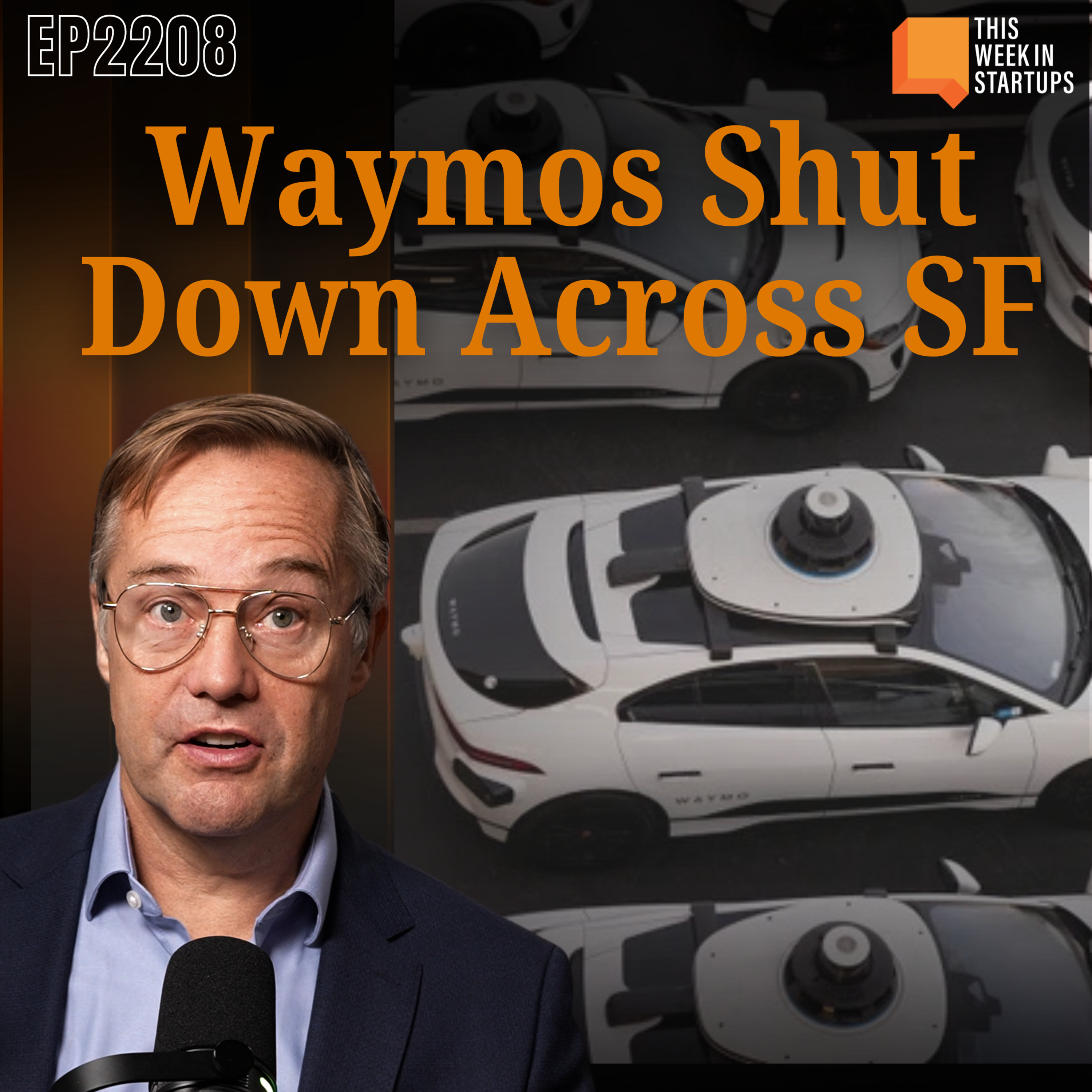
The seamless experience of an autonomous vehicle hides a complex backend. A subsidiary company, FlexDrive, manages a fleet for services like cleaning, charging, maintenance, and teleoperation. This "fleet management" layer represents a significant, often overlooked, part of the AV value chain and business model.

By eschewing expensive LiDAR, Tesla lowers production costs, enabling massive fleet deployment. This scale generates exponentially more real-world driving data than competitors like Waymo, creating a data advantage that will likely lead to market dominance in autonomous intelligence.

The existing infrastructure and operational expertise of traditional rental car companies in managing large vehicle fleets—including maintenance, charging, and cleaning—positions them as essential partners for scaling robotaxi operations. This creates a new, vital role for them in the autonomous vehicle value chain.

As tech giants like Google and Amazon assemble the key components of the autonomy stack (compute, software, connectivity), the real differentiator becomes the ability to manufacture cars at scale. Tesla's established manufacturing prowess is a massive advantage that others must acquire or build to compete.
Uber's defense against AV players like Waymo isn't to build better tech, but to leverage its distribution. Autonomous vehicles are expensive fixed assets requiring high utilization to be profitable. Uber's 200M+ user base offers that utilization, giving them leverage even against technologically superior partners.

By opting out of building its own autonomous vehicles, Uber avoids massive R&D and hardware costs. This "capital-light" partnership model allows Uber to act as a profitable aggregator, which is potentially more scalable and less risky than vertically integrated competitors like Waymo.

The transition from selling cars to operating a RoboTaxi network transforms Tesla's business model. A car sold for a one-time $4,000 profit could generate $200,000 in profit over a five-year period as an autonomous taxi. This 100x increase in lifetime value per unit represents a massive financial unlock for the company.
