Get your free personalized podcast brief
We scan new podcasts and send you the top 5 insights daily.
The climactic scene where a main character violently kills KKK members is criticized as a narrative flaw. It's seen as a cynical move to provide a "feel-good" moment, abandoning the film's more complex themes about appropriation and history for a simplistic and inconsistent action sequence.

Related Insights
In the final scene, the camera holds for 45 seconds on Kate pointing her gun, unable to shoot. This patient direction eschews quick cuts for sustained tension, perfectly conveying her psychological defeat and inability to act.
The speaker argues Hollywood is built on people pretending to be someone they're not, which fosters a 'main character energy' where individuals see themselves as writers of their own script. This mindset directly conflicts with the principles of faith, which involve surrendering control to a higher power.
The film "Dreams" is acknowledged to have narrative flaws, including an unrealistic plot twist. However, its ultimate success is judged by a different metric: whether it makes you think for days after watching. This suggests a film's provocative power can outweigh its imperfections in storytelling.

Director Denis Villeneuve shot a pivotal argument between two main characters in a single, wide shot, making them look small against a vast landscape. This directorial choice visually communicates that their moral conflict is insignificant in the grand scheme.
Netflix requires early action scenes and repeated plot points because they directly compete with viewers' phones for attention. Unlike traditional filmmakers with a captive theater audience, Netflix must optimize for retention in a distracted home environment, treating content more like science than art.

The film originally opened with Alejandro torturing someone, but this was cut to start with Kate's raid. This choice forces the audience to share her confusion and disorientation, making her the viewer's surrogate and heightening the tension.
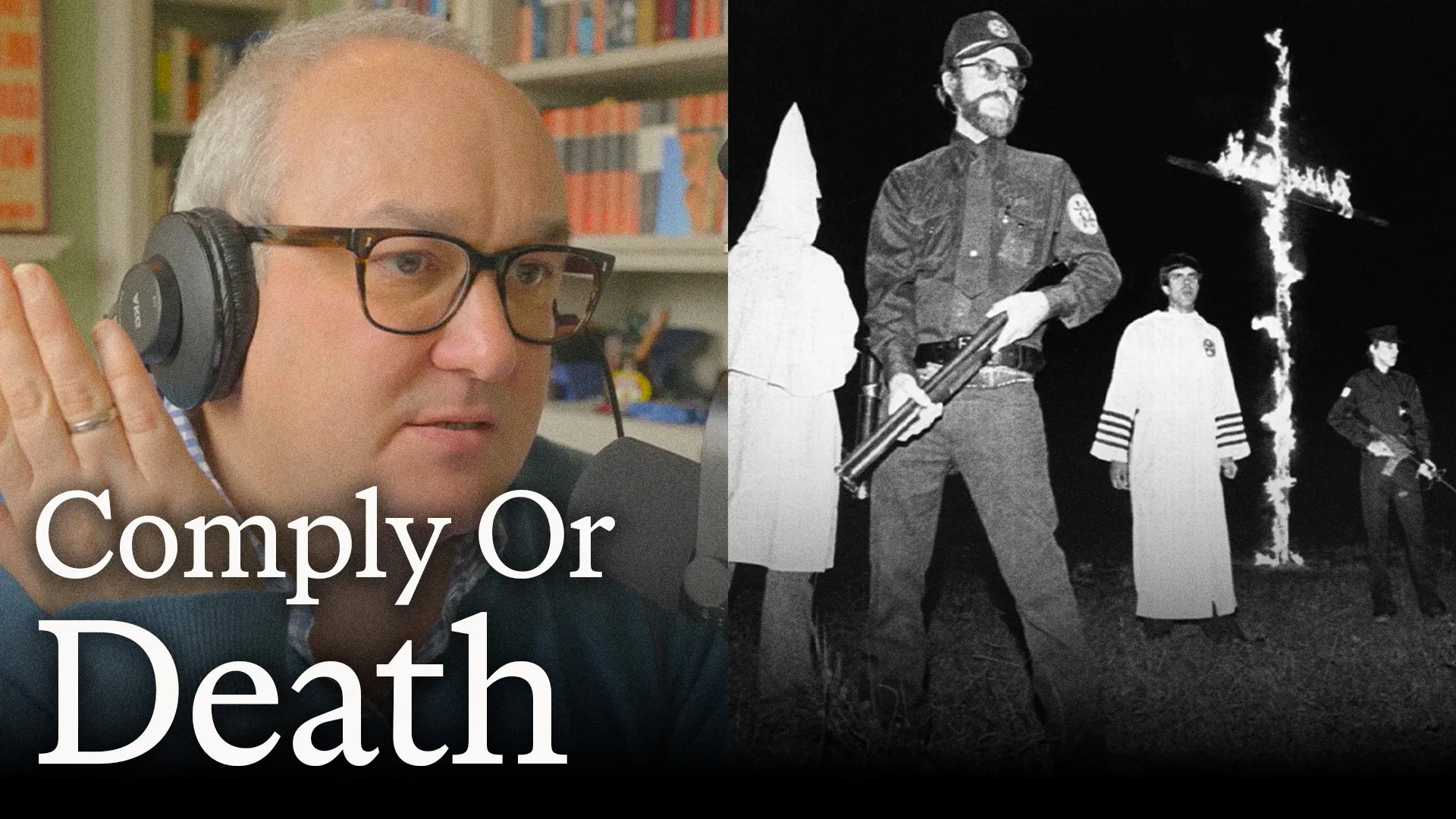
The second KKK's rituals, particularly cross-burning, were not historical practices. They were invented for Thomas Dixon's novel "The Klansman" and popularized by D.W. Griffith's blockbuster film "The Birth of a Nation," demonstrating how mass media can create and legitimize radical aesthetics.

The film's logic breaks down not because it's unrealistic, but because characters' actions, particularly the director Christoph's, contradict the show's core premise once Truman becomes aware he's on TV. The entire external world's complicity is also glossed over, making the satire ineffective.
Following its demise, the KKK's violent legacy was completely sanitized by the 'Lost Cause' mythology. Academic historians and popular culture, most notably D.W. Griffith's 1915 film 'The Birth of a Nation', recast the Klan not as racist terrorists but as swashbuckling defenders of civilization, a narrative that enabled its eventual rebirth.
The box office success of films like 'Project Hail Mary' indicates a broader trend. Viewers are drawn to stories that acknowledge overwhelming, world-ending threats—reflecting contemporary anxieties—but find resolution and appeal through themes of hope and personal connection, such as an unlikely friendship.