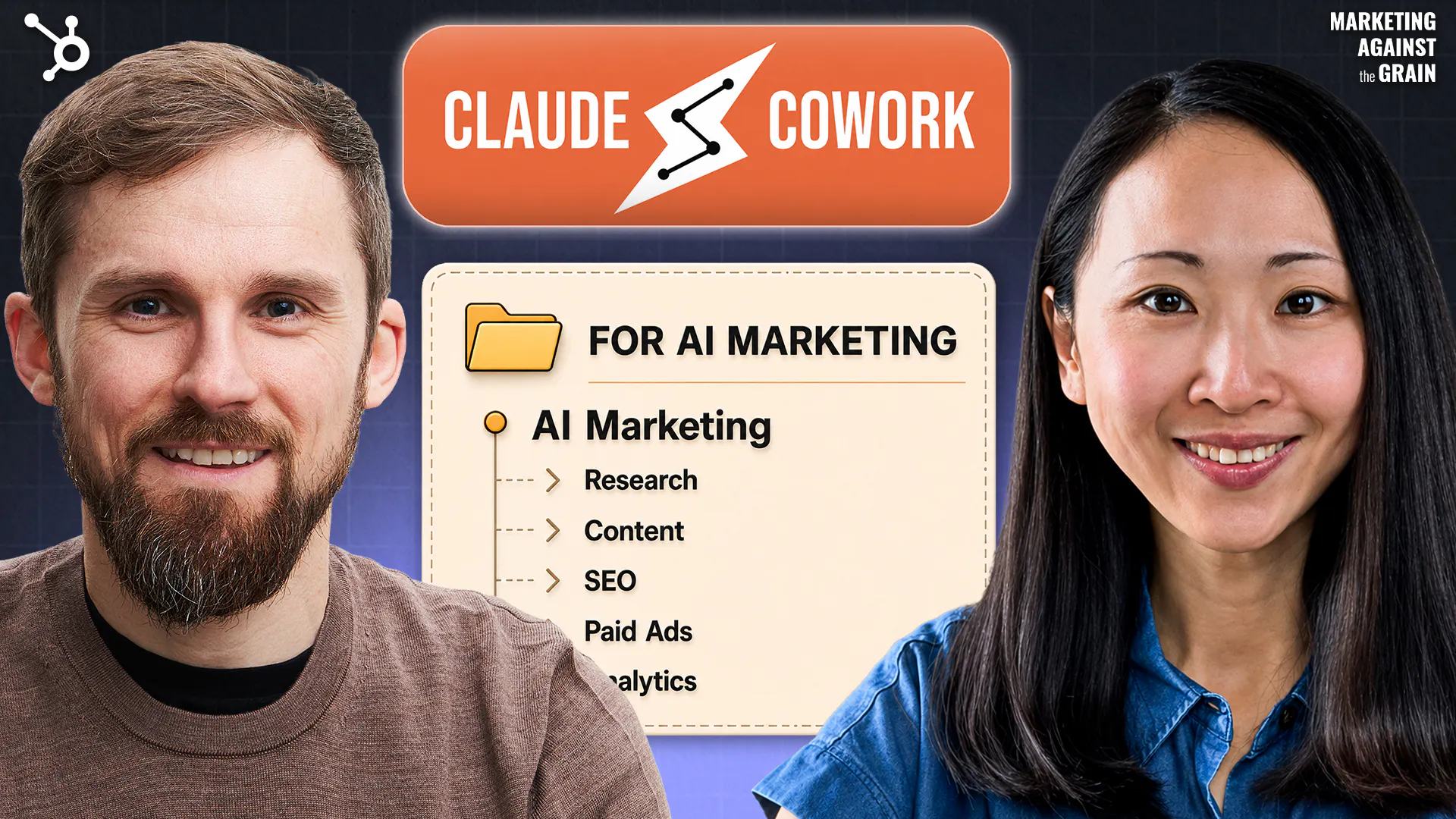
Get your free personalized podcast brief
We scan new podcasts and send you the top 5 insights daily.
To create effective, on-brand AI-generated advertisements, the process must begin by analyzing the company's website. This allows the AI to create a production-grade design system that codifies brand colors, fonts, and motifs, ensuring all outputs feel authentic and customized.

Related Insights
As AI agents optimize for quantifiable attributes, brands risk becoming generic. The solution is a "brand ontology"—a structured, machine-readable definition of brand guidelines, aesthetics, and values. This allows for scaling content with AI while ensuring every asset remains distinctively on-brand.
Without strict guidance, AI page builders can produce generic, low-quality "slop" that harms your brand. To achieve high-quality, "one-shot" page creation, you must provide the AI with a comprehensive brand book, including tone of voice, colors, button styles, hover states, and messaging rules.

In an era of rapid AI-generated content, maintaining brand integrity is paramount. Adobe addresses this by building features into its creative tools that enforce brand standards and guidelines, ensuring that speed and automation don't come at the cost of brand consistency.

Achieve high-quality, scalable design by hiring a human designer to create the initial brand identity, key assets, and a style guide. Then, feed these assets and rules (as a `design.md` file) to an AI image model to generate unlimited, perfectly on-brand new content, saving significant ongoing cost.

Instead of iterating on prompts for single assets, focus on building reusable systems. This approach ensures brand consistency, saves time, and empowers non-designers to create on-brand assets efficiently by turning complex workflows into simple interfaces.

Generic AI creates content without context. In contrast, 'Brand-Aware AI' functions like a strategic coach that understands your brand's rules and learns from performance data. It shifts from just generating content to actively recommending improvements based on what resonates.
Traditional brand guidelines in static PDFs fail to scale with AI. A "brand system of record" acts as a dynamic, living brain, capturing tone, style, and visuals that AI can use in real-time to ensure all generated content is consistent and on-brand.

To combat generic AI output, Unilever created a 'Brand DNA' system. This internal training repository ensures its AI models only source from approved brand voices, values, and visual identities. The managed system produces assets 30% faster while doubling key performance metrics like video completion and click-through rates.
Generic AI app generation is a commodity. To create valuable, production-ready apps, AI models need deep context. This "Brand OS" combines a company's design system (visual identity) and CMS content (brand voice). Providing this unique context is the key to generating applications that are instantly on-brand.

The most valuable output from AI design tools isn't a finished product but a reusable, on-brand template (e.g., an HTML carousel). This template becomes a core system asset that other AI skills can consistently populate with new content, ensuring scalability and brand consistency.