Get your free personalized podcast brief
We scan new podcasts and send you the top 5 insights daily.
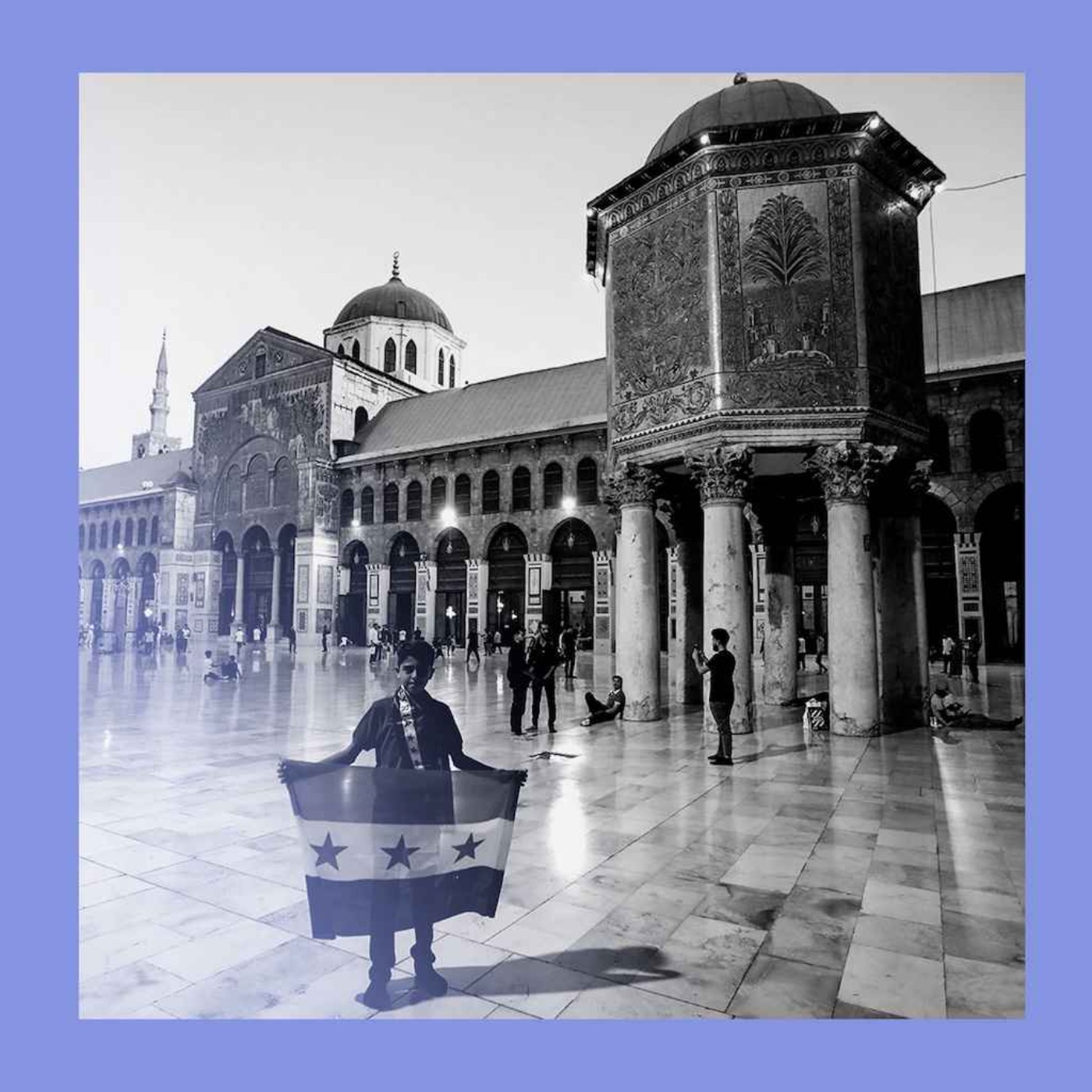
The final decision pitted Argentina's remarkable economic turnaround against Syria's emergence from a brutal civil war. Syria won because the improvement in tangible human security—the end of widespread killing and displacement—was deemed more significant than the abstract, albeit massive, economic improvement for millions in Argentina.
Related Insights
Rather than taking a "holier than thou" stance and refusing to engage with governments that have committed atrocities, it is more effective to build bridges. Cooperation invites them into the 21st century and aligns them with your values, whereas isolationism is counterproductive.

Unprecedented US financial support, likened to Draghi's "whatever it takes," has successfully created a circuit breaker for Argentina's negative market feedback loop. However, this support only addresses financial symptoms (FX and credit risk) and cannot solve the underlying political uncertainty about the government's ability to implement reforms.

The recent $20 billion U.S. Treasury support for Argentina was not a reactive bailout for a failing program. It was a pre-planned "big bazooka" to counter a politically-motivated speculative attack on the peso ahead of midterm elections, making it prohibitively expensive to bet against the country's stability.

Despite a strong democratic and economic recovery, South Korea was passed over for the award. The judging committee determined its progress was primarily a recovery from "entirely ridiculous and self-inflicted wounds" (an attempted imposition of martial law), which is a less compelling form of improvement than overcoming external challenges.
After a complex debate weighing factors for multiple countries, the final justification for Syria winning was boiled down to a single, powerful metric. The return of 3.5 million people to their homes provided an undeniable and emotionally resonant data point that was "very hard to beat," cutting through all other arguments.
Canada received many nominations for "Country of the Year," but was rejected upon analysis. The rationale was that the country hadn't actually improved; rather, it had simply managed to "fail to catastrophically decline" in a turbulent year. This distinguishes resilience from genuine forward progress, a key insight for evaluators.
The only historically effective method to resolve deep-rooted religious and ideological conflicts is to shift focus toward shared economic prosperity. Alliances like the Abraham Accords create tangible incentives for peace that ideology alone cannot, by making life demonstrably better for citizens.

Evaluate political ideologies based on their historical potential for large-scale harm ("amplitude"), not just a leader's current negative actions. A socialist path, historically leading to mass death, may pose a greater long-term threat than a leader's immediate, but less catastrophic, authoritarian tendencies.

Geopolitical solutions based on earthly incentives like economic development are bound to fail when dealing with an ideology focused on martyrdom. If people believe the ultimate goal is paradise after death, they won't compromise for a better life for their children now.

Unlike countries with no recent memory of economic collapse, nations like Greece, Spain, and Italy—and potentially now Argentina—that have endured hyperinflation are more likely to elect reformist governments. The population internalizes the cost of fiscal irresponsibility and votes to avoid repeating the disaster.