Get your free personalized podcast brief
We scan new podcasts and send you the top 5 insights daily.
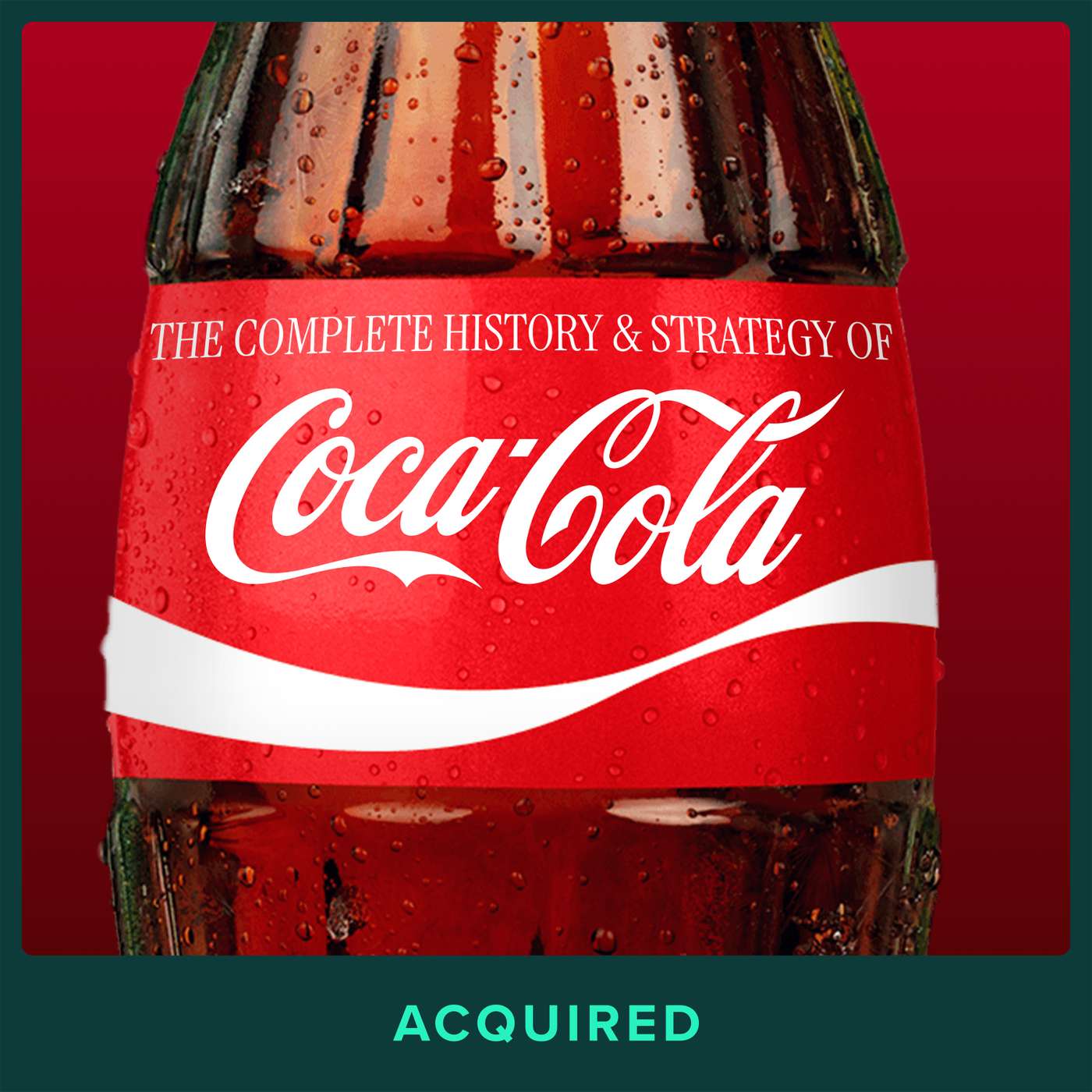
Coca-Cola's legal team extended its IP moat beyond the brand name. They commissioned a bottle "so distinct that you would recognize it by feel in the dark" and successfully argued for its shape to be granted trademark status, a rare accomplishment that created a powerful, non-verbal brand defender.
Related Insights
Unable to patent the core vacuum technology, Hydro Flask patented the bottle's design and prominently labeled it "Patent Pending." This psychological tactic created enough perceived legal risk to deter competitors for six to eight critical months, buying them a crucial head start in the market.

While product differentiation is beneficial, it's not always possible. A brand's most critical job is to be distinctive and instantly recognizable. This mental availability, achieved through consistent creative, logo, and tone, is more crucial for cutting through market noise than having a marginally different feature set.

Coca-Cola gave away bottling rights for free in a perpetual contract. This seemingly terrible deal offloaded capital expenditure and operational complexity, enabling rapid, asset-light scaling through a franchised network of local entrepreneurs who built the distribution system.
AI in creative doesn't have to dilute a brand. Coca-Cola's successful holiday ad used AI, but its high brand recall (83%) was driven by focusing on iconic assets like Santa. The AI execution was effective because it was largely invisible, proving the creative idea still drives the ad, not the tech.
The bottling contract fixed Coke's price at a nickel. While a long-term liability, during the Depression this became a powerful weapon. Coke's massive scale allowed it to remain profitable at that price point, while smaller competitors with higher costs were crushed, unable to compete with a superior, cheaper product.
In a crowded market, brand is defined by the product experience, not marketing campaigns. Every interaction must evoke the intended brand feeling (e.g., "lovable"). This transforms brand into a core product responsibility and creates a powerful, defensible moat that activates word-of-mouth and differentiates you from competitors.

Facing hundreds of "something-cola" imitators, Coca-Cola waged a massive legal war using the new Federal Trademark Act. They successfully argued, all the way to the Supreme Court, that "cola" was not a generic beverage type but an integral part of their unique, trademarked brand, effectively litigating an entire category into submission.
The disastrous "New Coke" launch, intended to win taste tests, triggered a massive public outcry that demonstrated the brand's deep cultural power. By bringing back "Coca-Cola Classic," the company inadvertently created the most effective marketing campaign imaginable, reminding consumers of their love for the original and halting Pepsi's momentum.
The podcast argues that Coca-Cola's "secret formula" holds little value today; a competitor couldn't replicate the brand or distribution even if they had it. The true cornered resource is the global network of exclusive, loyal, and efficient bottling partners—a proprietary distribution system that is nearly impossible to replicate.
Coca-Cola pioneered lifestyle advertising by shifting from promoting intrinsic product qualities (a "brain tonic") to extrinsic associations. They linked the brand to universal positive emotions like happiness, friendship, and Christmas, making the product a symbol rather than just a beverage.